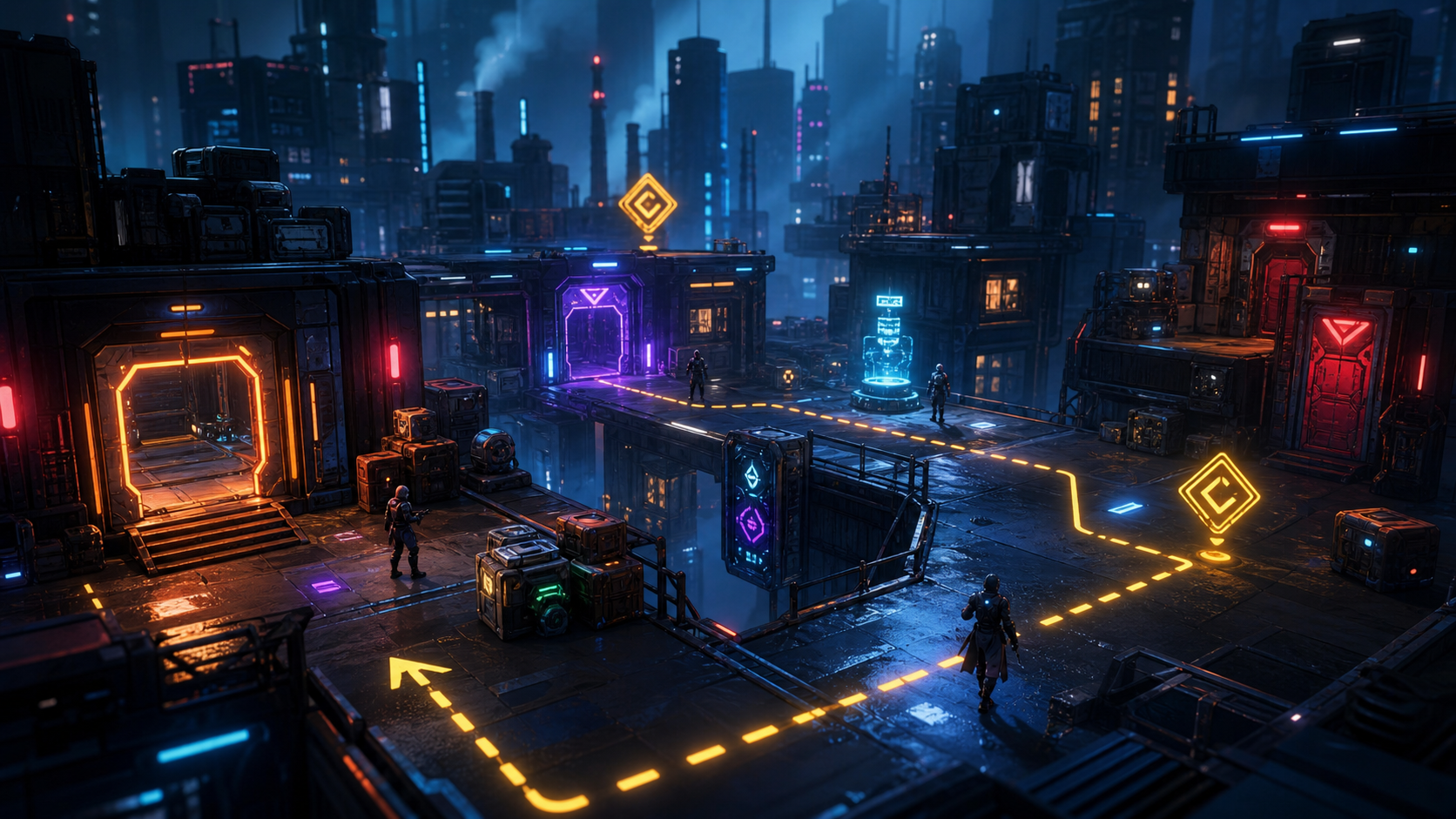
Live-generated AI in games means part of the experience is created while the game is running. The output might be a character response, quest, image, voice line, hint, animation, or world event. It is one of the clearest ways an AI game platform can make two sessions meaningfully different.
That definition is narrower than “made with AI.” A game can use AI-assisted art, code, audio, or localization during development and still deliver the same fixed content to every player. Runtime generation happens after release, in response to a player or changing game state.
The distinction now affects platform disclosure, moderation, service cost, privacy, and player expectations. It also gives players a better question than “does this game use AI?” Ask what the AI changes during play.
Quick read
Key takeaways
- Steam separates AI content created during development from content generated live while the game is running.
- Live generation needs guardrails because the final output cannot be reviewed completely before release.
- Players should check what the AI can generate, what data it receives, how mistakes are reported, and whether usage changes the price.
- The best runtime AI creates meaningful variation inside visible game rules rather than replacing the rules with an unrestricted chatbot.
Pre-Generated vs Live-Generated AI Content
Steam’s current Content Survey separates generative AI into two categories. Pre-generated content is created with AI during development and ships with the game. Live-generated content is created with AI while the game is running.
Both categories can include material consumed by players, such as artwork, sound, narrative, and localization. Live generation adds a special problem: the developer cannot manually inspect every possible output before a player sees it.
| Question | Pre-generated AI | Live-generated AI |
|---|---|---|
| When is content created? | During development | While the game is running |
| Can every shipped asset be reviewed? | Usually yes, before release | No, the output space is open-ended |
| Typical examples | Textures, voice lines, code-assisted assets, localization | Dialogue, quests, hints, images, voices, or events created per session |
| Main player concern | Rights, quality, and accurate disclosure | Safety, privacy, latency, cost, and unpredictable output |
| Steam requirement highlighted | Describe the implementation and follow content rules | Also describe guardrails against illegal output |
Where Runtime Generative AI Changes Gameplay
Runtime generation is most useful when it performs work the game cannot easily pre-author at the same scale. Natural-language conversation can interpret an unusual question. A quest system can combine current characters, locations, and unresolved events. A director can create pressure that reflects how the player has behaved.
The generation should connect to state. A character response matters when it changes trust, information, goals, or available actions. A generated quest matters when its conditions, rewards, failure states, and consequences are represented by the game rather than only described in text.
- Dialogue that refers to the real character, location, inventory, and history.
- Hints that adapt to the player’s current obstacle without revealing unrelated information.
- Quests assembled from valid goals, actors, locations, and rewards.
- World events that respond to resource, relationship, or progression state.
- Voices or animation generated for a bounded, disclosed character interaction.
What Steam Requires Developers to Disclose
Steam’s Content Survey asks developers to describe AI content that ships with the game or is produced as part of the product. For live generation, developers must also explain the guardrails used to prevent illegal output.
Disclosure is not permission to ignore the rest of the platform rules. Steam states that products must still follow its content requirements and be consistent with their marketing materials.
Steam also says it does not currently want to ship Adult Only Sexual Content games that use live-generated AI during gameplay, citing substantial legal and customer risks. That is a specific current platform decision, not a universal legal definition for every store or country.
A Player Checklist for Live AI Games
The store page may tell you that live AI exists, but the useful details often appear inside the game’s onboarding, privacy notice, reporting flow, or settings. Check those surfaces before giving the system personal information or expecting long-term memory.
| Check | Question to ask | Good player-facing answer |
|---|---|---|
| Scope | What can the AI generate or change? | A concrete list of dialogue, images, quests, voices, or actions |
| Input | What data does the model receive? | Only the game state and player input required for the feature |
| Memory | What persists after the session? | Clear duration, purpose, reset, and deletion controls |
| Safety | How can I report a bad output? | Visible reporting plus a response process |
| Control | Can I disable or constrain the feature? | A setting, content level, or reliable fallback |
| Cost | Does each generation affect price or limits? | Usage terms shown before the player commits |
| Attribution | Who created or supplied generated content? | Disclosure and rights information appropriate to the asset |
Live AI Can Change Game Pricing
A conventional game can perform most of its runtime logic locally after purchase. A live generative feature may call a paid external service for each input and output, creating an ongoing cost that rises with play time.
Steam’s developer guidance lists several possible models: include the cost in the base price, charge for granular interactions through supported microtransactions, use a subscription, or sell DLC that unlocks ongoing access. The guidance does not require one model, but it makes the cost structure a product decision players should be able to understand.
On-device models can reduce dependence on a network service and may improve latency, as the PUBG Ally example shows. They also introduce hardware requirements, storage, power, heat, and performance tradeoffs. Local does not automatically mean free or private; the game still needs to explain what it stores and transmits.
Guardrails Need More Than a Blocklist
A text filter catches only one layer of risk. A live AI game also needs valid actions, bounded tools, age-aware content rules, privacy limits, copyright handling, reporting, human review paths, and recovery when the generated state becomes inconsistent.
Apple’s App Review Guideline 1.2 requires user-generated-content apps to filter objectionable material, provide reporting and timely responses, block abusive users, and publish contact information. Its creator-content rules explicitly include casual games and require age handling for content that exceeds the app rating.
Those rules are written for app review rather than as a complete AI safety standard, but they show the platform expectation: generation, community content, discovery, and moderation cannot be designed as separate products.
- Filter both player input and model output where appropriate.
- Restrict which game actions the model can call.
- Use deterministic validation for inventory, rewards, payments, and irreversible state.
- Give players reporting, blocking, reset, and appeal paths.
- Log enough context to investigate a report without collecting unrelated personal data.
The Best Test Is Still to Play the Game
A label cannot tell you whether runtime AI improves the experience. Enter a world from the Elseland game library, identify the core goal, and watch for one moment where the system responds to your specific state rather than replaying a generic branch.
Then ask whether that response changed a meaningful decision. If the AI only produces more words, images, or events without affecting the game loop, the variation may be decorative. If it creates a new problem, relationship, strategy, or consequence inside clear rules, it is part of play.
Frequently asked questions
What is live-generated AI in a game?
It is content created with AI while the game is running, often in response to player input or live game state. Examples include generated dialogue, quests, hints, images, voices, animation, or world events.
How is live-generated AI different from a game made with AI?
A game may use AI during development to help create fixed assets that ship in the final build. Live-generated AI continues producing content during play, so the exact output may not exist until a player triggers it.
Does Steam allow live-generated AI games?
Steam’s current Content Survey provides a route for developers to disclose live-generated AI and explain guardrails against illegal output. Games must still follow all other Steam content and distribution rules.
Why do live AI games need guardrails?
Developers cannot manually review every possible runtime output before release. Guardrails reduce the chance of illegal, abusive, unsafe, privacy-invasive, or game-breaking content and create a response path when prevention fails.
Can live-generated AI make a game more expensive?
Yes. Cloud models can create a cost for every interaction, while local models may increase hardware requirements. Developers may include the cost in the game price, use subscriptions, supported microtransactions, DLC, or another disclosed model.
Does on-device AI keep all game data private?
Not necessarily. Local inference can remove some network calls, but the game may still transmit analytics, reports, account data, or other information. Check the actual privacy notice and settings.
Can I turn off live-generated AI in a game?
That depends on the game. A player-friendly implementation should explain whether the feature is required for the core loop, optional, adjustable, or replaceable with a deterministic fallback.
How can I tell whether runtime AI improves gameplay?
Look for a generated response that changes a real decision, rule, relationship, goal, or consequence. If it only adds more output without affecting what the player can do, it may be presentation rather than core gameplay.
Sources and further reading
- Steamworks Content Survey
Current definitions for pre-generated and live-generated AI, guardrails, costs, and content restrictions.
- Apple App Review Guidelines
Current user-generated and creator-content moderation, reporting, blocking, and age requirements.
- 2026 State of the Game Industry
GDC’s current report based on responses from more than 2,300 game industry professionals.
Next step