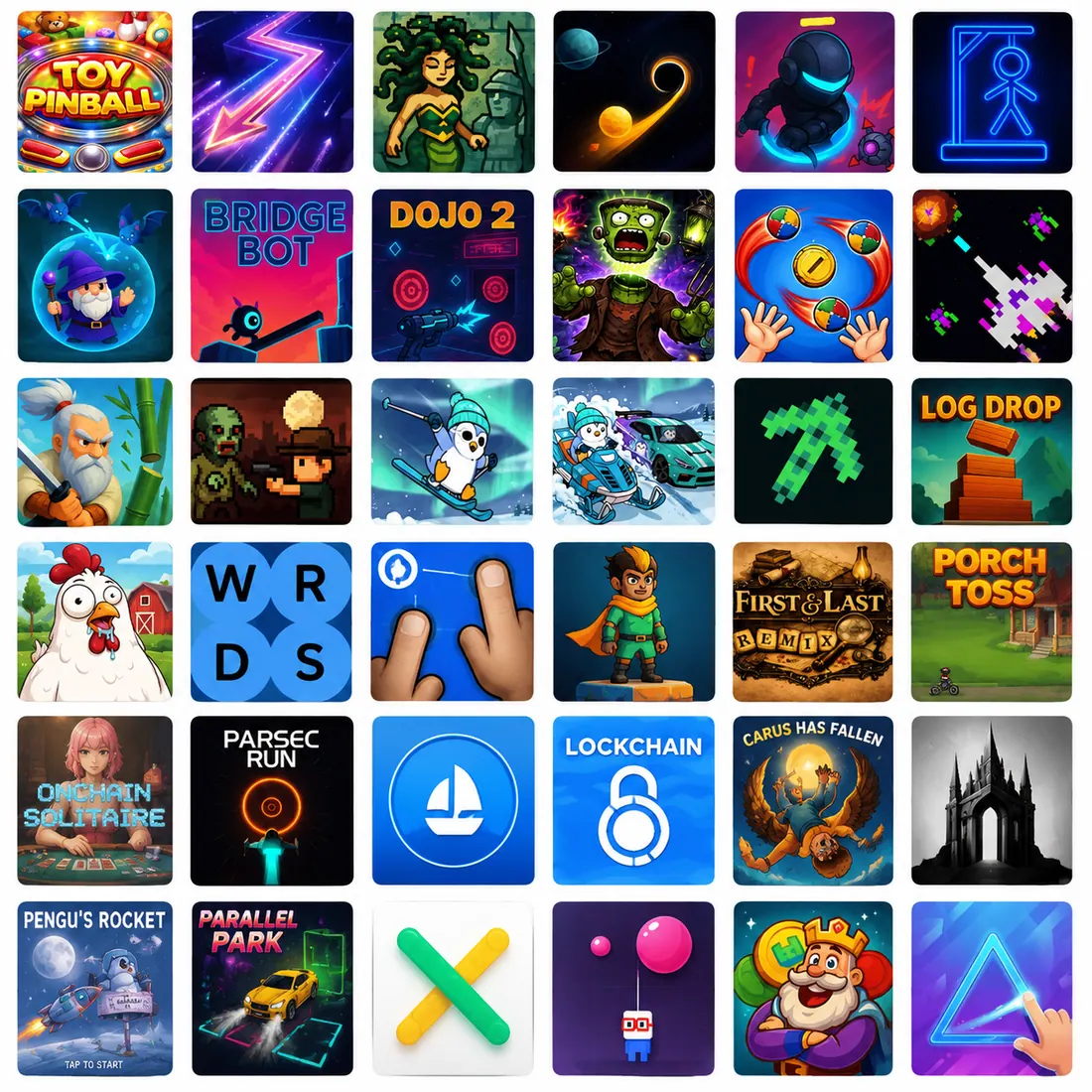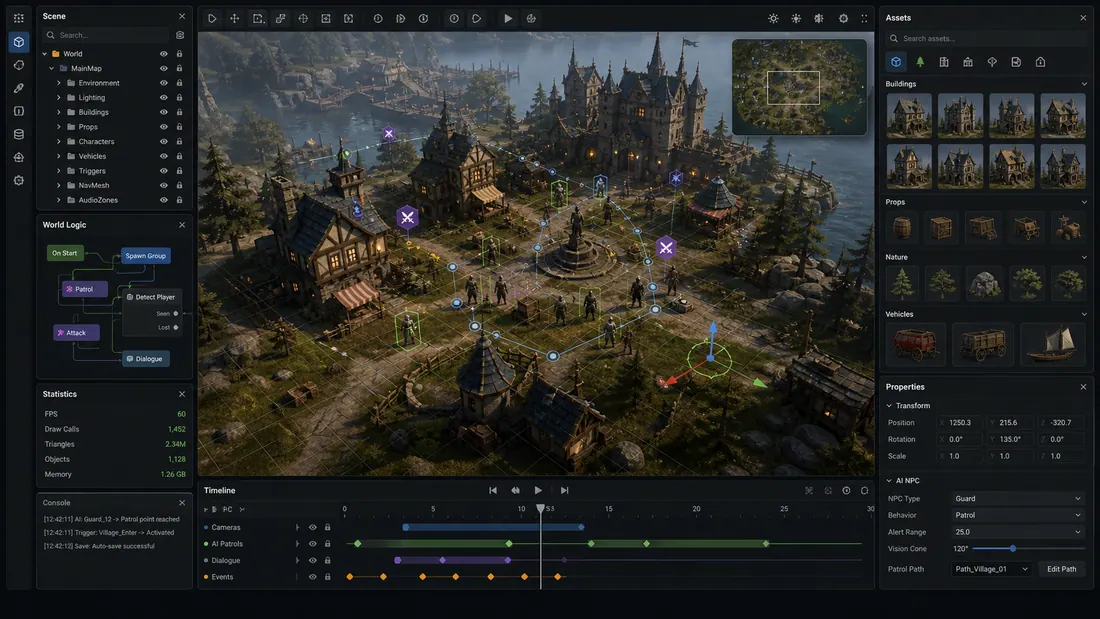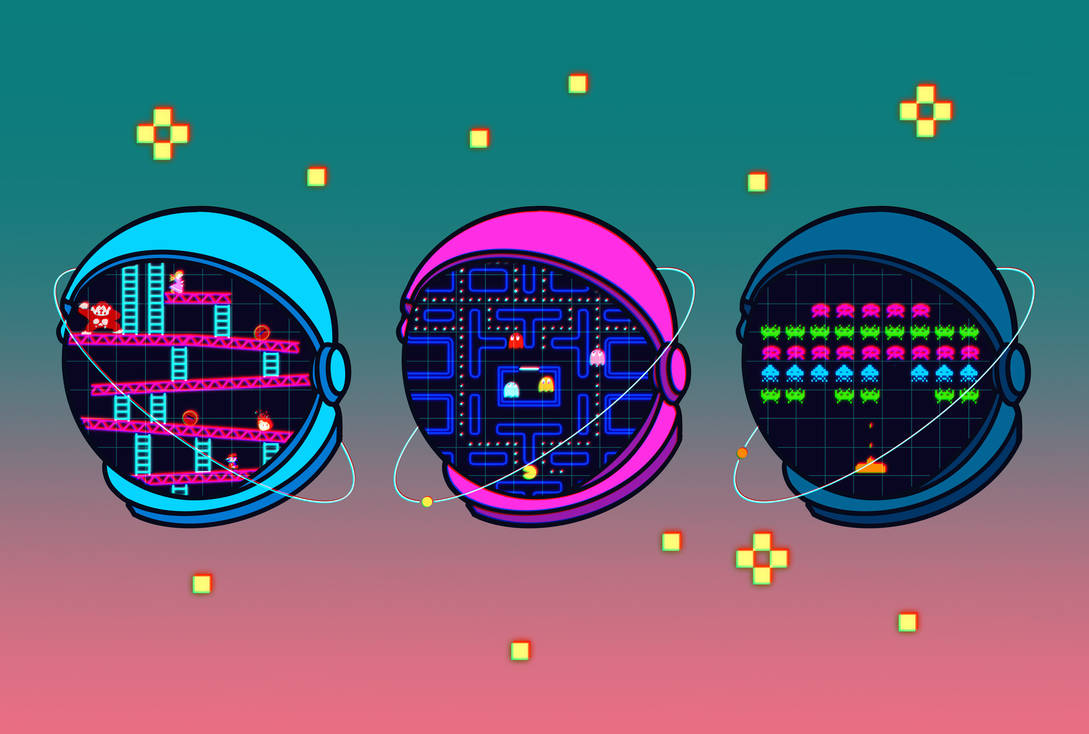
An AI game platform is a place where people can discover, play, revisit, remix, and share AI-powered game experiences. The platform may include creation tools, but its main product is the connected player journey across a growing library of worlds. Elseland follows that player-first idea with an Elseland game library spanning RPG, puzzle, arcade, action, simulation, story, sandbox, quiz, casual, and roleplay experiences.
That variety is designed to lead into play. Download the Elseland app to enter the full game experience, choose a world that fits the moment, and return for another genre later. Creation and remixing remain available, but they support the platform instead of replacing the player journey.
That distinction matters because “AI game platform,” “AI game maker,” and “AI game generator” describe different products. A generator can produce an asset or prototype. A maker helps someone build. A platform must also help players find something worth playing, preserve context, support community behavior, and make the next session better than the first.
Quick read
Key takeaways
- An AI game platform organizes an ongoing player ecosystem; an AI game maker focuses on producing or editing one game.
- The strongest platform signal is a repeatable journey from discovering different game genres to playing, returning, sharing, and finding another relevant world.
- A game is AI-native only when runtime AI is essential to the core loop, not merely used during production.
- Discovery quality, state continuity, moderation, and transparent AI behavior matter as much as generation speed.
What an AI Game Platform Actually Includes
At minimum, an AI game platform combines a catalog of playable experiences with the systems required to run, organize, and improve those experiences. AI may generate dialogue, quests, characters, images, rules, or world events at runtime, but generation alone is not enough.
The platform layer begins where the individual output ends. It manages how a player enters a world, how the world responds, what is remembered, how another experience is recommended, and what happens when people publish or remix content.
| Platform layer | Player question | Useful signal |
|---|---|---|
| Discovery | What should I play? | Search, genres, recommendations, previews, and clear game pages |
| Runtime | Does this feel like a game? | Goals, rules, state, feedback, failure, progress, and replay |
| AI systems | What changes because of AI? | Responsive characters, generated situations, adaptive rules, or world events |
| Continuity | Why should I return? | Saved progress, remembered choices, identity, collections, or evolving worlds |
| Community | What can people do together? | Sharing, remixing, creator pages, reactions, collaboration, or social play |
| Trust | Can I use it safely? | Moderation, reporting, age controls, privacy clarity, and AI disclosure |
AI Game Platform vs Maker vs Generator
The terms overlap because one product can contain all three capabilities. The difference is the center of gravity. A generator is judged by output speed, a maker by creative control, and a platform by whether players and creators form a healthy repeatable ecosystem.
This is why adding a public gallery to a generator does not automatically create a platform. The gallery must help people evaluate quality, enter a game quickly, understand what AI changes, and continue into a second relevant experience.
| Product type | Primary job | Typical starting point | Success signal |
|---|---|---|---|
| AI game generator | Produce code, assets, rules, or a playable draft | Prompt or source material | A usable output is generated |
| AI game maker | Build, edit, and test a game | Idea, template, scene, or project | The creator can shape a working game |
| AI game platform | Connect players, worlds, creators, and ongoing systems | Game feed, world page, character, or community | People play, return, discover more, and contribute |
AI-Native Games Are a Subset of the Platform
A 2026 survey reviewed 53 publicly available AI-native games and prototypes. Its practical test is counterfactual: if runtime generative AI were removed or replaced with a simple deterministic substitute, would the central form of play collapse or become fundamentally different?
That test separates AI-native play from games that only used AI during production. A puzzle whose art was generated by AI may still have a fully fixed loop. A roleplaying world in which free-form player language changes character decisions, quest state, and future consequences is closer to AI-native because the model performs essential mechanical work.
- AI-assisted production: AI helped make the game, but does not participate in play.
- AI-powered feature: AI improves one layer, but the main game can still function without it.
- AI-native core loop: runtime AI is required for the player’s actions, feedback, or consequences to work as designed.
The Player Journey Defines the Platform
The first useful platform metric is not how many games can be generated. It is how quickly a new visitor can identify a relevant world, understand the first action, receive meaningful feedback, and decide whether to continue.
Genre routes reduce that decision cost. A player looking for quests, characters, and progression should be able to move directly into AI RPG games instead of reading a long explanation of the creation technology first.
After the first session, continuity becomes the differentiator. Saved state, remembered decisions, visible collections, followed creators, or an evolving world give the next visit context. Without continuity, the experience behaves more like a disposable demo feed than a platform.
| Journey stage | Healthy platform behavior | Common failure |
|---|---|---|
| Discover | Clear genres, previews, and reasons to play | A feed of unexplained AI outputs |
| Start | First meaningful action is obvious | Long setup before any play |
| Understand | Rules and AI behavior are legible | Surprising output with no causal feedback |
| Continue | Progress and consequences persist | Every session feels reset or disconnected |
| Explore | The next world matches demonstrated interest | Random recommendations based only on recency |
| Contribute | Sharing or remixing preserves attribution and context | Copies with unclear origin or ownership |
Community and Remix Turn a Library Into an Ecosystem
A platform grows when one participant’s work creates a better experience for another. Players supply behavior and feedback. Creators publish worlds and updates. Curators make discovery easier. Remixers adapt a rule, character, map, or scenario into a new branch that still points back to its origin.
Remixing is more useful when it is structured. A strong system records what changed, which parts came from the original, and whether the new version remains compatible with future updates. That makes remixing a navigable relationship between experiences rather than an untraceable copy.
Roblox describes its own platform around discovery, play, creation, community, safety, marketplace systems, and an economy. An AI game platform does not need every one of those layers on day one, but it needs a clear path beyond isolated generation.
How to Judge AI Game Platform Quality
Use a player test before evaluating the AI model. Open one game without reading the marketing page, complete the first meaningful action, leave, return, and then try to find a second world that fits the same interest.
Score each dimension from zero to two: zero means missing, one means present but inconsistent, and two means clear and reliable. A platform scoring below 12 out of 20 may still contain interesting prototypes, but its player journey probably needs more work.
| Dimension | 0 points | 1 point | 2 points |
|---|---|---|---|
| Discovery | No useful organization | Basic categories | Relevant search, previews, and recommendations |
| Time to play | Blocked or unclear | Several setup steps | Meaningful action starts quickly |
| Game structure | Mostly open chat or output | Some goals and feedback | Clear rules, state, consequences, and replay |
| AI legibility | AI behavior feels random | Some explanations | Players can connect actions to AI-driven outcomes |
| Continuity | Nothing persists | Partial session history | Progress, choices, or identity carry forward |
| World variety | Near-duplicate outputs | Several formats | Distinct genres, mechanics, and audiences |
| Remix and sharing | No contribution path | Basic sharing | Attribution-aware publishing or remixing |
| Safety controls | No visible controls | Basic reporting | Filtering, reporting, blocking, and clear response paths |
| Privacy clarity | Data use is unclear | General policy only | Player-facing explanation of stored and generated data |
| Return value | No reason to come back | Occasional new content | Persistent worlds, community, events, or strong discovery |
Safety Is a Core Platform Feature
Creator and AI-generated content expands faster than a small editorial catalog, so trust systems must scale with it. Apple’s current App Review Guideline 1.2 requires user-generated-content apps to provide objectionable-content filtering, reporting, blocking, and published contact information. Its creator-content section explicitly includes casual games inside a unified app experience.
For players, the visible questions are simple: Can I report a world or user? Can I block unwanted interactions? Is age-sensitive content labeled? Does the platform explain when content is AI-generated and what interaction data is retained?
A platform should also separate model capability from permission. The fact that AI can generate a character, voice, image, or story does not establish that the source material is licensed, safe, or appropriate for every audience.
Where Elseland Fits as an AI Game Platform
Elseland’s platform direction is strongest when it starts with playable worlds: players choose a genre, enter a game, interact with rules and characters, and then move into another world or remix the part they want to change.
Creation still matters, but it supports the ecosystem rather than defining the whole product. The long-term platform value comes from making discovery, play, AI-driven world behavior, local remixing, roleplay, sharing, and return sessions work together.
The practical positioning is therefore not “AI makes a game for you.” It is “enter a growing network of AI-powered worlds, find the experience that fits, and participate at the level you want—as a player, roleplayer, remixer, or creator.”
Frequently asked questions
What is an AI game platform?
An AI game platform is an ecosystem for discovering, playing, revisiting, sharing, and sometimes creating AI-powered game experiences. It combines playable content with platform services such as identity, persistence, recommendations, community features, moderation, and AI runtime systems.
How is an AI game platform different from an AI game maker?
An AI game maker focuses on helping a creator produce or edit a game. An AI game platform may include those tools, but it also serves players by organizing discovery, play, continuity, community, and repeat visits across many experiences.
Is every game made with AI an AI-native game?
No. A game can use AI-generated art, code, or audio while keeping a conventional fixed gameplay loop. An AI-native game requires runtime AI to perform essential work inside the core loop, so removing it would fundamentally change the play experience.
Do AI game platforms need a game engine?
They need a reliable runtime for rules, state, input, feedback, assets, and performance, but it may be a traditional engine, a web runtime, or a proprietary system. The platform layer then adds discovery, accounts, publishing, moderation, analytics, and community services around that runtime.
Can an AI game platform be only for players?
Yes, a platform can curate or operate AI-powered games without offering public creation tools. However, platforms with creator or remix systems need additional publishing, attribution, compatibility, and safety controls.
What makes an AI game platform worth returning to?
Strong reasons include persistent progress, evolving worlds, memorable characters, useful recommendations, community activity, events, and a steady supply of distinct games. Raw generation volume is less valuable when the experiences are difficult to evaluate or feel interchangeable.
Are AI game platforms safe for children?
Safety depends on the specific platform, its age rating, content rules, moderation, communication controls, and parental features. Parents should check the live product policies and settings rather than assuming that an AI label or App Store listing guarantees suitability.
Is Elseland an AI game platform or an AI game maker?
Elseland includes creation and remix capabilities, but its broader direction is an AI game platform where people can discover, play, roleplay in, remix, and share playable worlds. The maker is one capability inside the platform rather than the complete product definition.
Sources and further reading
- AI Native Games: A Survey and Roadmap
2026 research definition, 53-game corpus, taxonomy, and AI-native core-loop criteria.
- Roblox official platform overview
Official description of discovery, play, creation, community, platform systems, and safety.
- Apple App Review Guidelines
Current requirements for user-generated and creator content, including casual games.
Next step