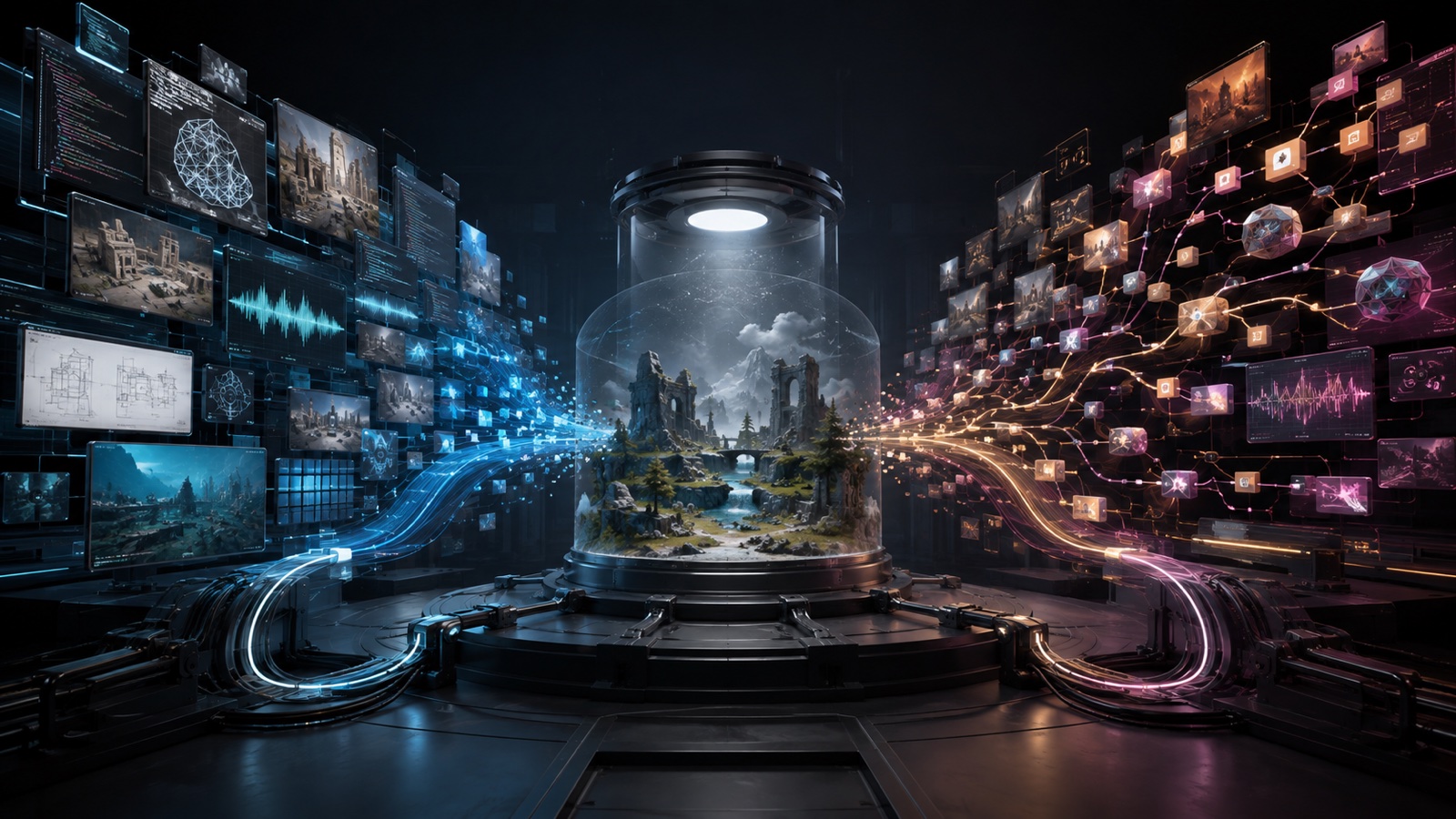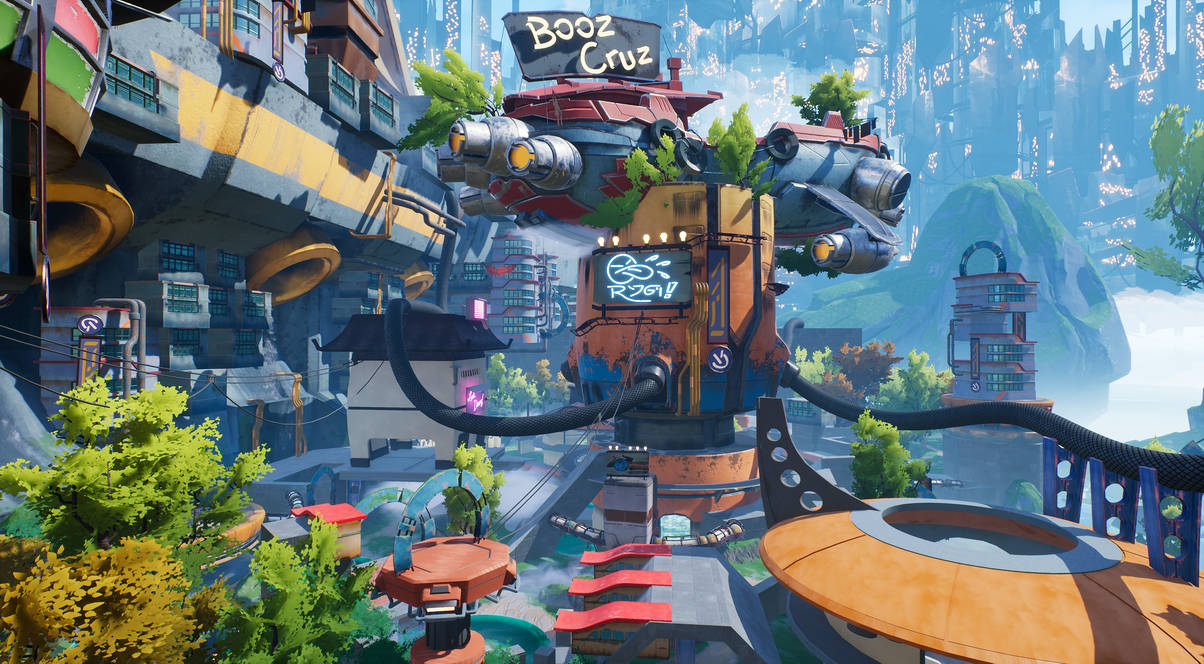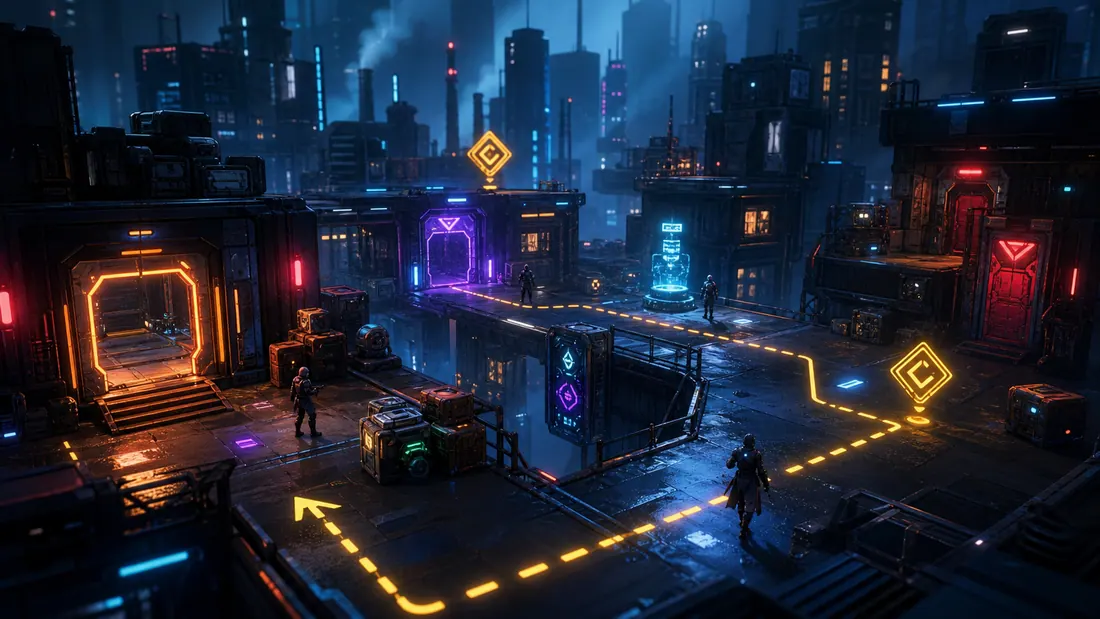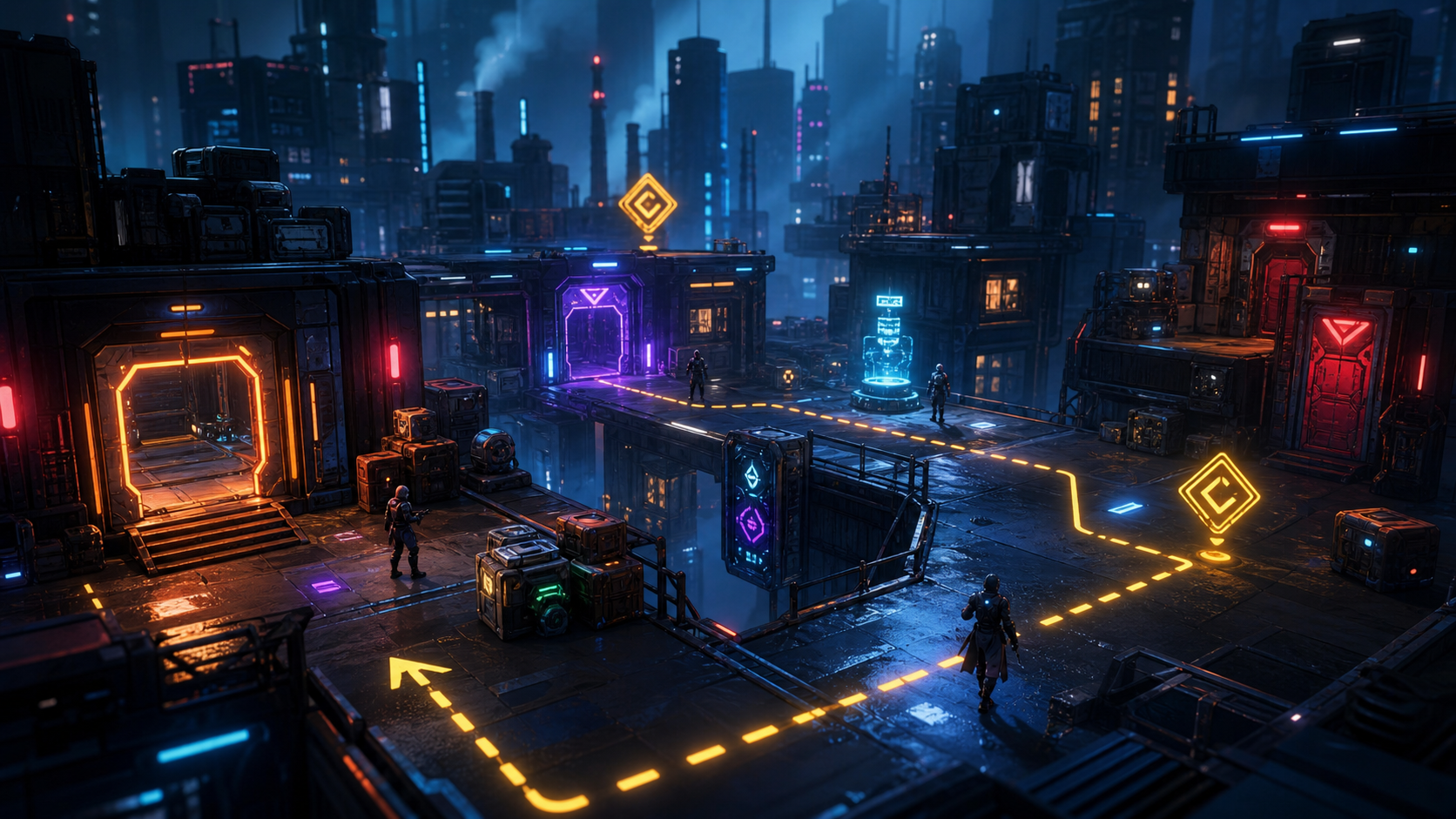
World models are moving game ideation from static concept art toward spaces a creator can enter, inspect, and revise. Genie 3 and Marble both demonstrate that shift, but the products expose different kinds of control and different handoffs to a production team.
This comparison focuses on the question a developer actually needs to answer: which tool is useful at each stage between a written world brief and a playable level? For a broader look at model selection, engine workflows, and production tradeoffs, start with our guide to the best AI for making games.
Quick read
Key takeaways
- Genie 3 is strongest as a real-time interactive world experience for testing mood, navigation ideas, and environmental behavior.
- Marble is stronger when a creator needs a persistent, editable 3D world with splat, collider, or high-quality mesh export options.
- Neither system replaces a deterministic game engine, production level design, collision authoring, or gameplay code.
- The most practical workflow uses a world model for spatial exploration, then reconstructs the approved design in Blender and an engine.
- Judge generated worlds by route readability, landmark persistence, export artifacts, and how much engineering remains—not by a single beautiful view.
Genie 3 vs Marble: the quick answer
Choose Genie 3 when the deliverable is an immediately navigable experience: walk through an imagined place, observe generated motion and environmental behavior, and decide whether the premise is worth pursuing. Choose Marble when the deliverable is a persistent 3D world that can be composed, edited, shared, or exported for downstream spatial work.
For a production game, the likely answer is neither tool alone. Use the generated world as a spatial design artifact, then translate it into explicit level geometry, collision, navigation, interactions, performance budgets, and saveable game state.
| Question | Genie 3 | Marble |
|---|---|---|
| Primary experience | Real-time generated navigation | Persistent 3D world creation |
| Useful input | Text prompt | Text, image, video, or coarse 3D structure |
| Best early use | Explore feel and environmental behavior | Develop and compose spatial concepts |
| Export path | Not positioned as a production mesh pipeline | Splats, collider mesh, and high-quality mesh options |
| Engine replacement? | No | No |
What a world model means for games
Google DeepMind describes world models as systems that simulate aspects of the world so agents can anticipate how an environment evolves and how actions affect it. That is different from a video generator, which produces a sequence to watch, and from a game engine, which executes authored rules and state deterministically.
It is also different from a coding model such as Claude Fable 5 or GPT-5.6 Sol. A coding model can write level scripts, import tools, or design documents. A world model generates or simulates the spatial experience those tools may later interpret.
How Genie 3 generates interactive worlds
Google announced Genie 3 on August 5, 2025 as a general-purpose world model. According to the official launch material, it can generate dynamic environments from text at 720p and 24 frames per second, remain consistent for a few minutes, and respond to navigation in real time.
For game teams, the compelling part is not resolution. It is the speed of experiential iteration. A designer can test whether a volcanic road feels precarious, whether a palace approach creates anticipation, or whether a forest route communicates direction before commissioning the final environment.
How Marble creates persistent 3D worlds
World Labs describes Marble as a system for reconstructing, generating, and simulating high-fidelity persistent 3D worlds. It accepts text, one or more images, video, and coarse 3D structures. Its workflow includes composing worlds, editing or expanding them, recording flythroughs, sharing browser and VR views, and exporting development assets.
Persistence and export change the production conversation. Instead of treating the output only as a moving reference, a team can inspect spatial relationships and carry representations of the world into other tools. That does not mean the exported geometry is automatically a finished level.
A fair world-model test for game developers
Use the same brief for both systems: “An abandoned seaside amusement park at dusk with a readable entrance, one central landmark, three distinct routes, a hidden maintenance area, and a return path that makes the player recognize where they started.” Then evaluate the outputs as design artifacts, not beauty shots.
Record the first route, deliberately turn away from the landmark, return to an earlier area, and inspect whether objects, lighting, and geography remain understandable. In Marble, also inspect the exported representations. In Genie 3, focus on interaction continuity and whether the generated behavior supports the intended fantasy.
- Can a new viewer identify the goal and main landmark within ten seconds?
- Do routes remain distinguishable after turning around?
- Does returning to an area preserve enough identity to support navigation?
- Which parts of the world can be exported, and what artifacts appear?
- How much manual reconstruction is required before gameplay can begin?
Marble mesh export still needs production work
World Labs documents two relevant mesh paths. Collider meshes provide simplified geometry for physics, while high-quality GLB generation can produce detailed visual meshes. The documentation also warns that thin structures, reflections, transparent surfaces, sky, and poorly covered areas can create holes, floating surfaces, or uneven geometry.
That makes Blender cleanup and engine validation essential. Separate visual representation from collision, replace important architecture with controlled meshes, simplify physics surfaces, establish scale, create navigation data, and profile the result on the target hardware.
From generated world to playable level
Turn the selected world into a level specification before touching production geometry. Capture a top-down route diagram, landmark list, gameplay zones, encounter beats, prop inventory, lighting references, and the states that change during play. This keeps the team from copying a beautiful image without understanding why the space works.
A coding agent can help convert that specification into scene scaffolding, import scripts, trigger definitions, validation checks, and a greybox. It should not infer precise geometry from a cinematic frame or claim that a generated splat already contains production-ready collision.
| World-model output | Production interpretation | Validation |
|---|---|---|
| Landmark | Authored mesh and visibility plan | Recognizable from key routes |
| Generated path | Navmesh and traversal metrics | Character can enter, exit, and return |
| Atmosphere | Lighting, fog, audio, and post effects | Readable on target display |
| Moving element | Explicit animation and gameplay state | Deterministic and restartable |
| Exported collider | Reviewed simplified physics mesh | No gaps, traps, or excess cost |
Current limits matter more than the demo
Genie 3’s official materials identify limits in action space, multi-agent interaction, exact geography, text rendering, and interaction duration. Marble provides a stronger export story, but its own documentation explains that generated meshes can contain reconstruction artifacts and that high-quality generation may take substantial processing time.
Neither product supplies a complete authored rule system, netcode, save format, economy, accessibility layer, platform build, or deterministic QA environment. Treat each as a specialized spatial tool, and keep the engine as the source of truth for the shipped game.
Which world model should you choose?
Choose Genie 3 for fast experiential exploration when you need to answer “What might it feel like to be there?” Choose Marble when you need to answer “Can I make this place persistent, edit it, compose it with other spaces, and move a representation downstream?” Use both only when the additional translation work earns its place in the schedule.
The strongest result is a smaller, clearer game world—not the largest generated landscape. Preserve the interaction idea, rebuild the parts that matter, and discard generated detail that does not serve navigation or play.
Frequently asked questions
Can Genie 3 export a 3D model for a game engine?
Google’s official Genie 3 material emphasizes real-time interactive generation rather than a production mesh-export workflow. Treat recordings and observations as spatial references unless the product documentation explicitly adds a supported export path.
Can Marble worlds be exported to Unity or Unreal?
Marble supports development-oriented exports including collider meshes and high-quality GLB options. The exported files still need scale, geometry, material, collision, navigation, and performance checks before they belong in a production level.
Can a world model replace a game engine?
Not for a conventional shipped game today. Engines provide deterministic systems for physics, input, UI, persistence, networking, packaging, profiling, and platform integration that a generated world experience does not automatically supply.
Is Marble a text-to-3D asset generator?
Marble generates and reconstructs persistent spatial worlds rather than focusing on one isolated prop or character. Text-to-3D asset tools are usually a better fit when the desired output is a controlled object with explicit topology, rigging, and material requirements.
What is the difference between a world model and a video model?
A video model primarily generates a sequence of frames to watch. A world model aims to represent how an environment changes and responds to actions, enabling some form of interaction, navigation, or simulation rather than only playback.
How should an indie developer test a generated world?
Use a fixed brief and score route readability, landmark persistence, return navigation, interaction continuity, export quality, and reconstruction cost. Repeat the test on several prompts before deciding that one attractive output represents normal behavior.
Do Marble collider meshes provide finished game physics?
They provide simplified geometry intended to support physics, but the developer must still inspect gaps, scale, slopes, traversal surfaces, collision complexity, and gameplay behavior. Important spaces may need custom colliders for reliable movement.
Are world models useful for small games?
Yes, when they answer a specific spatial question faster than concept art or manual greyboxing. They become counterproductive when the team spends more time cleaning generated space than it would take to build a focused level directly.
Sources and further reading
- Google DeepMind: Genie 3
Official capabilities, demonstrations, limitations, and research context.
- World Labs: Welcome to Marble
Official overview of inputs, persistent world creation, composition, and export paths.
- World Labs: Marble mesh export
Official collider and high-quality mesh guidance, including known artifacts.
- World Labs: Bringing Marble to Life
Official case study showing Marble-generated worlds in a visual production pipeline.
Next step