
Atlas is easiest to evaluate by separating three deliverables: a convincing new view, an inspectable spatial scene and an environment ready for a production tool. The Atlas world model announcement describes capabilities across those boundaries, but a camera-controlled demonstration alone does not establish editable geometry, gameplay or access through your account.
This article explains the release through that workflow rather than ranking world models. It is based on public documentation, not a hands-on Atlas test. The camera-path and acceptance checks below are proposed evaluation tools, not measured results.
Quick read
Key takeaways
- A believable new viewpoint is not proof that hidden geometry is accurate.
- Separate the Atlas announcement from access to existing Marble products.
- Evaluate a repeatable camera path before planning an engine integration.
What the Atlas world model adds
World Labs introduced Atlas on September 1, 2026 as a model spanning text, images, video and 3D. Its Atlas announcement describes camera-conditioned generation, reconstruction, simulation and image generation, and says it will power future versions of Marble. Those are vendor-reported capabilities, not evidence that an existing Marble account already runs Atlas.
For a production decision, separate three questions. What can the research system demonstrate? What does a shipping product expose? What can your own account access under its current terms? A launch page can answer the first without settling the other two. Keep the model name, product name and interface in your notes as distinct fields.
| Evidence level | What the reviewed material establishes | What remains to verify |
|---|---|---|
| Official announcement | World Labs describes Atlas capabilities and future Marble use. | Which features a shipping interface exposes. |
| Existing product documentation | World API is documented around Marble. | An Atlas-specific model ID and entitlement. |
| Proposed evaluation | A repeatable camera path can test a chosen deliverable. | Actual results; no Atlas test was run here. |
Atlas access is not the same as World API access
The World API announcement describes a public interface built around Marble for generating navigable environments. That establishes an existing product route, not an Atlas-specific model ID or an account-level entitlement. The reviewed Atlas announcement describes future product use; we did not verify an Atlas API call.
Before planning an integration, obtain the exact model identifier, accepted inputs, output representation, asynchronous job behavior, usage terms and applicable price from the provider. Record which of those items is documented and which was actually checked with your account.
Do not buy capacity or promise a delivery date based only on a research demonstration. If access is still unclear, you can prepare input assets and acceptance criteria without claiming to have completed an integration. Keep a conventional scene-production route available for time-sensitive work.
Camera control is more than a motion prompt
The announcement describes camera geometry as a native input, with generated viewpoints conditioned on a shared spatial context. It also says that unseen regions are inferred. This distinction matters: following a requested camera path does not prove that a newly revealed surface matches a real object.
For example, imagine a reference image of a studio with a desk in front of a window. A useful shot brief specifies where the camera begins, how it moves and which object must remain visible. A vague request for a cinematic reveal leaves all three decisions open. When reviewing a result, watch the window edges and desk corners instead of judging only the overall mood.
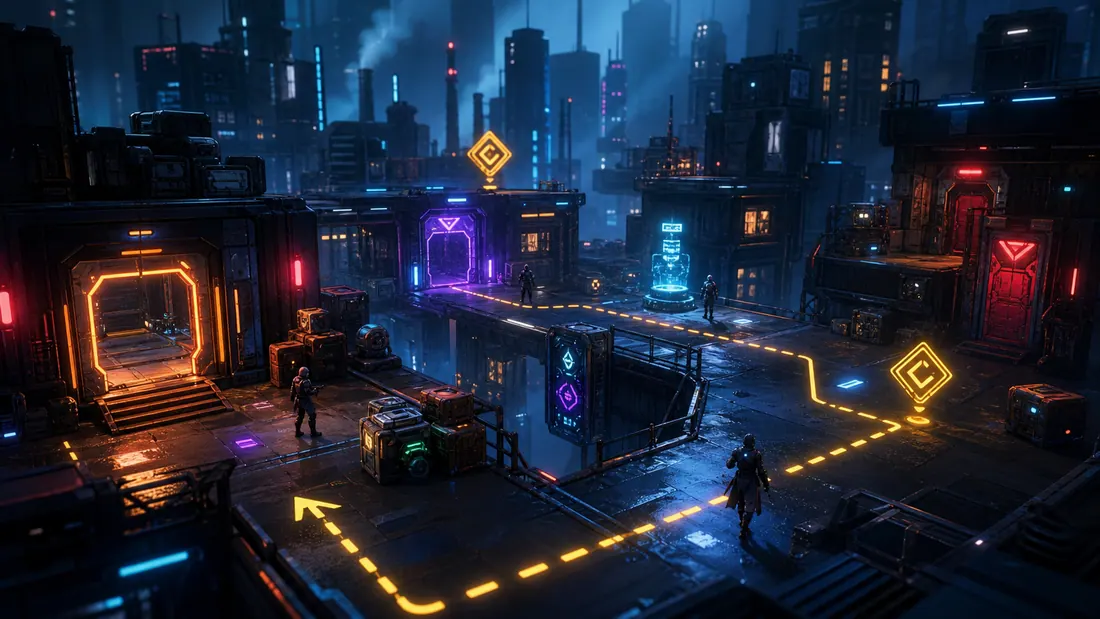
Start with a short route: front view, side view, partial occlusion, then return. Save comparable frames at fixed points. If the desk changes size on the return view, or the window moves relative to the wall, record a spatial failure even if each individual frame looks polished. This is an evaluation proposal; it is not a report of Atlas making those errors.
Generated views and reconstructed space solve different problems
World Labs' functional taxonomy separates systems that produce observations, systems that represent state and systems that choose actions. That is a useful lens for evaluating a deliverable: an image shows an appearance, while a downstream program may need structure it can inspect.
A reconstruction workflow should identify what is measured, what is inferred and what remains unavailable. Sparse reference views leave occluded regions uncertain. More input is only useful when it adds relevant coverage; several nearly identical views can leave the same hidden surface unresolved.
Before calling a result production-ready, check the representation and intended consumer. Can your tool read it? Does scale remain consistent? Can a designer isolate or replace an object? Is collision available or separately authored? A rendered walkthrough alone cannot settle those questions.
| Needed output | Evidence to request | What it does not establish |
|---|---|---|
| A camera-controlled clip | Repeatable path and stable landmarks | Editable geometry |
| A spatial scene | Inspectable representation and scale checks | Gameplay rules |
| An engine-ready environment | Import, editing, performance and collision checks | Automatic completion of a game |
Evaluate a scene from camera path to interaction
Choose a room or courtyard with a few distinctive landmarks rather than a large, visually busy landscape. Define the intended deliverable before generation: a pitch clip, a spatial reference or an editable scene. Each requires a different acceptance test.
Use this sample brief as a starting point: preserve the relative positions of the entrance, a central object and a distant landmark; follow one short camera route; identify which surfaces were unseen in the references; and deliver the representation required by the next tool. Use assets you have permission to provide.
Keep the original input set, the requested path and the accepted output together. Record failures as specific observations, such as a landmark shifting between views, rather than a single quality score. If a test is not possible because the interface does not expose the relevant control, mark it untested rather than passed.
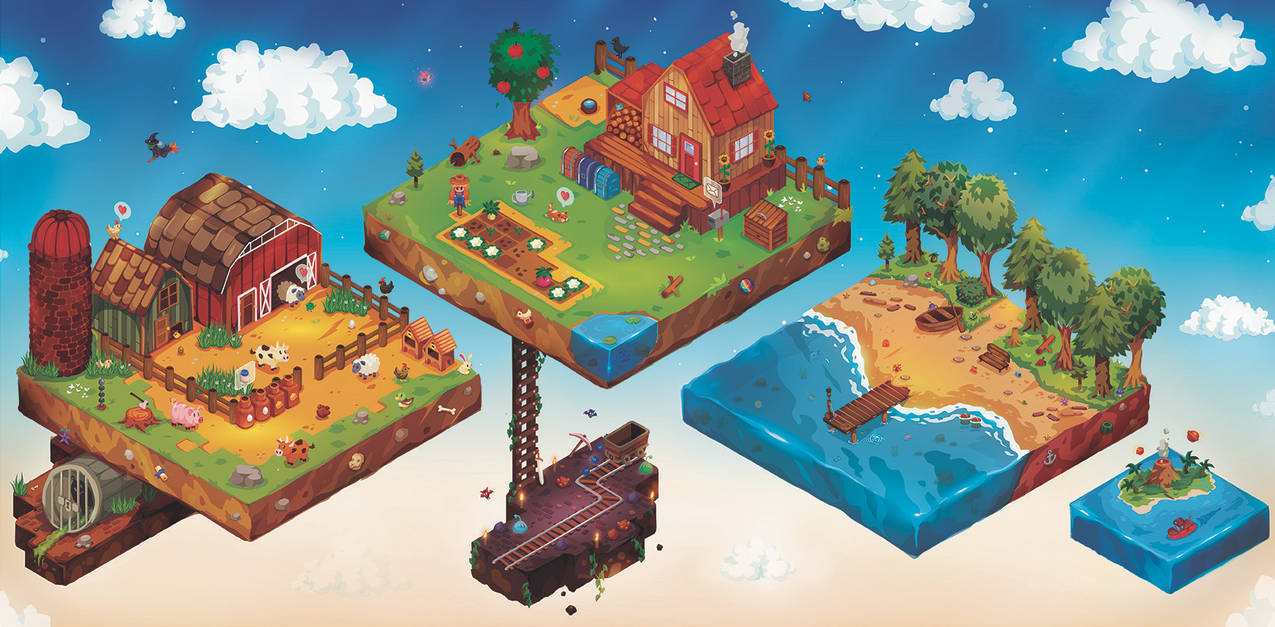
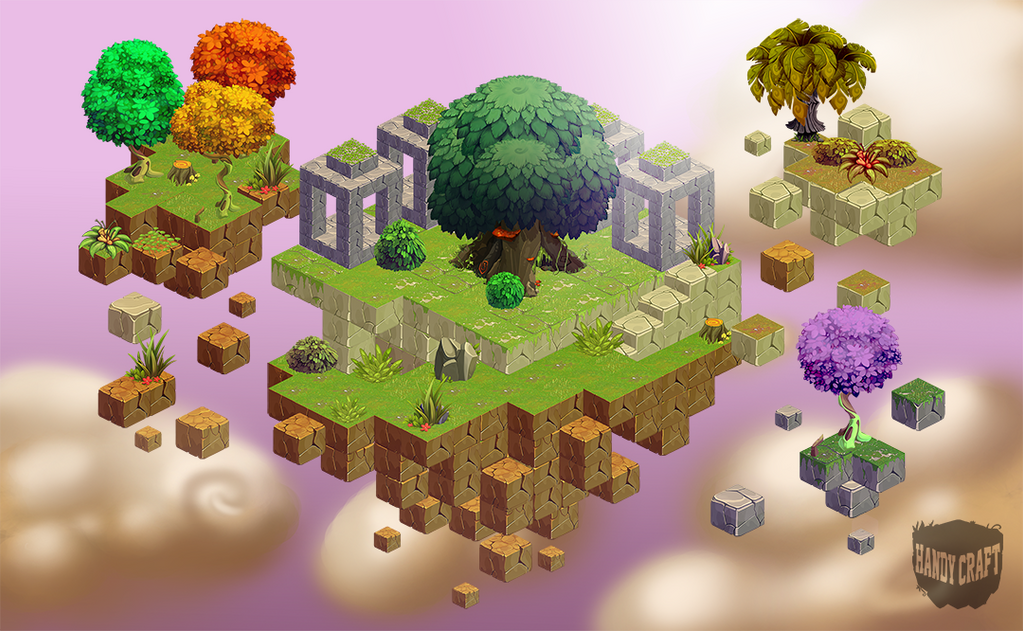
Previsualization is a narrower and more testable starting point than asking a model to build a complete game. A team could use spatial references to discuss sightlines, camera placement or the relationship between a landmark and a player route. Those are suggested applications, not claims that Atlas has replaced a level editor.
Simulation games offer a useful reference for the difference between scenery and a working system. Observe which objects respond to input, what persists after an action and how the player sees a state change. Those requirements go beyond making a new viewpoint look plausible.
A game still needs intentional rules, interaction, state handling and testing. Even a visually consistent scene may require collision work, object organization and performance optimization. Judge the benefit by how much usable work reaches the next stage, not by how impressive the first preview looks.
- Input: reference coverage, resolution and permitted use.
- Control: repeatability of the requested path and framing.
- Consistency: landmark position, scale and occlusion.
- Delivery: supported format, editability and runtime checks.
- Access: exact product, model and account evidence.
The deliverable matters more than the demo
Atlas points toward more controllable spatial generation, but the useful decision is specific: does the available tool help produce the artifact your next stage needs? Keep announced capability, accessible functionality and validated output separate. That distinction lets you experiment without turning an encouraging demonstration into a production guarantee.
For player-facing inspiration, explore Elseland AI and compare how finished games communicate space and action. Use those observations to sharpen your evaluation criteria; the linked games are not presented as Atlas-generated examples.
Sources and further reading
- Atlas announcement
Published September 1, 2026. Vendor capability claims; no account access verified.
- World API announcement
Published January 21, 2026. Describes Marble, not proof of Atlas access.
- A functional taxonomy of world models
Published June 3, 2026. Conceptual framework, not an independent benchmark.
Next step