
browser game accessibility is useful only when it improves a result the player can see, understand, and control. W3C WAI develops accessibility standards and evaluation material for web content and digital products. Browser games add fast input, canvas rendering, motion, audio, timing, and game-state challenges that require both WCAG-informed implementation and playtesting with disabled players.
This guide is designed for browser-game designers, frontend developers, QA teams, producers, and accessibility reviewers. It connects the current topic to the practical AI game QA checklist, giving readers a way to compare a public launch or known game-design pattern with a broader production workflow.
Elseland connects this editorial analysis with playable browser examples. The article uses first-party documentation for time-sensitive facts and names well-known games only as public design cases. Where no controlled Elseland test exists, the text says so. Recommendations are conditional on the target build, audience, performance budget, safety requirements, and current platform rules.
Quick read
Key takeaways
- Provide keyboard and touch paths, remapping, visible focus, and alternatives to gestures or rapid repeated input.
- Never communicate a critical rule through color, sound, motion, or timing alone.
- Respect reduced-motion preferences and provide controls for camera shake, flashes, particles, and animation intensity.
- Automated checks help with the surrounding page; real game-state testing still requires human and assistive-technology review.
Map Accessibility Across the Whole Browser Game
Start with the player-visible decision, not the novelty of the technology. The accessible experience includes the page, navigation, consent, loading, controls, canvas, menus, tutorial, HUD, audio, errors, pause, settings, results, and recovery. This framing keeps the section useful after launch-week excitement fades, because the reader can evaluate the same decision against a later model, engine version, browser, or platform rule.
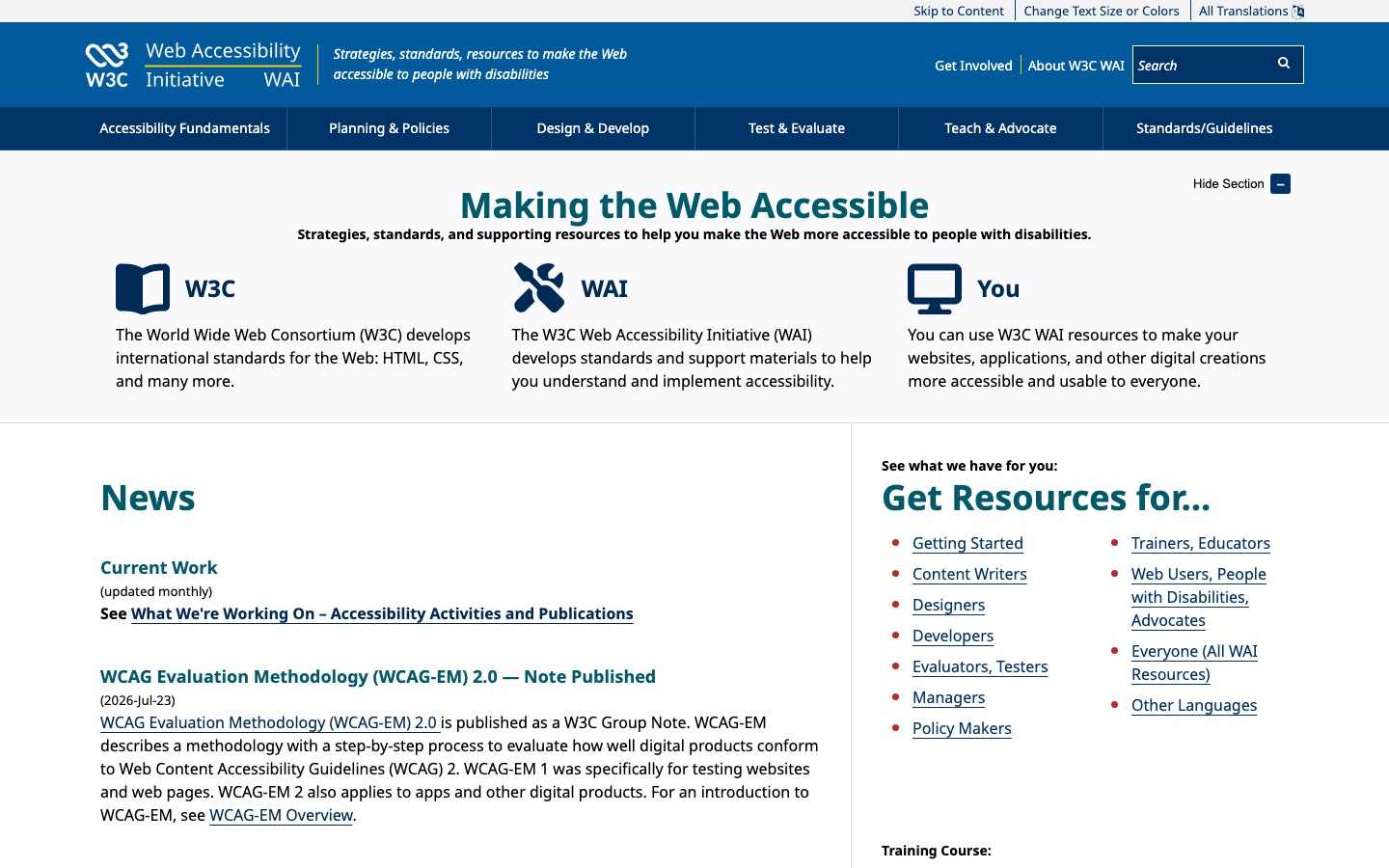
The W3C Web Accessibility Initiative provides the primary evidence for this part of the guide. It establishes the documented feature or public design context; it does not prove universal quality, player preference, production readiness, or an endorsement of Elseland. Read the W3C Web Accessibility Initiative alongside the dated notes in this article before relying on the claim in a shipping decision.
A practical implementation begins with a written contract for inputs, outputs, failure states, and approval. Trace a complete session with keyboard only, screen magnification, reduced motion, muted audio, high zoom, touch, and at least one assistive-technology review. The related AI game QA checklist offers a second Elseland perspective on the workflow, so teams can move from the current topic into a concrete production or play context without treating this page as an isolated answer.
The main failure mode is easy to understate: A compliant landing page can hand focus into an inaccessible canvas where goals, buttons, game state, errors, and exits are invisible to the player. Record the expected result before the test, capture what actually happened, and decide whether the gap is acceptable, fixable, or large enough to reject the approach. A polished output without that record is a demo; a reviewed output with a reproducible decision can become production evidence.
- Define the expected perceivable feedback result before generating or integrating anything.
- Save the exact input, version, settings, output, and build where the decision was reviewed.
- Test one normal case, one boundary case, and one deliberate failure case.
- Assign a named owner for revision, approval, and re-checking after a tool or platform update.
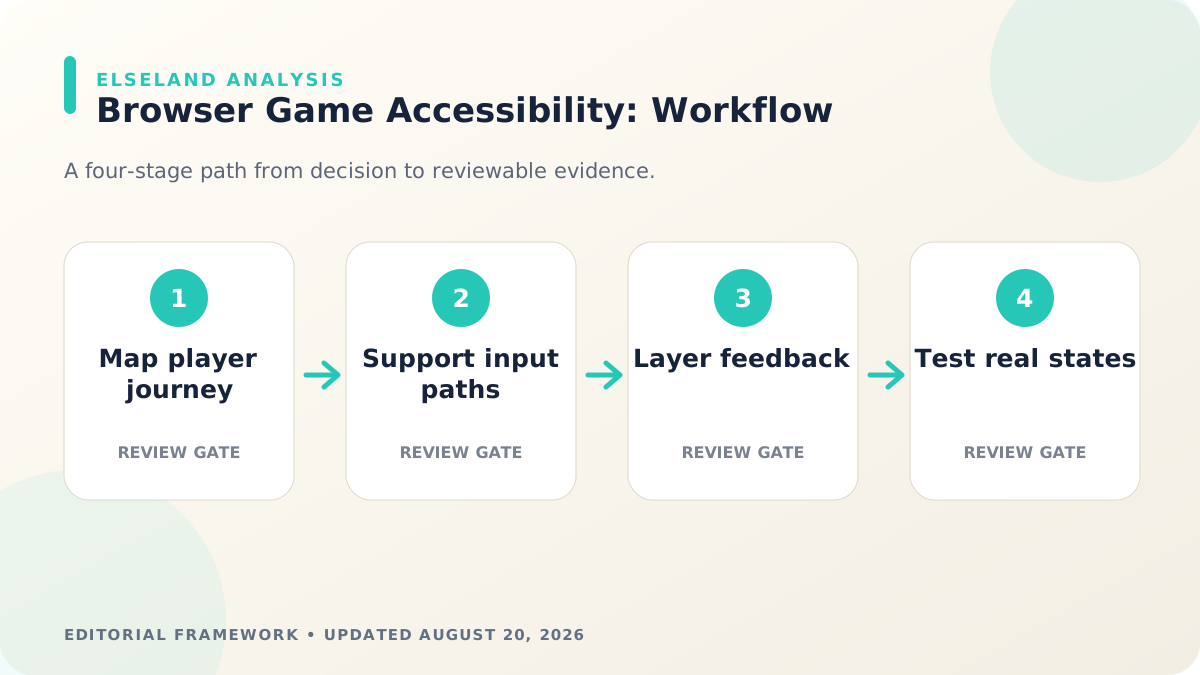
Support Keyboard, Touch, Remapping, and Focus
The useful question is not whether the feature looks impressive in a demonstration, but whether a team can control it in production. Players need equivalent actions across devices, predictable focus, no keyboard traps, remappable controls, sufficient target size, and alternatives to complex or path-based gestures. This framing keeps the section useful after launch-week excitement fades, because the reader can evaluate the same decision against a later model, engine version, browser, or platform rule.
The WCAG 2.2 provides the primary evidence for this part of the guide. It establishes the documented feature or public design context; it does not prove universal quality, player preference, production readiness, or an endorsement of Elseland. Read the WCAG 2.2 alongside the dated notes in this article before relying on the claim in a shipping decision.
Build one narrow vertical slice before expanding the workflow across a full game or content library. Expose an HTML control surface where appropriate, show the active control method, pause during remapping, prevent conflicts, and preserve settings locally. To keep the recommendation grounded in playable interactions, the AI game platform collection lets readers compare how current examples communicate goals, state changes, feedback, and recovery instead of judging the idea from a static demo alone.
The main failure mode is easy to understate: A game can technically accept keyboard input while hiding focus, intercepting browser shortcuts, requiring simultaneous holds, or making menus impossible to leave. Record the expected result before the test, capture what actually happened, and decide whether the gap is acceptable, fixable, or large enough to reject the approach. A polished output without that record is a demo; a reviewed output with a reproducible decision can become production evidence.
- Define the expected operable controls result before generating or integrating anything.
- Save the exact input, version, settings, output, and build where the decision was reviewed.
- Test one normal case, one boundary case, and one deliberate failure case.
- Assign a named owner for revision, approval, and re-checking after a tool or platform update.
Communicate Game State Beyond Color
Treat the public example as evidence of a capability boundary, then translate that boundary into a game-design requirement. Pieces, teams, hazards, rarity, health, pathing, success, and failure should use shape, symbol, position, label, pattern, animation, or text in addition to hue. This framing keeps the section useful after launch-week excitement fades, because the reader can evaluate the same decision against a later model, engine version, browser, or platform rule.
The WAI accessibility resources provides the primary evidence for this part of the guide. It establishes the documented feature or public design context; it does not prove universal quality, player preference, production readiness, or an endorsement of Elseland. Read the WAI accessibility resources alongside the dated notes in this article before relying on the claim in a shipping decision.
Make the review gate observable: another developer should be able to reproduce the result from the saved build and source record. Test common color-vision simulations, grayscale, contrast, small screens, bright environments, and crowded late-game states without relying on one filter preset. The related play free online games offers a second Elseland perspective on the workflow, so teams can move from the current topic into a concrete production or play context without treating this page as an isolated answer.
The main failure mode is easy to understate: A palette that looks distinct in a static screenshot can become unreadable under effects, compression, overlap, motion, or low-quality mobile displays. Record the expected result before the test, capture what actually happened, and decide whether the gap is acceptable, fixable, or large enough to reject the approach. A polished output without that record is a demo; a reviewed output with a reproducible decision can become production evidence.
- Define the expected understandable rules result before generating or integrating anything.
- Save the exact input, version, settings, output, and build where the decision was reviewed.
- Test one normal case, one boundary case, and one deliberate failure case.
- Assign a named owner for revision, approval, and re-checking after a tool or platform update.
Reduce Motion, Flashing, and Camera Discomfort
Start with the player-visible decision, not the novelty of the technology. Parallax, screen shake, zoom, rapid particles, auto-rotation, motion blur, hit-stop, and flashing feedback can create barriers or health risks for some players. This framing keeps the section useful after launch-week excitement fades, because the reader can evaluate the same decision against a later model, engine version, browser, or platform rule.
The source record for this section is included in the article's evidence list. Use it to establish documented behavior or public design context, then keep project-specific performance, player preference, rights, and release conclusions tied to the actual artifact and build under review.
A practical implementation begins with a written contract for inputs, outputs, failure states, and approval. Respect prefers-reduced-motion, add granular settings, keep critical information when effects are reduced, and review flash frequency and contrast against current guidance. The related best casual games offers a second Elseland perspective on the workflow, so teams can move from the current topic into a concrete production or play context without treating this page as an isolated answer.
The main failure mode is easy to understate: A single master toggle may remove visual noise but also remove the only cue for damage, direction, timing, or success. Record the expected result before the test, capture what actually happened, and decide whether the gap is acceptable, fixable, or large enough to reject the approach. A polished output without that record is a demo; a reviewed output with a reproducible decision can become production evidence.
- Define the expected robust recovery result before generating or integrating anything.
- Save the exact input, version, settings, output, and build where the decision was reviewed.
- Test one normal case, one boundary case, and one deliberate failure case.
- Assign a named owner for revision, approval, and re-checking after a tool or platform update.
Provide Audio Controls and Visual Alternatives
The useful question is not whether the feature looks impressive in a demonstration, but whether a team can control it in production. Music, effects, dialogue, spatial cues, and warning sounds require independent volume control, captions where speech matters, and visual or haptic equivalents for essential information. This framing keeps the section useful after launch-week excitement fades, because the reader can evaluate the same decision against a later model, engine version, browser, or platform rule.
The source record for this section is included in the article's evidence list. Use it to establish documented behavior or public design context, then keep project-specific performance, player preference, rights, and release conclusions tied to the actual artifact and build under review.
Build one narrow vertical slice before expanding the workflow across a full game or content library. Label speakers and meaningful sounds, allow replay of important dialogue, avoid autoplay, support mute from the first interaction, and test without audio. For a shorter comparison loop, the minigame platform provides compact sessions where pacing, input clarity, accessibility, restart behavior, and player feedback can be inspected directly.
The main failure mode is easy to understate: Captions that only transcribe words can omit off-screen hazards, tone, identity, timing, or action cues that hearing players receive. Record the expected result before the test, capture what actually happened, and decide whether the gap is acceptable, fixable, or large enough to reject the approach. A polished output without that record is a demo; a reviewed output with a reproducible decision can become production evidence.
- Define the expected perceivable feedback result before generating or integrating anything.
- Save the exact input, version, settings, output, and build where the decision was reviewed.
- Test one normal case, one boundary case, and one deliberate failure case.
- Assign a named owner for revision, approval, and re-checking after a tool or platform update.
Test Accessibility With Real Players and States
Treat the public example as evidence of a capability boundary, then translate that boundary into a game-design requirement. Automated tools can inspect DOM semantics and contrast, but game accessibility depends on timing, cognition, motor load, feedback, difficulty, and whether options work during real play. This framing keeps the section useful after launch-week excitement fades, because the reader can evaluate the same decision against a later model, engine version, browser, or platform rule.
The source record for this section is included in the article's evidence list. Use it to establish documented behavior or public design context, then keep project-specific performance, player preference, rights, and release conclusions tied to the actual artifact and build under review.
Make the review gate observable: another developer should be able to reproduce the result from the saved build and source record. Include disabled players or specialist reviewers early, test onboarding and stressful states, record barriers by severity, and verify fixes across the complete session. The related play free online games offers a second Elseland perspective on the workflow, so teams can move from the current topic into a concrete production or play context without treating this page as an isolated answer.
The main failure mode is easy to understate: Late compliance testing can identify issues after rules, art, controls, audio, and progression have become too coupled to change safely. Record the expected result before the test, capture what actually happened, and decide whether the gap is acceptable, fixable, or large enough to reject the approach. A polished output without that record is a demo; a reviewed output with a reproducible decision can become production evidence.
- Define the expected operable controls result before generating or integrating anything.
- Save the exact input, version, settings, output, and build where the decision was reviewed.
- Test one normal case, one boundary case, and one deliberate failure case.
- Assign a named owner for revision, approval, and re-checking after a tool or platform update.
A Production Decision Framework for Browser Game Accessibility
A useful first draft should help a team make a bounded decision. For browser game accessibility, that means separating what the technology or design pattern can produce from what the project can reliably integrate, what the player can understand, and what the release process can defend. Mixing those questions creates false confidence: a visually strong result can still fail performance, safety, accessibility, or maintenance review.
Score each dimension against the same artifact or build. Do not compare a provider's polished showcase with an unrelated local prototype and call the result a benchmark. If direct testing is unavailable, label the analysis as documentation-based, retain uncertainty, and define the smallest experiment needed to replace inference with observation.
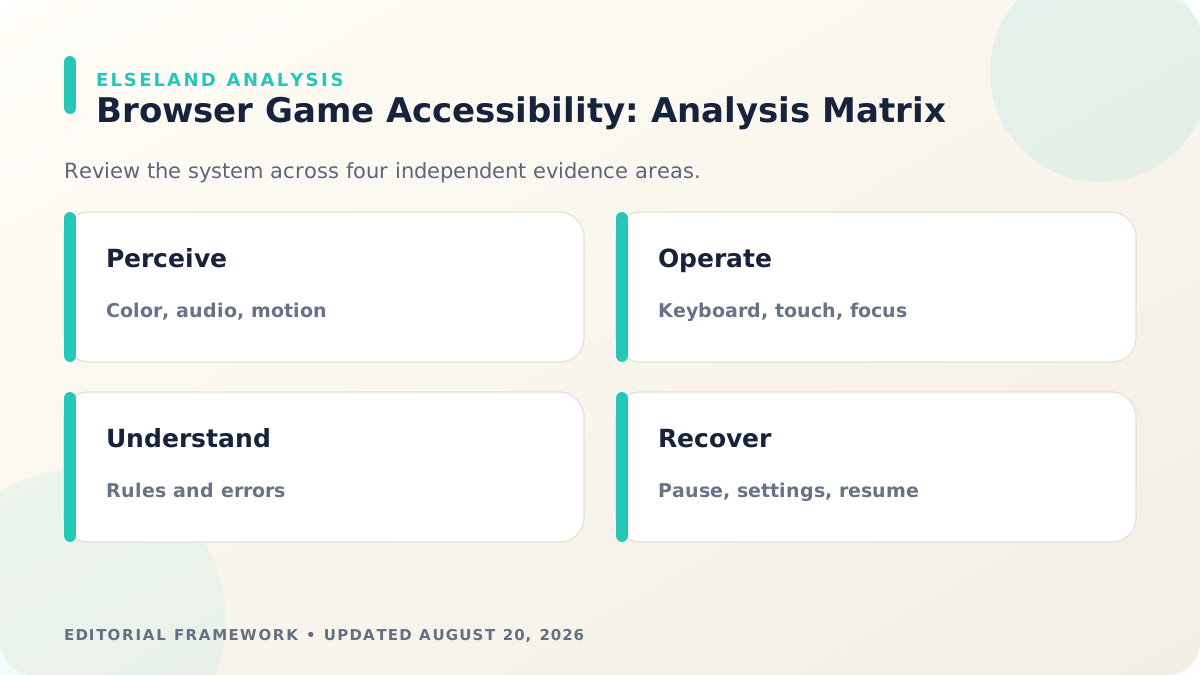
The table below is deliberately tool-neutral. It can be reused after a model, engine, API, or platform changes. A pass requires evidence in all four rows; strength in one row should not compensate for a release-blocking failure in another.
| Review dimension | Question | Evidence to retain | Fail condition |
|---|---|---|---|
| Perceivable feedback | Can it produce the required player-visible result? | Inputs, outputs, version, and selection criteria | The result depends on an undocumented lucky sample |
| Operable controls | Can the result enter the real pipeline without hidden rework? | Source files, transforms, code changes, and build logs | The workflow breaks the runtime, format, or ownership contract |
| Understandable rules | Can a player understand, control, and recover from it? | Fresh-player notes, accessibility checks, and failure captures | The feature obscures rules, removes agency, or fails without explanation |
| Robust recovery | Can the team ship and maintain it responsibly? | Rights, disclosures, approvals, monitoring, and rollback plan | The team cannot explain provenance, policy fit, or operational ownership |
Field Validation Checklist for browser game accessibility
Run this checklist after the first plausible result and before scaling. Keep an untouched baseline beside the candidate revision. The baseline reveals whether a change actually improved the intended dimension or merely moved the problem somewhere less visible.
Use the real delivery environment whenever possible. Browser, mobile, engine editor, storefront, and local inference conditions expose different constraints. Record the device, browser or engine version, network state, content version, and reviewer so a later editor can reproduce the observation instead of relying on memory.
End the review with one of four statuses: pass, conditional pass, revise, or reject. Conditional pass requires a bounded exception, an owner, and a trigger for review. “Looks good” is not a release status because it says nothing about the evidence, intended use, or known limit.
- Confirm the article's documented capability against the current official source and access date.
- Test the smallest complete player loop, not only an isolated asset or conversation response.
- Capture latency, performance, clarity, safety, and recovery behavior where they affect the experience.
- Ask a reviewer who did not build the feature to explain the rules and identify the next action.
- Verify anchor-text links, source attributions, disclosures, and rights records before publishing.
- Preserve the accepted artifact and the reason it passed; repeat the affected checks after any material update.
Evidence, Limits, and the Editorial Position on Browser Game Accessibility
This guide is a documentation-based editorial analysis, not a claim that Elseland conducted a controlled benchmark of every named product or game. Official sources establish public features, rules, release timing, and design context. They do not establish universal performance, legal clearance, commercial success, or the experience every player will have.
Named games are used as public case studies. The article does not imply access to private design data, an affiliation with the developer, or knowledge of internal metrics. When the analysis moves from a documented fact to an interpretation, the wording should remain conditional and identify the design principle being inferred.
Before publication, an editor should re-open time-sensitive sources, verify that screenshots still match the English version of the referenced page, and update absolute dates where needed. The strongest conclusion is therefore practical and bounded: use the approach when its assumptions match the project, test it in the real context, and keep enough evidence to revisit the decision.
| Statement type | Required treatment |
|---|---|
| Officially documented fact | Use an anchor-text citation and an absolute date for unstable details |
| Observed project result | Name the build, environment, sample, and method |
| Editorial interpretation | State the criteria and the tradeoff; avoid presenting inference as fact |
| Forecast or roadmap | Separate confirmed, reported, and speculative elements |
Frequently asked questions
What is the quickest way to evaluate browser game accessibility?
Choose one player-visible outcome, build the smallest complete loop that contains it, and define pass criteria before testing. Use the same input and review dimensions for the baseline and candidate so the comparison reflects the change rather than a different task.
Who is this Browser Game Accessibility guide for?
It is written for browser-game designers, frontend developers, QA teams, producers, and accessibility reviewers. Specialists can use the decision tables as a handoff tool, while smaller teams can use the field checklist to avoid scaling an attractive but unverified result.
Does an official product demo prove the workflow is production-ready?
No. A demo can establish that a provider is presenting a capability, but production readiness also depends on repeatability, integration cost, player clarity, performance, safety, rights, and maintenance in the target project.
How should teams document AI-assisted game work?
Store the prompt or input, provider and version, settings, generated output, human edits, reviewer, decision date, and final asset or build identifier. Add rights, disclosure, safety, and rollback records wherever they affect release approval.
How many test cases are enough for an initial draft?
Start with at least one normal case, one boundary case, and one deliberate failure case. That is not a universal benchmark, but it is enough to reveal whether the workflow has a defined recovery path before the team invests in a larger evaluation.
When should a team reject the approach instead of revising it?
Reject it when the core player outcome conflicts with the project's performance, control, safety, rights, or maintenance requirements and no bounded change can close the gap. Preserve the failed evidence so the same unsuitable approach is not repeated later.
Can the same framework be used after the platform or model changes?
Yes. The four review dimensions are intentionally independent of one vendor. Re-run the time-sensitive source checks and affected tests, then compare the new result with the preserved baseline rather than assuming a newer version is automatically better.
What should readers do after finishing this guide?
Use the field checklist on one real artifact or playable loop, then continue with the linked Elseland guide that best matches the next production decision. If the goal is simply to play, explore the game library and compare the analysis with an experience you can test directly.
Sources and further reading
- W3C Web Accessibility Initiative
Standards, support material, and current accessibility work.
- WCAG 2.2
Current web content accessibility recommendation.
- WAI accessibility resources
Design, development, evaluation, and conformance resources.
Next step