
A game that opens is not necessarily a game that is ready. The player may be unable to understand the objective, generated text may violate a safety policy, an asset may lack provenance, or a route may disappear from discovery metadata after a content update.
Use this checklist after the prototype loop is approved and before any deployment decision. For a smaller first-pass process, start with the 48-hour browser game plan.
Quick read
Key takeaways
- Test deterministic gameplay paths separately from variable generated output.
- Record prompts, models, source assets, licenses, human edits, and disclosure status.
- Use real target devices, input methods, network conditions, and fresh-player sessions.
- Ship only with monitoring, fallback behavior, a rollback path, and an accountable human approver.
Gameplay and State
- Goal, controls, feedback, win, loss, pause, resume, restart, and saved state work.
- The first minute is understandable without developer coaching.
- Repeated inputs, edge cases, and rapid restarts do not corrupt state.
- Generated variation cannot create impossible objectives or unrecoverable states.
Generated Content and Safety
- Prompts and outputs are logged at the level required for diagnosis and policy.
- Blocked content categories and adversarial prompts are tested.
- Live generation has timeout, refusal, retry, moderation, and safe fallback behavior.
- Pre-generated assets have model, date, source, license, prompt, and human-edit records.
Readability, Input, and Accessibility
Check keyboard, pointer, touch, controller, focus visibility, remapping where supported, text size, contrast, motion, audio alternatives, and color-independent state. Test the smallest supported viewport and zoom behavior.
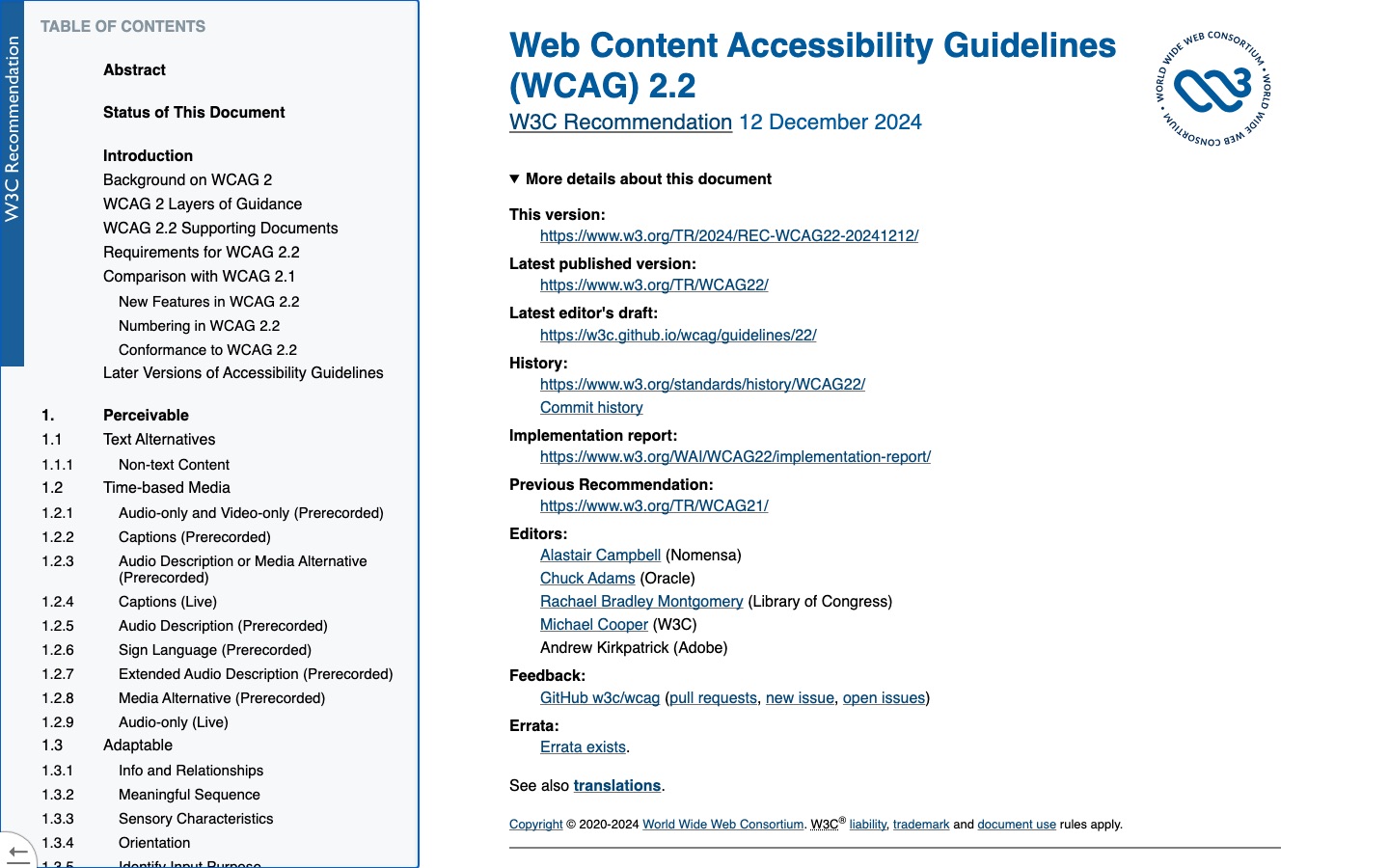
WCAG is written for web content rather than game design alone, but its interaction, contrast, motion, and input guidance provides a useful baseline for browser-facing UI.
Performance, Compatibility, and Network
- Measure loading, frame pacing, memory, long sessions, scene transitions, and repeated generation.
- Test supported browsers and lower-power devices, not only the development machine.
- Simulate slow, intermittent, and offline network states where relevant.
- Verify asset caching, versioning, error reporting, and graceful degradation.
Rights, Disclosure, Discovery, and Operations
Review licenses, likeness and trademark risk, platform AI disclosure, age and safety positioning, privacy, analytics, canonicals, metadata, and sitemap inclusion. Confirm that the shipped build matches the reviewed build.
Finish with a production build, automated SEO validation, a manual playtest, monitoring, rollback instructions, and explicit human approval. Browse the game library to check the same discovery path a player will use.
Build a Risk-Based QA Matrix
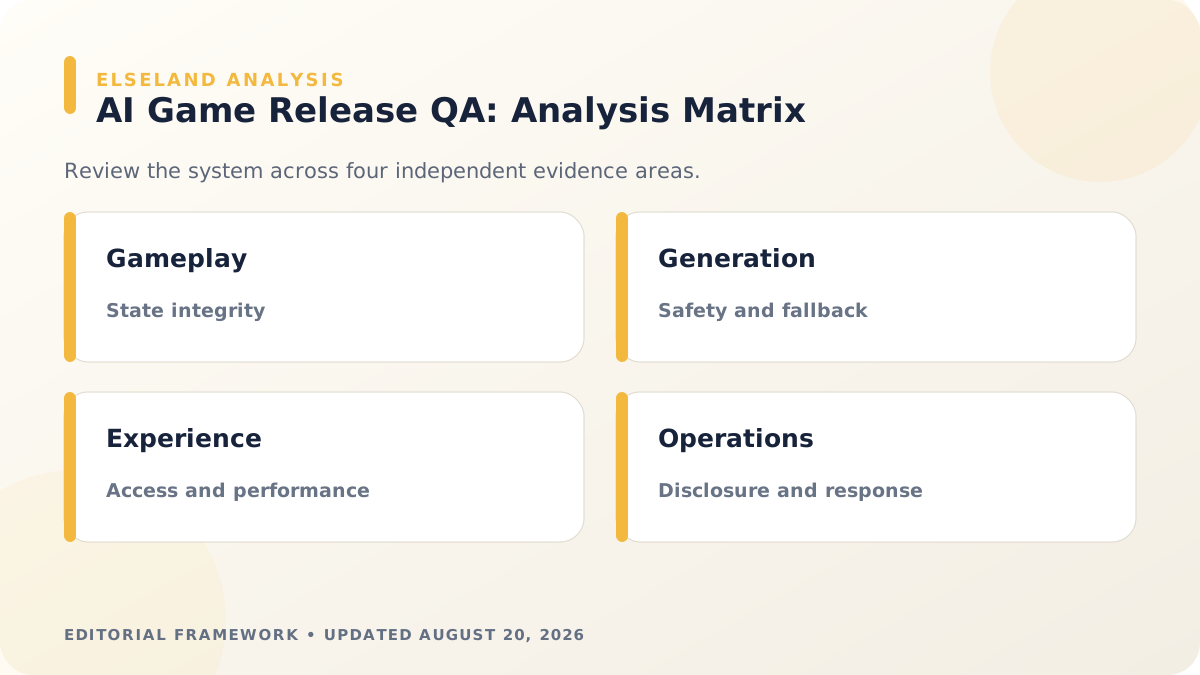
List the deterministic core loop, pre-generated AI assets, live-generated systems, external services, public routes, and release operations. Score each by player impact, likelihood, detectability, and reversibility. A live dialogue generator with player input receives deeper adversarial and fallback testing than a reviewed background texture.
Map each high-risk item to an owner, automated checks, manual scenarios, evidence location, release threshold, monitoring signal, and rollback action. The result is a release control system rather than a checklist copied into a document and forgotten.
| System | Primary risk | Required evidence |
|---|---|---|
| Core gameplay | Broken or impossible state | Automated invariants and human playthrough |
| Pre-generated assets | Rights, artifact, or disclosure gap | Provenance and visual review |
| Live generation | Unsafe, unavailable, or incoherent output | Adversarial tests, guardrails, fallback |
| Browser UI | Input or accessibility failure | Keyboard, touch, contrast, motion tests |
| Release pipeline | Wrong build or missing discovery | Build ID, metadata, sitemap, rollback |
Separate Release Gates From Test Cases
Test cases describe actions and expected results. Release gates define the evidence required for a human decision. A thousand passing low-risk tests should not outweigh one missing live-generation fallback or an unresolved ownership question.
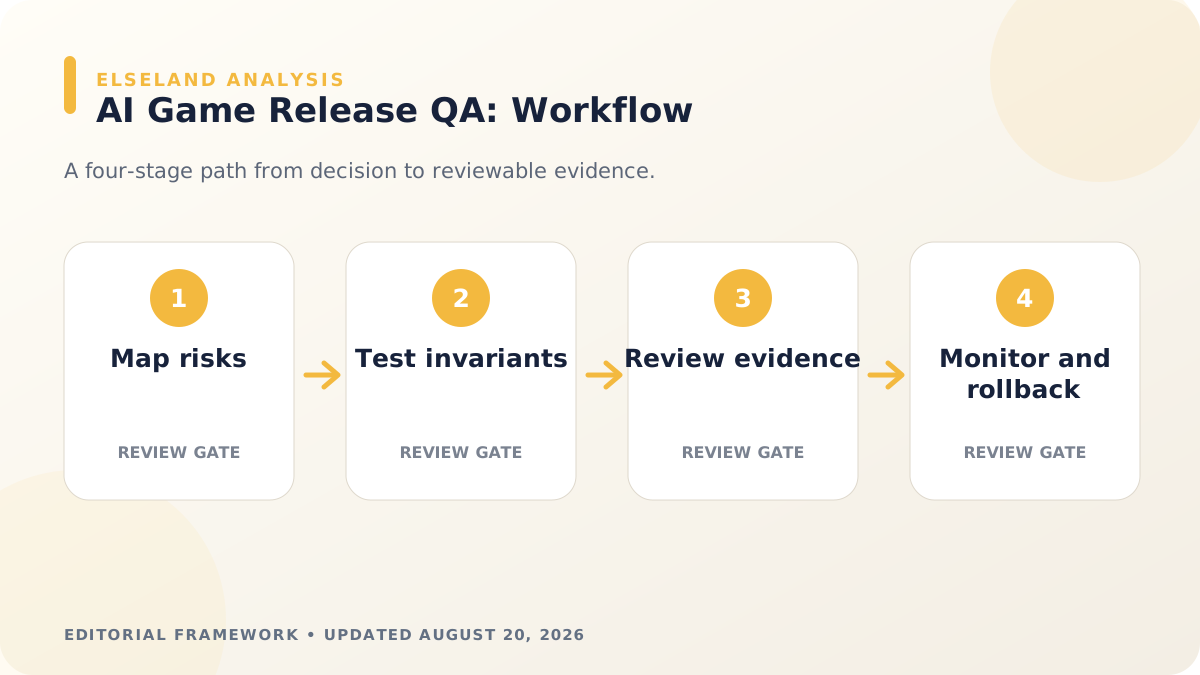
Create gates for gameplay integrity, generated-content safety, accessibility, performance, rights and disclosure, discovery, and operations. Each gate has an accountable approver and a small set of blockers that cannot be waived silently.
- Gameplay gate: objectives, state integrity, save, restart, and recovery
- Generation gate: schemas, guardrails, moderation, fallback, and logging
- Experience gate: readability, input, accessibility, performance, and compatibility
- Release gate: rights, disclosure, metadata, sitemap, privacy, analytics
- Operations gate: monitoring, incident owner, feature disable, and rollback
Test Variable Output Without Pretending It Is Deterministic
Use invariants and distributions. A generated quest may vary in wording, but it must reference valid entities, produce reachable goals, stay within length and safety constraints, and preserve save-state compatibility. Sample across languages, adversarial inputs, network failures, and model refusals.
Steam's current survey asks about live-generated guardrails, while WCAG provides a baseline for browser interface accessibility. Link platform and standards evidence directly to the relevant gate so future reviewers can re-check rules instead of relying on memory.
| Symptom | Likely cause | Next check |
|---|---|---|
| Output varies too widely | Prompt, temperature, context, or schema | Constrain structure and validate invariants |
| Moderation blocks normal play | Guardrail threshold or missing fallback | Test false positives and recovery |
| Timeout corrupts state | Generation coupled to transaction | Use pending state and idempotent retry |
| Bug cannot be reproduced | Missing model/input/version log | Capture privacy-aware diagnostic context |
| Rules changed after QA | Unpinned service or prompt | Version dependencies and re-run gate |
Release Evidence Pack
The evidence pack should let a reviewer connect the product claim, test result, source rule, and exact build. Store concise summaries with links to detailed logs instead of burying approval in screenshots and chat threads.
After launch, treat monitoring and incident review as continued QA. Generated systems can change through model updates, prompt changes, moderation policy, or provider behavior even when application code is unchanged.
- Risk register and owners cover deterministic, generated, external, and operational systems.
- High-risk invariants and failure paths have automated and manual evidence.
- Accessibility, device, browser, network, and long-session tests reflect supported use.
- AI provenance and current platform disclosures match the exact build.
- Monitoring detects generation failure, policy events, performance, and state corruption.
- Feature-disable, safe fallback, rollback, and incident communication are rehearsed.
What the Primary Sources Establish About AI Game QA Checklist
Our evidence baseline starts with the W3C WCAG 2.2, accessed August 20, 2026. We use it to establish documented behavior, terminology, or constraints—not to claim that the source endorses Elseland's workflow or conclusions. The practical artifact under review is a risk-based release matrix with reproducible tests, accessibility evidence, provenance records, guardrails, ownership, and rollback.
That distinction is central to E-E-A-T. A first-party page can establish what a format, tool, platform, model, or game team publicly documents. It cannot prove that a particular asset is fast, accessible, legally cleared, fun, or production-ready. Those conclusions require separate observation, measurement, specialist review, or player evidence tied to the actual project.
For this topic, the decision is whether the reviewed build is safe, understandable, operable, and accurately represented at release. The following observations turn the official reference into a reviewable production record rather than a decorative citation:
| Evidence layer | What it can support | What it cannot support alone |
|---|---|---|
| Official source | Documented feature, rule, format, or published design context | Project-specific quality or universal performance |
| Project measurement | Observed behavior in a named build, scene, device, or sample | Unmeasured platforms or future versions |
| Human review | Usability, visual, editorial, and production judgment | Legal certainty or population-level player behavior |
| Release record | Who approved what, when, with which evidence | Permanent compliance after inputs or rules change |
- 1. test deterministic gameplay invariants separately from probabilistic generation. Store the result with the asset or build identifier so another reviewer can reproduce the conclusion.
- 2. tie accessibility checks to actual interactions and failure states. Store the result with the asset or build identifier so another reviewer can reproduce the conclusion.
- 3. inventory every generated asset and runtime model path. Store the result with the asset or build identifier so another reviewer can reproduce the conclusion.
- 4. require a safe fallback and owner for external-service failure. Store the result with the asset or build identifier so another reviewer can reproduce the conclusion.
A Field Review Protocol for AI Game QA Checklist
Use this protocol after the first plausible output exists and before scaling the workflow. Keep one untouched baseline, one candidate revision, and one deliberately stressed case. The stressed case should expose the topic's likely failure mode—crowded scenes, extreme poses, small-screen play, unusual inputs, or a release-rule change—rather than merely repeat the easiest success case.
Run the review in the real delivery context whenever possible. Capture the tool or model version, source files, settings, target device or engine, date, and reviewer. If the work depends on a changing external service, record the response or exported artifact instead of assuming the same output can be recreated later.
A useful review ends with a decision and a next action. “Looks good” is not a gate. State whether the candidate passes, passes with a bounded exception, needs revision, or should be rejected; identify the evidence behind that status and the owner of the next check.
| Review status | Meaning | Required next action |
|---|---|---|
| Pass | All defined visual, technical, and release gates are supported by evidence | Freeze the reviewed artifact and link it to the build |
| Conditional pass | A known limitation is bounded and does not invalidate the intended use | Document the exception, owner, and trigger for re-review |
| Revise | The direction is viable but one or more gates remain unsupported | Change one controlled variable and repeat the affected checks |
| Reject | The candidate conflicts with the intended use, evidence, rights, safety, or budget | Preserve the record and choose a different approach |
- map player, content, technical, accessibility, rights, and operational risks. Record the expected result before the check, then attach the observed result and any exception after it.
- define reproducible tests and expected evidence for each risk. Record the expected result before the check, then attach the observed result and any exception after it.
- probe refusals, timeouts, repeated attempts, and indirect input. Record the expected result before the check, then attach the observed result and any exception after it.
- test keyboard, focus, contrast, motion, audio, and readable feedback. Record the expected result before the check, then attach the observed result and any exception after it.
- reconcile store claims, disclosures, and the exact shipping build. Record the expected result before the check, then attach the observed result and any exception after it.
- verify monitoring, incident response, feature disablement, and rollback. Record the expected result before the check, then attach the observed result and any exception after it.
Expert Interpretation and Limits of This AI Game Creation Guide
The strongest conclusion this guide can support is a conditional production recommendation: use the workflow when its documented assumptions match the project, and keep the evidence needed to revisit the decision. We do not infer universal model quality, player preference, legal clearance, or performance from an official screenshot, a provider example, or a single successful asset.
Experience matters here because ai game qa checklist crosses creative judgment and implementation detail. The practical review should include the people who will edit the source, integrate the result, test it in play, maintain it after release, and answer rights or policy questions. A narrow expert handoff often misses problems that appear only when those responsibilities meet.
Before publishing or shipping, repeat time-sensitive checks against the current source and exact build. Preserve dated evidence, disclose the evaluation method, and distinguish measured results from editorial inference. That record is more valuable than a confident conclusion that future reviewers cannot reproduce.
| Claim type | Editorial treatment |
|---|---|
| Documented fact | Link to W3C WCAG 2.2 and include the access date |
| Observed project result | Name the build, environment, sample, and method |
| Expert judgment | State the criteria, reviewer role, and tradeoff |
| Inference or forecast | Label it explicitly and describe what evidence could change it |
- A checklist cannot replace specialist security, accessibility, or legal review.
- Passing sampled generated outputs does not guarantee all future outputs.
- Automated audits cannot observe every usability or assistive-technology issue.
- Platform rules and model behavior can change after a release candidate is approved.
Frequently asked questions
How is QA for an AI-generated game different?
It adds variable output, moderation, provenance, model behavior, disclosure, fallback, and monitoring checks to normal gameplay, performance, compatibility, and accessibility testing.
Can automated tests validate generated content?
They can check schemas, limits, blocked patterns, invariants, routes, and regressions. Human review remains important for context, fairness, creative quality, and unexpected harm.
What should happen when live generation fails?
Use a tested timeout and safe fallback, preserve game state, explain the interruption in player language, log the diagnostic event, and avoid endless retry loops.
Who should approve an AI game release?
A named human owner should review the integrated evidence and approve release. Automation can collect evidence but should not silently broaden product or safety authority.
How many generated outputs should QA sample?
Choose a sample based on risk, variability, languages, input classes, and the cost of failure. Combine random sampling with adversarial and boundary cases, then monitor production because no finite pre-release set covers every model output.
What should be logged for an AI game bug?
Capture the build, feature and prompt version, model or service version when available, sanitized input, relevant context identifiers, output, moderation result, latency, fallback path, and state transition. Follow privacy and retention rules and avoid logging unnecessary personal content.
Can a game ship when the AI service is unavailable?
It should have a defined product decision: safe fallback, queued behavior, disabled feature, or blocked session. Test the chosen path deliberately and communicate it in player language without corrupting progress.
When must QA be repeated after launch?
Repeat affected gates after model, prompt, moderation, asset, platform-rule, dependency, or gameplay changes. Also re-test when monitoring shows drift or incidents expose an unmodeled failure class.
Sources and further reading
- Steamworks content survey
Current first-party Steam requirements for AI content disclosure and live-generation guardrails.
- W3C WCAG 2.2
Authoritative web accessibility standard for perceivable and operable interfaces.
- MDN game development
Mozilla reference for browser game technologies, development, and platform considerations.
Next step