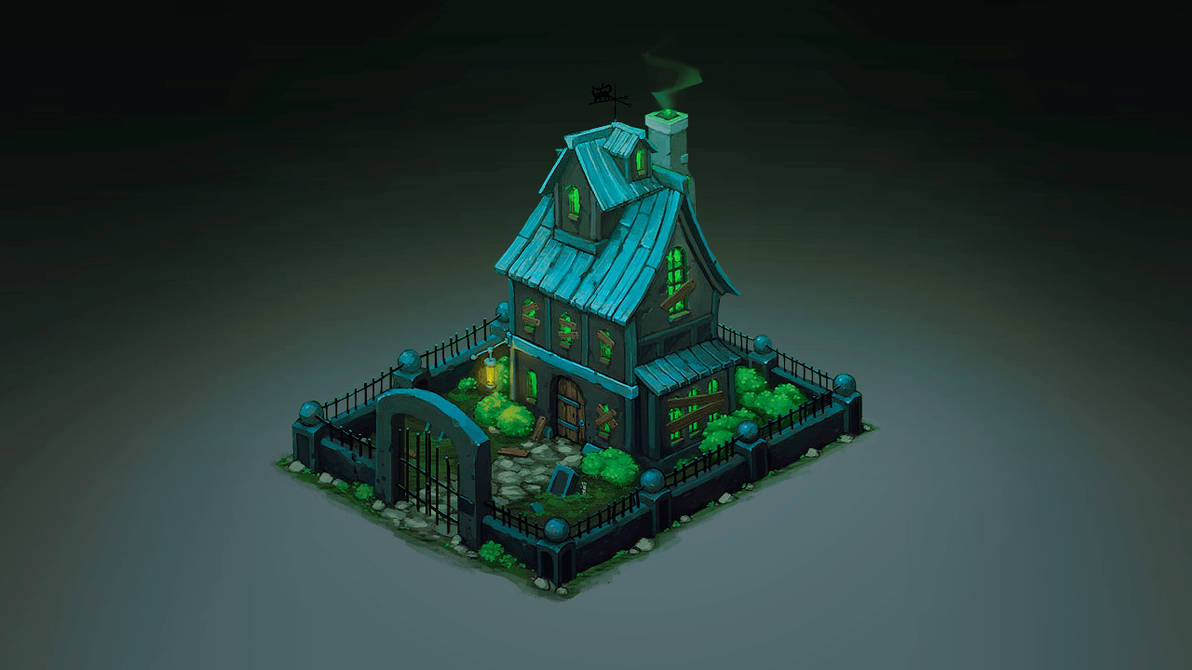
Asking what AI makes game models the best only becomes useful after you define the model: a prop, building, creature, hero character, vehicle, or modular kit. Start with a 3D game maker brief that states scale, camera distance, interaction, collision, and whether the object must animate.
Use AI output as a production candidate, not proof of readiness. The real comparison starts after export, inside the target engine, under the target camera and performance budget.
Quick read
Key takeaways
- Meshy is the broadest starting point for common export workflows.
- Sloyd is compelling for controllable props, buildings, and hard-surface assets.
- Tripo targets fast image/text-to-3D and game-oriented generation.
- Roblox Assistant is the simplest option when the final asset belongs in Roblox Studio.
Best AI for Game Models by Asset Type
| Tool | Strongest fit | Useful controls | Concrete data point | Check carefully |
|---|---|---|---|---|
| Meshy | General props and rapid variations | Text/image input, remesh, UV, rig, and export | 6 formats: GLB, FBX, OBJ, STL, USDZ, 3MF | Topology, texture packaging, and rig quality |
| Sloyd | Props, buildings, and hard-surface assets | Templates, sliders, topology control, plugins | Parametric edits after generation | Style match outside supported workflows |
| Tripo | Fast concept-to-3D and batches | Text/image generation and GLB delivery | Fast candidate generation rather than a final budget | Cleanup for deformation and close-up use |
| Roblox Assistant | Models placed directly in Roblox | Mesh/procedural generation in Studio | 10,000-triangle default; max 8 segmented parts | Triangle budget, segmentation, and platform policy |
What Game-Ready Should Mean
A game-ready label should describe constraints, not appearance. The model should have the right scale, pivot, transform, topology density, UVs, texture maps, material slots, collision, LOD strategy, and license for the project.
Characters add more requirements: a usable skeleton, clean weights, deformation tests, facial needs, animation compatibility, and a silhouette that survives the gameplay camera. Test at least five poses—neutral, crouch, full arm raise, wide stride, and a strong twist—to expose shoulder, hip, wrist, and knee failures.
- Inspect the silhouette from the real gameplay distance.
- Check normals, holes, intersecting parts, and non-manifold geometry.
- Set a triangle and texture budget before generation.
- Confirm whether textures are embedded or delivered separately.
- Create collision and LODs intentionally instead of trusting defaults.
Set a Triangle and Texture Budget Before Generation
The ranges below are conservative prototype starting points, not universal engine limits. A stylized mobile scene, a first-person PC game, and a cinematic hero asset can justify very different budgets; profile the whole scene on the slowest target device.
| Asset role | Triangle starting range | Texture starting point | LOD or reuse note |
|---|---|---|---|
| Small background prop | 300–1,500 | 256–512 px | Atlas repeated props where materials match |
| Interactive environment prop | 2,000–8,000 | 512–1,024 px | Create simple collision; add LOD if repeated often |
| Vehicle or large machine | 8,000–30,000 | 1,024–2,048 px | Separate moving parts and collision shapes |
| Third-person hero character | 15,000–60,000 | 1,024–2,048 px | Budget hair, clothing, rig, and facial needs separately |
| Mobile crowd or distant NPC | 1,500–8,000 | 512–1,024 px | Use shared rigs, materials, and aggressive LODs |
Prompt AI Game Models for the Engine
Describe function before decoration. A better brief is “low-poly market stall, readable from an isometric camera, two material slots, open front, no loose props” rather than a paragraph of cinematic adjectives.
For a set, lock scale, camera, material language, edge treatment, and color range. Consistency across twenty props matters more than one impressive standalone mesh, especially when those props must support the same AI game loop.
Run the Same Engine Import Test
Export every candidate to the same format and import it into the same test scene. Meshy documents six export formats and recommends FBX for Unity and Unreal; GLB embeds textures and is the more convenient choice for web delivery.
Measure cleanup time in minutes, not impressions. Log scale correction, material relinking, topology repair, UV work, collision, LOD creation, and rig cleanup. A model that looks slightly less detailed but saves 30 minutes per repeated prop can be the better production choice.
Frequently asked questions
What is the best AI 3D model generator for games?
Meshy is a flexible general starting point, while Sloyd can be better for controllable props and Roblox Assistant for Studio-native work. Test the same asset brief in your engine before choosing.
Are AI 3D models really game-ready?
Some are useful immediately as prototypes, but “game-ready” is not a guarantee. Check topology, UVs, materials, collisions, LODs, rigging, scale, and rights.
Should I export FBX or GLB?
FBX is common for Unity and Unreal pipelines, while GLB conveniently embeds textures and suits web workflows. Follow the target engine and project pipeline rather than a universal rule.
Can AI make rigged game characters?
Some tools offer rigging or character workflows, but deformation quality varies. Test shoulders, hips, hands, face, and extreme animation poses before production use.
How many polygons should an AI game model have?
The right budget depends on platform, camera distance, scene density, and shader cost. Set the budget from the real scene and profile on the target device.
How do I keep generated models in one art style?
Use shared references, fixed material rules, repeatable prompts, and a human cleanup pass. A small style guide should define silhouette, proportion, edge language, and palette.
Can I sell a game with AI-generated models?
Commercial use depends on the tool’s current terms, the source inputs, and the destination platform’s policies. Keep generation records and obtain legal advice for material uncertainty.
What is the best first asset to test?
Choose a medium-complexity prop that appears often and has a clear scale. It exposes topology, texture, style, and import problems without the extra complexity of a hero character.
Sources and further reading
- Meshy export and file formats
Official format guidance for Unity, Unreal, Blender, and web.
- Sloyd documentation
Official overview of parametric controls and game-oriented assets.
- Roblox Assistant mesh generation
Official Studio workflow for meshes and procedural models.
Next step