
A useful Gemini-versus-Grok comparison begins with a task, not a leaderboard. A solo creator debugging a browser prototype, a Unity team reviewing a large multimodal project, and a research-heavy design team monitoring player conversations may reasonably choose different models.
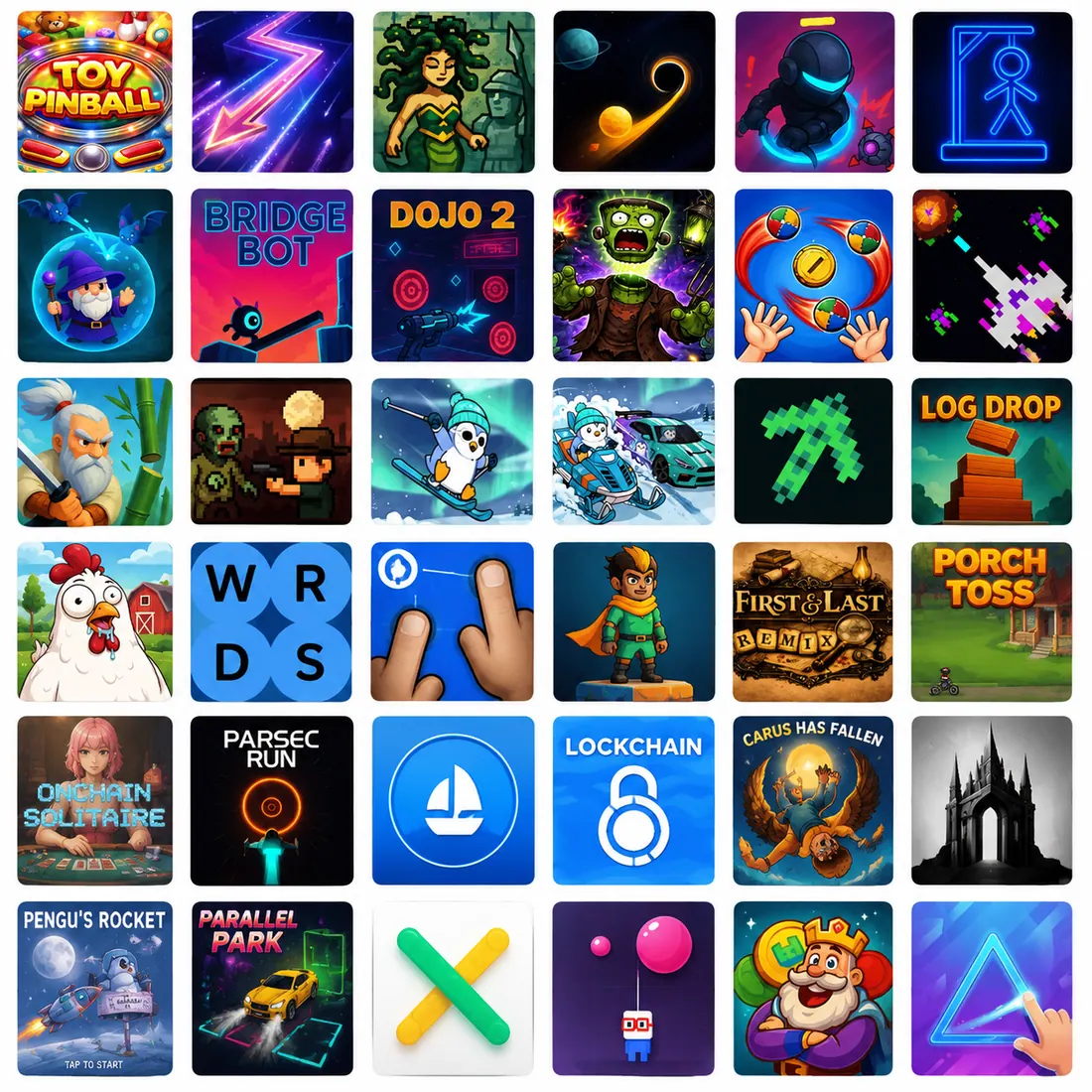
Before treating one language model as the entire production stack, browse playable games on Elseland and turn an observable mechanic, interface, or failure state into a controlled comparison task.
Quick read
Key takeaways
- Gemini 3.8 Flash is the stronger documented fit for very large multimodal project context and lower short-context API input cost during its introductory period.
- Grok 4.6 is attractive when a workflow benefits from xAI's native web search, X search, code execution, and high-effort long-running agent behavior.
- Both can support coding and tool use, but neither replaces engine builds, tests, profilers, version control, or human playtesting.
- Vendor benchmark scores are not directly interchangeable and do not measure game feel, frame rate, asset quality, or release reliability.
- Choose with a controlled trial on the same repository tasks and calculate cost per accepted change, not cost per token alone.
Gemini vs Grok: the quick verdict
Start with Gemini 3.8 Flash when the workflow needs to combine a large amount of source code with images, video, audio, or PDF specifications, and when current introductory API economics matter. Start with Grok 4.6 when native X and web research, code execution, and a high-effort long-running agent are central to the job.
For implementation, the better model is the one that produces a smaller correct diff, uses tools safely, verifies the result, and needs fewer reviewer corrections in your repository. A model that wins a general benchmark can still lose on your engine conventions or build harness.
| Decision factor | Gemini 3.8 Flash | Grok 4.6 |
|---|---|---|
| Documented input context | 1,048,576 tokens | 500,000 tokens |
| Input modalities | Text, image, video, audio, PDF | Text and image |
| Output | Text | Text |
| Reasoning levels | Low, medium, high | Low, medium, high, xhigh |
| Search tools | Google Search grounding, URL context, file search | Web search and X search |
| Execution tools | Code execution, function calling, preview computer use | Code execution and function calling |
| Published base API price | $0.75 input / $3.75 output per 1M tokens through 2026 | $2 input / $6 output per 1M tokens below long-context threshold |
| Best initial hypothesis | Large multimodal repository and document analysis | Research-connected, high-effort agent workflows |
Compare current models, not brand names
Google released Gemini 3.8 Flash on September 2, 2026, with claims focused on software engineering, agentic tasks, and multi-step reasoning. The announcement lists an introductory API price through December 31, 2026 and a higher price beginning January 1, 2027.
xAI released Grok 4.6 on August 12, 2026 and emphasized long-running agents, interactive and visual work, research, codebase tasks, and self-testing across longer trajectories. Versioning the comparison matters because product capabilities and prices change faster than an evergreen brand-versus-brand headline suggests.
Coding quality depends on repository control
For game work, code generation should be judged on integration rather than output volume. Ask each model to inspect the repository, identify existing patterns, state non-goals, implement one bounded change, and run the relevant validation. Score the resulting diff, not the fluency of the explanation.
Use three representative tasks: repair a reproducible state bug; add a small mechanic with acceptance tests; and refactor a cross-file subsystem without changing behavior. Include a failure case where the first approach is wrong so you can observe whether the model diagnoses evidence or simply repeats the same strategy.
| Coding criterion | Evidence to capture | Why it matters |
|---|---|---|
| Repository understanding | Files inspected and dependencies traced | Prevents parallel or duplicate systems |
| Diff discipline | Changed lines and unrelated churn | Keeps review and regression risk manageable |
| Verification | Commands run and failures resolved | Separates code output from working behavior |
| Recovery | Response to a failed build or test | Long tasks rarely succeed on the first attempt |
| Explanation | Tradeoffs and remaining uncertainty | Reviewers need to understand the change |
| Playability | Human session against the requirement | A passing build can still feel wrong |
Context and modalities change the useful workload
Google's current model documentation gives Gemini 3.8 Flash a 1,048,576-token input limit and lists text, image, video, audio, and PDF inputs. That makes it a strong candidate for correlating a gameplay recording, profiler screenshot, audio defect, design PDF, and related code—provided the evidence is organized.
xAI documents a 500,000-token context for Grok 4.6 with text and image input. That is still large enough for substantial codebase work, but video and audio evidence may need transcription, frame extraction, or a separate analysis step before the model can use it.
Do not confuse capacity with relevance. Give either model a repository map, exclude generated files, attach the smallest evidence set that can answer the question, and require file and timestamp references in the diagnosis.
Tool use is the real agent comparison
Gemini 3.8 Flash documents function calling, code execution, structured outputs, file search, URL context, search grounding, and preview computer use. Grok 4.6 documentation and launch material emphasize function calling, web search, X search, and code execution. Those differences matter when the task crosses research, code, and interfaces.
For a production repository, expose the minimum tools required. Read-only code and documentation access can be broad; writes should be scoped to a branch or worktree. Deployments, credentials, purchases, moderation actions, and destructive commands should remain behind explicit human approval.
| Workflow | Potential advantage | Required control |
|---|---|---|
| Large multimodal defect review | Gemini input modalities and context | Evidence manifest and reproducible issue |
| Current player-sentiment research | Grok X and web search | Source dates, sampling caveats, no private data |
| Structured asset manifest | Gemini structured output and file search | Schema validator and asset inspection |
| Research-to-prototype loop | Grok search plus code execution | Primary-source requirement and isolated branch |
| UI-only application control | Gemini preview computer use | Allowlist, screenshots, and approval gates |
Why the published benchmarks do not settle the choice
Google highlights Gemini 3.8 Flash results on DeepSWE v1.1 and HLE-Verified. xAI publishes Grok 4.6 High scores across DeepSWE v1.1, CursorBench v3.2, FrontierCode, and other evaluations. Even when a benchmark name matches, results may depend on model effort, tool harness, retries, environment, and reporting method.
Game production adds unmeasured dimensions: engine APIs, scene serialization, asset import, frame pacing, input feel, saves, platform packaging, accessibility, and player comprehension. Treat vendor results as a reason to test, not a reason to skip testing.
- Use the exact public model identifier and record the evaluation date.
- Give both models the same files, tools, budget, and acceptance criteria.
- Reset the repository and runtime state before each attempt.
- Score accepted outcomes, reviewer edits, latency, tokens, and total cost.
- Publish limitations with the result instead of compressing everything into one ranking.
Compare cost per accepted change
Google's September launch price for Gemini 3.8 Flash is $0.75 per million input tokens and $3.75 per million output tokens through December 31, 2026, followed by announced prices of $1.50 and $7.50. xAI lists Grok 4.6 at $2 per million input tokens and $6 per million output tokens below its long-context threshold, with higher rates once the request crosses that threshold.
List price is only one input. Add hidden reasoning tokens where applicable, cached-input policy, tool charges, search use, build minutes, failed attempts, reviewer correction time, and the cost of regressions. A model that costs more per token may still be cheaper if it reaches an accepted build in fewer attempts.
Recommended model by game-development workflow
For a multimodal repository audit—code plus design PDFs, captures, video, and audio—Gemini 3.8 Flash has the clearer documented fit. For a research-heavy concept sprint that needs live web and X context before implementation, Grok 4.6 has the more direct first-party tool story.
For ordinary feature work, treat the choice as unresolved until a controlled trial. The surrounding agent harness, repository instructions, tests, and engine automation often determine more of the outcome than the model name.
| Workflow | Start with | Decision checkpoint |
|---|---|---|
| Multimodal bug investigation | Gemini 3.8 Flash | Does the diagnosis cite the correct evidence? |
| Player-conversation research | Grok 4.6 | Are findings current, sourced, and representative? |
| Bounded gameplay feature | Run both | Which passes tests with the smaller reviewed diff? |
| Large specification synthesis | Gemini 3.8 Flash | Does it preserve constraints across documents? |
| Long autonomous prototype | Run both at fixed budget | Which verifies instead of only generating? |
| Release-critical fix | The proven team default | Do not introduce a new model without a regression trial |
A fair one-day Gemini-versus-Grok test
Choose one medium-sized issue that takes an experienced developer one to three hours. Freeze the commit, write observable acceptance criteria, and provide the same repository guide. Give each model one fresh run with the same tool permissions and maximum budget. Do not help one model with hints learned from the other.
At the end, run type checks, tests, a clean build, and the affected game flow. Have a reviewer who does not know which model produced which diff score correctness, maintainability, scope control, and remaining risk. Repeat across at least five tasks before changing the team default.
- One gameplay-state bug with a deterministic reproduction
- One UI or input feature with accessibility requirements
- One asset or scene integration task
- One performance diagnosis with a capture
- One documentation-to-code task with ambiguous constraints
Production fit is bigger than vibe coding
Vibe coding can get a prototype on screen, but production requires explicit source control, build automation, observability, and ownership. A compact game such as Mouse Chasing Cat is a useful reminder that the real evaluation target is an understandable playable loop, not the amount of generated code.
Use Elseland AI to sample additional playable experiences and define a small benchmark from what you can observe: objective clarity, input response, feedback, recovery, and whether a first-time player understands the loop.
Final verdict: choose the task-model pair
Gemini 3.8 Flash is our first evaluation candidate for very large multimodal project context and cost-sensitive short-context API workloads during the introductory window. Grok 4.6 is our first candidate for research-connected agent workflows that benefit from native X search, web search, code execution, and xhigh reasoning.
For coding a game feature, there is no responsible universal winner without a shared repository test. Run the same task, require executable proof, include reviewer time in cost, and keep the model that repeatedly produces accepted playable changes.
Frequently asked questions
Is Gemini or Grok better for game development?
Gemini 3.8 Flash has the clearer documented advantage for very large multimodal inputs and lower introductory API input cost. Grok 4.6 has a strong first-party tool story for web and X research plus code execution. Coding quality should be decided with the same tasks in your own repository.
Which model is better for vibe coding a game?
Either can produce a fast first version, but a useful comparison must continue through build errors, revisions, and playtesting. Score how reliably the model turns a brief into a maintainable, playable change rather than how impressive the first screen looks.
Which model has the larger context window?
Google documents 1,048,576 input tokens for Gemini 3.8 Flash. xAI documents 500,000 tokens for Grok 4.6. The practical result still depends on how well you organize and retrieve relevant project evidence.
Which model accepts more game-development media?
Gemini 3.8 Flash documents text, image, video, audio, and PDF inputs. Grok 4.6 documents text and image input, so video and audio work may require preprocessing or another model.
Is Gemini 3.8 Flash cheaper than Grok 4.6?
At published base API rates in September 2026, Gemini's introductory input and output prices are lower. Google has announced higher rates from January 1, 2027, and xAI applies higher rates to long-context requests, so compare the actual workload and total attempts.
Can Gemini or Grok replace a game engine?
No. They can write and analyze code and coordinate tools, but the engine remains responsible for deterministic simulation, rendering, input, physics, scenes, persistence, profiling, packaging, and platform behavior.
Do benchmark scores prove which model writes better game code?
No. Vendor benchmarks test particular tasks and harnesses, while game work includes engine-specific behavior, performance, assets, saves, and playability. Use benchmarks to select candidates, then run a blind repository evaluation.
How should a small team test Gemini and Grok?
Freeze one commit, choose at least five representative tasks, give both models the same context and tools, and require builds and acceptance tests. Track total cost, elapsed time, failed attempts, reviewer edits, and the final playable result.
Sources and further reading
- Google: Introducing Gemini 3.8 Flash
Official release date, positioning, vendor-reported evaluation context, and pricing schedule.
- Google AI for Developers: Gemini 3.8 Flash
Official model identifier, modalities, context limits, supported tools, and consumption options.
- xAI: Introducing Grok 4.6
Official release date, agentic and interactive positioning, pricing, and vendor-reported benchmarks.
- xAI Docs: Grok 4.6
Official context, modalities, reasoning support, tool compatibility, and API pricing reference.
Next step