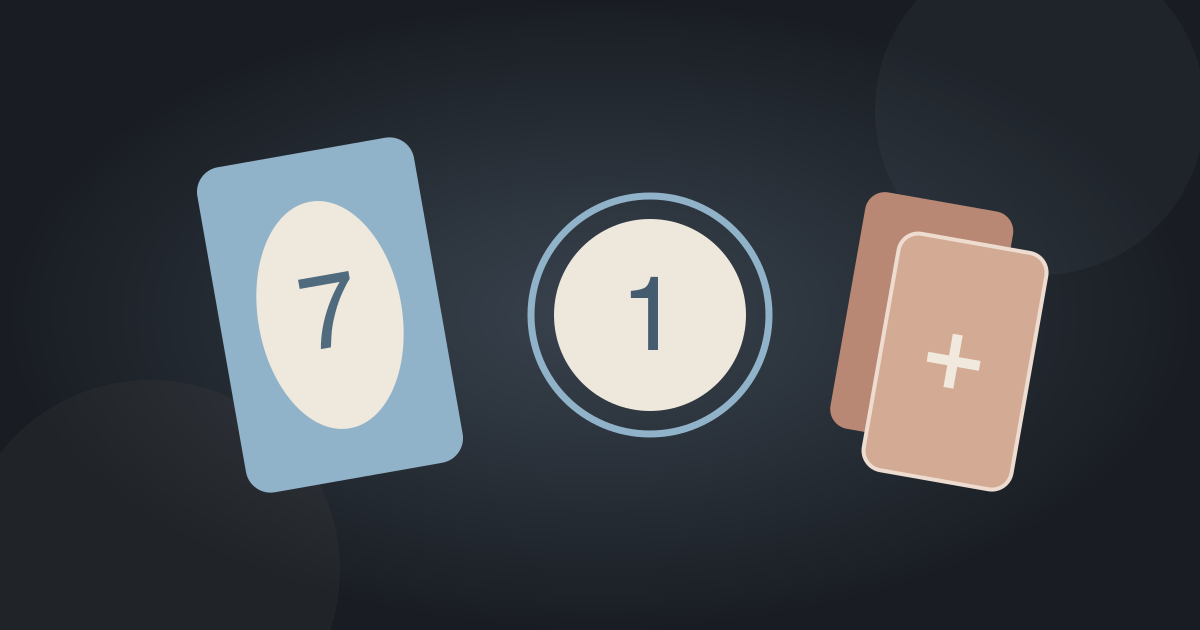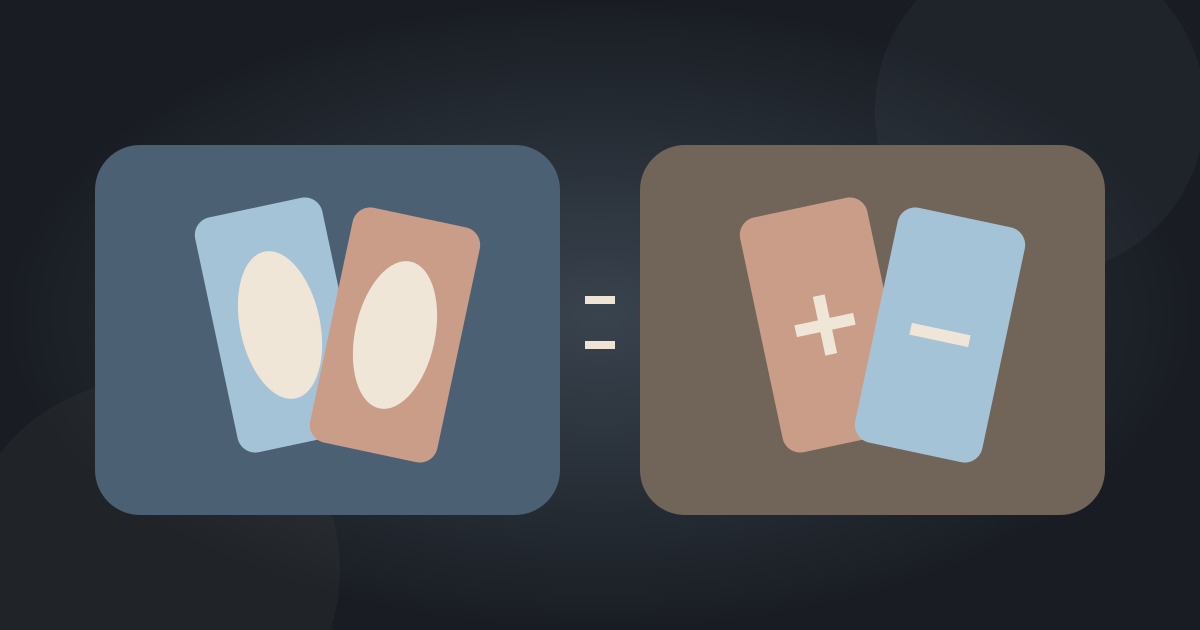
The essential ZAP card game rules are straightforward: empty your hand before the other players, play a card matching the previous card’s color or number, and draw until you obtain a playable card if you have none. When your hand reaches one card, press the “1” button immediately; forgetting it brings a two-card penalty.
ZAP card game rules at a glance
The Playgama ZAP instructions are the basis for this guide. Learn the matching rule and the one-card control before worrying about advanced tactics. Similar-looking card games can use different draw and penalty rules.
| Situation | Documented rule | What to check |
|---|---|---|
| Your turn | Match the top card by color or number | Check both properties, not just color |
| No playable card | Draw until you have a card you can use | Follow the game’s current prompt |
| One card remains | Press “1” immediately | Find the button before this moment |
| Missed “1” | Two penalty cards are added | Read the resulting hand before the next play |
| Round objective | Empty your hand before opponents | Avoid confusing a low hand count with victory |
Read the top card before choosing your play
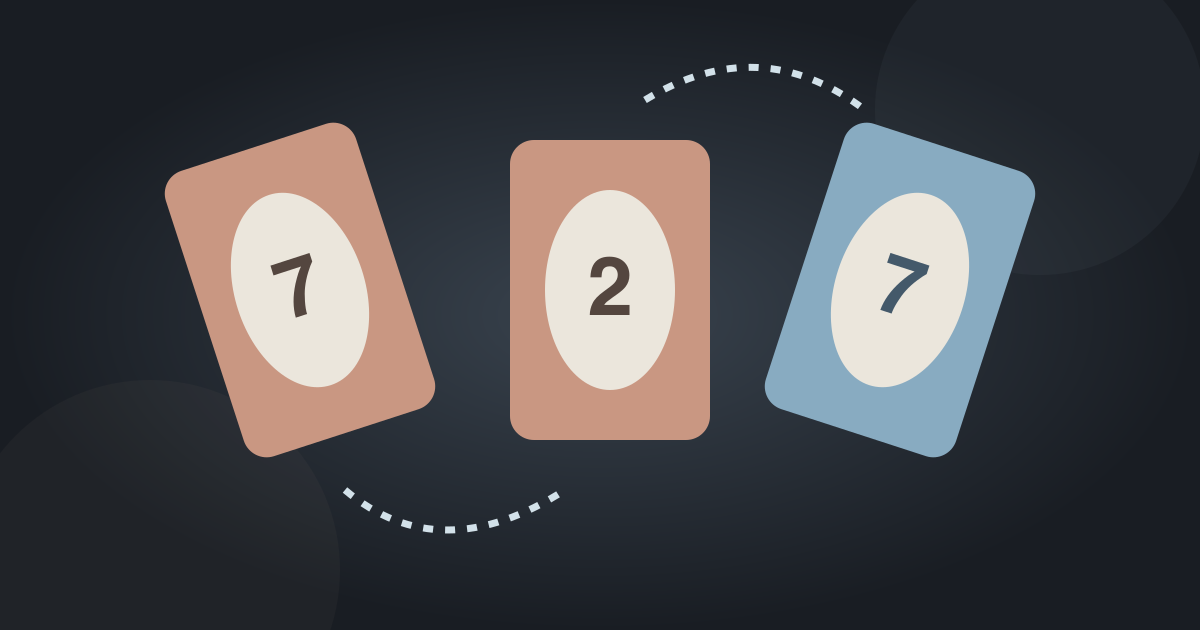
For an illustrative red 7 on top, a red number card matches by color and a blue 7 matches by number. A blue 3 matches neither property. This example explains ordinary number-card matching; it does not establish special-card exceptions.
Compare every legal number-card option before selecting one. The first playable card you notice is not necessarily the only one. Let the game indicate turn order and legal actions instead of interpreting every moment of inactivity as a loading failure.
| Top card | Ordinary card | Match? |
|---|---|---|
| Red 7 | Red 2 | Yes: same color |
| Red 7 | Blue 7 | Yes: same number |
| Red 7 | Blue 3 | No: neither matches |
Walk through an ordinary turn, one state at a time
Consider a teaching position with red 7 on top and red 2, blue 7, and yellow 5 in your hand. Red 2 matches by color; blue 7 matches by number; yellow 5 matches neither. Choose red 2. The new top card is red 2, and the remaining hand is blue 7 plus yellow 5. Your turn does not entitle you to play those remaining cards immediately.
Before your next turn, another player can change the top card. If it is now blue 4, your blue 7 matches by color. Recheck the new board instead of continuing a memorized sequence. These invented number-card states teach matching, not an entire scripted round or an undocumented turn-order rule.
When blocked, use the documented draw rule
The distributor says to draw until you find a card you can use when no playable card is in your hand. Do not substitute a familiar house rule such as “draw exactly one and always pass.” Other games may use that rule; this instruction describes ZAP.
Once the available actions change, reread the visible hand and current prompt. The guide does not prescribe an undocumented shortcut, maximum draw count, or option to draw instead of making an available play.
A blocked-hand example: check each new card
Suppose the top card is blue 4 and your ordinary cards are red 2 and yellow 5. Neither matches. In an illustrative draw sequence, a red 9 still does not match, while a blue 6 does. The published ZAP rule says to draw until you obtain a usable card, so the first unusable draw is not automatically a pass under that instruction.
Follow the actual game’s draw prompt and permitted action after a usable card appears. This example does not predict the next draw, establish the deck’s composition, or add a draw limit. It only explains why reading both properties matters after every change, including a card you did not originally hold.
Treat the “1” button as part of the move
Locate the control while the board is calm. As soon as your hand becomes one card, press it immediately. Thinking of the second-to-last card and this declaration as one routine is easier than remembering an extra task afterward.
Missing the declaration adds two cards according to the published instructions. The source does not give a precise timer or a challenge window, so this guide does not invent one. A declaration is not a win: you still need to play your final card legally.
From two cards to zero: declaration and victory are separate
Imagine holding red 2 and blue 2 with red 8 on top. Red 2 is legal by color. Playing it leaves blue 2, so press “1” immediately. You now have one card, not a completed round. Whether blue 2 is legal on your next turn depends on the top card at that time.
A blue top card would match its color; a number 2 would match its number. A yellow 6 would match neither ordinary property. Do not press the declaration as though it removes the last card. The key learning sequence is legal play, hand-count transition, immediate declaration, then another board check when you may act again.
A first-round checklist
Before playing: find the top card, your hand, the draw pile, and the “1” control. During a turn: check color and number, choose a legal play, and watch the resulting hand size. After a penalty or draw: reset your plan from the new hand.
Learn undocumented symbols from the in-game help or prompts. This guide does not assume that stacking, challenges, Reverse, Skip, or wild-card restrictions are identical to UNO. If a rule is not shown or documented, verify it rather than using another game’s convention.
Three reading mistakes to correct before advanced tactics
First, checking only color can hide a legal number match. Second, assuming the top card is unchanged can make a previously legal card illegal by your next turn. Third, treating one remaining card as victory can distract you from the declaration and final legal play. Correct those mistakes before trying sophisticated opponent reads.
For practice, explain aloud why one ordinary card matches and another does not, then use the documented button rather than a spoken declaration. If a special symbol changes the available actions, read the current help or prompt. This lesson deliberately stops at documented ordinary-card behavior; it cannot resolve a special-card rule by resemblance to another game.
Frequently asked questions
What is the goal of ZAP?
Empty your hand before the other players. Reaching one card is only an intermediate step, not the end of the round.
How do number cards match?
A card can match the previous card by color or number. Check both properties before concluding that you have no playable number card.
What happens when I cannot play?
The distributor instructs you to draw until you obtain a usable card. Follow the current game prompt rather than importing a draw-one house rule.
When should I press “1”?
Press it immediately when only one card remains in your hand. Locate the control early so you do not have to search for it at that moment.
What is the penalty for forgetting “1”?
Two penalty cards are added to your hand. Recheck the new hand before deciding what to play next.
Does saying the word out loud replace the button?
The published ZAP controls specify pressing the “1” button. They do not document a voice declaration, so use the control rather than assuming speech is recognized.
Can I use all UNO house rules in ZAP?
No identical ruleset is established by the documentation. Confirm special-card and draw behavior in ZAP itself before applying a familiar convention.
Is the Japanese guide proof that the game interface is Japanese?
No: the website’s guide language and the embedded game’s language are separate. The distributor currently lists English for ZAP, so do not assume site localization translates the game itself.
Next step