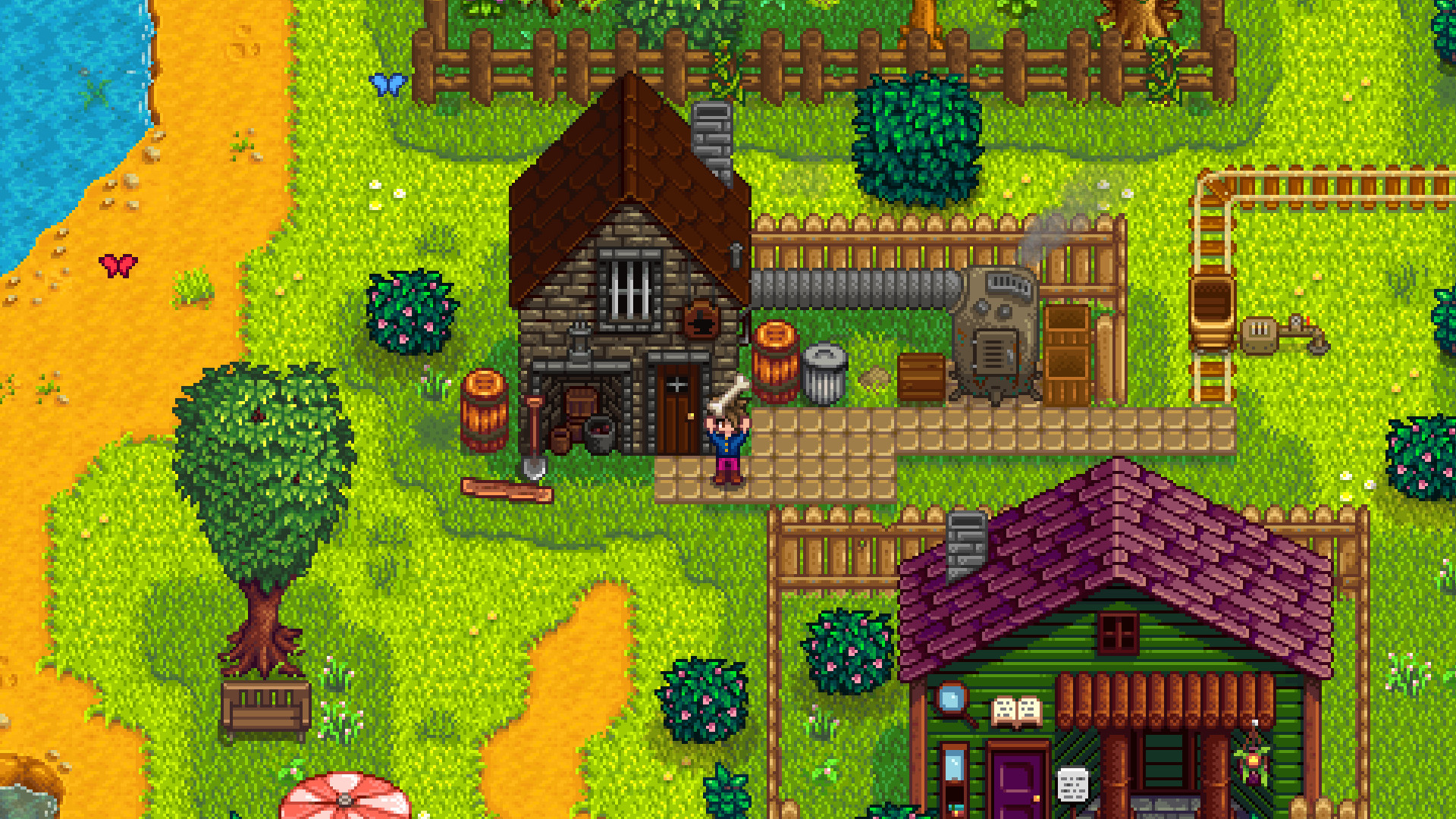

Searching for the best strategy games usually produces a list of famous names without explaining what “best” means. A five-minute browser puzzle, a cooperative live-service game, and a sixty-hour story can all be excellent, but they solve different player needs. This guide starts by defining the decision instead of pretending popularity is one universal score.
Our list mixes widely known games with a small number of relevant Elseland experiences. You can also browse the full strategy games collection to compare shorter playable loops before committing to a larger download or purchase.
The order is an editorial recommendation based on public evidence and the fixed criteria above. We did not claim private telemetry, publisher access, or hands-on testing that did not occur. Use the quick table to shortlist by fit, then read each numbered entry for the limitation that could change your decision.
Quick read
Key takeaways
- The best choice depends on session length, device, desired challenge, and whether you are playing alone or with other people.
- A famous game is not automatically the best fit; every selection below includes a clear strength and a meaningful trade-off.
- Elseland games appear only where their actual loop matches the category, and they are not ranked as best overall by default.
- Official pages were checked on August 21, 2026, but live modes, pricing, accounts, and platform access can change.
The 15 Best Strategy Games at a Glance
Start with the “best for” column rather than the rank. The list rewards games that express their intended experience clearly, but a lower-ranked specialist can still be the right personal choice.
For live and annual games, treat this as an August 21, 2026 snapshot. Check the linked official page before spending money or planning a group session, especially when subscriptions, account requirements, online services, or platform editions matter.
| Rank | Game | Best for | Why it stands out |
|---|---|---|---|
| 1 | Sid Meier's Civilization VII | turn-based strategic planning | long campaigns make diplomatic, technological, and military choices interdependent |
| 2 | Age of Empires IV | players learning competitive RTS fundamentals | economy and timing remain visible inside fast real-time pressure |
| 3 | XCOM 2 | turn-based tactics with consequences | campaign persistence gives every tactical risk weight |
| 4 | Into the Breach | compact tactical problem solving | perfect information creates precise, compact tactical puzzles |
| 5 | Chess.com | strategy practice at every skill level | a minimal ruleset supports endless strategic depth |
| 6 | RimWorld | emergent colony stories | planning must survive characters and incidents the player cannot fully control |
| 7 | Pirates Begone! | approachable strategy and action | tower coverage and hero movement create layered defense choices |
| 8 | Slay the Spire | solo strategy with strong replayability | route and deck decisions accumulate across every encounter |
| 9 | Root | experienced groups who enjoy negotiation and conflict | asymmetric goals force players to understand several strategic languages |
| 10 | Pokémon Showdown | deep turn-based competition | team construction matters before the first turn begins |
| 11 | Primitive Evolution | quick strategy with visible progression | resource timing is compressed into clear lane battles |
| 12 | Balatro | compact strategy and replayable card builds | multipliers and deck edits reward strategic adaptation |
| 13 | Crystal Energy Merge | merge planning and quick progression | merge order determines how efficiently the board progresses |
| 14 | CATAN | social strategy groups | negotiation can alter the value of every resource decision |
| 15 | Food Box Merge | cozy puzzle and simulation play | limited space makes planning more important than fast matching |
1. Sid Meier's Civilization VII
Sid Meier's Civilization VII earns the number 1 position because long campaigns make diplomatic, technological, and military choices interdependent. Long-form empire decisions connect exploration, diplomacy, technology, war, and historical transition. That combination gives it a specific reason to appear in this best strategy games list instead of relying on name recognition alone.
Best for: turn-based strategic planning. Its strongest quality is how clearly the player can understand the next meaningful decision, then see the result soon enough to adjust. The main trade-off is that full campaigns require a substantial time commitment. We reviewed the current official product or publisher page for public gameplay and availability context as of August 21, 2026; modes, pricing, and platform access can change after that date. Choose it when that fit matches your time, device, group, and tolerance for complexity—not because every player needs the same universal winner.
- Why it made the list: long campaigns make diplomatic, technological, and military choices interdependent.
- Best fit: turn-based strategic planning.
- Consider before playing: full campaigns require a substantial time commitment.
2. Age of Empires IV
Age of Empires IV earns the number 2 position because economy and timing remain visible inside fast real-time pressure. Economic growth, map information, timing, and faction strengths create readable real-time strategy. That combination gives it a specific reason to appear in this best strategy games list instead of relying on name recognition alone.
Best for: players learning competitive RTS fundamentals. Its strongest quality is how clearly the player can understand the next meaningful decision, then see the result soon enough to adjust. The main trade-off is that multitasking speed matters at higher levels. We reviewed the current official product or publisher page for public gameplay and availability context as of August 21, 2026; modes, pricing, and platform access can change after that date. Choose it when that fit matches your time, device, group, and tolerance for complexity—not because every player needs the same universal winner.
- Why it made the list: economy and timing remain visible inside fast real-time pressure.
- Best fit: players learning competitive RTS fundamentals.
- Consider before playing: multitasking speed matters at higher levels.
3. XCOM 2
XCOM 2 earns the number 3 position because campaign persistence gives every tactical risk weight. Squad tactics gain weight because injury, death, research, and campaign pressure persist beyond one mission. That combination gives it a specific reason to appear in this best strategy games list instead of relying on name recognition alone.
Best for: turn-based tactics with consequences. Its strongest quality is how clearly the player can understand the next meaningful decision, then see the result soon enough to adjust. The main trade-off is that probability and permanent loss can be punishing. We reviewed the current official product or publisher page for public gameplay and availability context as of August 21, 2026; modes, pricing, and platform access can change after that date. Choose it when that fit matches your time, device, group, and tolerance for complexity—not because every player needs the same universal winner.
- Why it made the list: campaign persistence gives every tactical risk weight.
- Best fit: turn-based tactics with consequences.
- Consider before playing: probability and permanent loss can be punishing.
4. Into the Breach
Into the Breach earns the number 4 position because perfect information creates precise, compact tactical puzzles. Enemy intentions are visible, turning each tiny battlefield into a precise damage-control puzzle. That combination gives it a specific reason to appear in this best strategy games list instead of relying on name recognition alone.
Best for: compact tactical problem solving. Its strongest quality is how clearly the player can understand the next meaningful decision, then see the result soon enough to adjust. The main trade-off is that small mistakes can still collapse a run. We reviewed the current official product or publisher page for public gameplay and availability context as of August 21, 2026; modes, pricing, and platform access can change after that date. Choose it when that fit matches your time, device, group, and tolerance for complexity—not because every player needs the same universal winner.
- Why it made the list: perfect information creates precise, compact tactical puzzles.
- Best fit: compact tactical problem solving.
- Consider before playing: small mistakes can still collapse a run.
5. Chess.com
Chess.com earns the number 5 position because a minimal ruleset supports endless strategic depth. A mature online chess ecosystem combines quick matches, puzzles, lessons, analysis, and multiple time controls. That combination gives it a specific reason to appear in this best strategy games list instead of relying on name recognition alone.
Best for: strategy practice at every skill level. Its strongest quality is how clearly the player can understand the next meaningful decision, then see the result soon enough to adjust. The main trade-off is that the number of modes can overwhelm a first-time player. We reviewed the current official product or publisher page for public gameplay and availability context as of August 21, 2026; modes, pricing, and platform access can change after that date. Choose it when that fit matches your time, device, group, and tolerance for complexity—not because every player needs the same universal winner.
- Why it made the list: a minimal ruleset supports endless strategic depth.
- Best fit: strategy practice at every skill level.
- Consider before playing: the number of modes can overwhelm a first-time player.
6. RimWorld
RimWorld earns the number 6 position because planning must survive characters and incidents the player cannot fully control. Colonist traits, incidents, and storyteller systems generate recoverable disasters and unexpected social narratives. That combination gives it a specific reason to appear in this best strategy games list instead of relying on name recognition alone.
Best for: emergent colony stories. Its strongest quality is how clearly the player can understand the next meaningful decision, then see the result soon enough to adjust. The main trade-off is that its interface and failure cascades take time to learn. We reviewed the current official product or publisher page for public gameplay and availability context as of August 21, 2026; modes, pricing, and platform access can change after that date. Choose it when that fit matches your time, device, group, and tolerance for complexity—not because every player needs the same universal winner.
- Why it made the list: planning must survive characters and incidents the player cannot fully control.
- Best fit: emergent colony stories.
- Consider before playing: its interface and failure cascades take time to learn.
7. Pirates Begone!
Pirates Begone! earns the number 7 position because tower coverage and hero movement create layered defense choices. A hex-island layout, hero movement, towers, and ten waves create a compact defense campaign. That combination gives it a specific reason to appear in this best strategy games list instead of relying on name recognition alone.
Best for: approachable strategy and action. Its strongest quality is how clearly the player can understand the next meaningful decision, then see the result soon enough to adjust. The main trade-off is that its campaign is smaller than a full commercial tower-defense game. This is an Elseland selection, so its shorter scope is part of the recommendation: it is meant to demonstrate one readable loop quickly rather than imitate the content volume of a large commercial release. Choose it when that fit matches your time, device, group, and tolerance for complexity—not because every player needs the same universal winner.
- Why it made the list: tower coverage and hero movement create layered defense choices.
- Best fit: approachable strategy and action.
- Consider before playing: its campaign is smaller than a full commercial tower-defense game.
8. Slay the Spire
Slay the Spire earns the number 8 position because route and deck decisions accumulate across every encounter. Deck building, route choice, and visible enemy intent make each run a sequence of informed tradeoffs. That combination gives it a specific reason to appear in this best strategy games list instead of relying on name recognition alone.
Best for: solo strategy with strong replayability. Its strongest quality is how clearly the player can understand the next meaningful decision, then see the result soon enough to adjust. The main trade-off is that success requires learning a large interaction space. We reviewed the current official product or publisher page for public gameplay and availability context as of August 21, 2026; modes, pricing, and platform access can change after that date. Choose it when that fit matches your time, device, group, and tolerance for complexity—not because every player needs the same universal winner.
- Why it made the list: route and deck decisions accumulate across every encounter.
- Best fit: solo strategy with strong replayability.
- Consider before playing: success requires learning a large interaction space.
9. Root
Root earns the number 9 position because asymmetric goals force players to understand several strategic languages. Asymmetric factions make one shared map feel like several strategy games colliding. That combination gives it a specific reason to appear in this best strategy games list instead of relying on name recognition alone.
Best for: experienced groups who enjoy negotiation and conflict. Its strongest quality is how clearly the player can understand the next meaningful decision, then see the result soon enough to adjust. The main trade-off is that teaching every faction takes time. We reviewed the current official product or publisher page for public gameplay and availability context as of August 21, 2026; modes, pricing, and platform access can change after that date. Choose it when that fit matches your time, device, group, and tolerance for complexity—not because every player needs the same universal winner.
- Why it made the list: asymmetric goals force players to understand several strategic languages.
- Best fit: experienced groups who enjoy negotiation and conflict.
- Consider before playing: teaching every faction takes time.
10. Pokémon Showdown
Pokémon Showdown earns the number 10 position because team construction matters before the first turn begins. Team building and competitive battles run directly in the browser without requiring the mainline games. That combination gives it a specific reason to appear in this best strategy games list instead of relying on name recognition alone.
Best for: deep turn-based competition. Its strongest quality is how clearly the player can understand the next meaningful decision, then see the result soon enough to adjust. The main trade-off is that the interface assumes familiarity with Pokémon systems. We reviewed the current official product or publisher page for public gameplay and availability context as of August 21, 2026; modes, pricing, and platform access can change after that date. Choose it when that fit matches your time, device, group, and tolerance for complexity—not because every player needs the same universal winner.
- Why it made the list: team construction matters before the first turn begins.
- Best fit: deep turn-based competition.
- Consider before playing: the interface assumes familiarity with Pokémon systems.
11. Primitive Evolution
Primitive Evolution earns the number 11 position because resource timing is compressed into clear lane battles. Lane deployment and camp evolution turn short battles into a readable resource-timing exercise. That combination gives it a specific reason to appear in this best strategy games list instead of relying on name recognition alone.
Best for: quick strategy with visible progression. Its strongest quality is how clearly the player can understand the next meaningful decision, then see the result soon enough to adjust. The main trade-off is that automation reduces direct unit control. This is an Elseland selection, so its shorter scope is part of the recommendation: it is meant to demonstrate one readable loop quickly rather than imitate the content volume of a large commercial release. Choose it when that fit matches your time, device, group, and tolerance for complexity—not because every player needs the same universal winner.
- Why it made the list: resource timing is compressed into clear lane battles.
- Best fit: quick strategy with visible progression.
- Consider before playing: automation reduces direct unit control.
12. Balatro
Balatro earns the number 12 position because multipliers and deck edits reward strategic adaptation. Poker hands become a flexible scoring language through jokers, deck changes, and escalating blind requirements. That combination gives it a specific reason to appear in this best strategy games list instead of relying on name recognition alone.
Best for: compact strategy and replayable card builds. Its strongest quality is how clearly the player can understand the next meaningful decision, then see the result soon enough to adjust. The main trade-off is that its multiplier logic takes time to internalize. We reviewed the current official product or publisher page for public gameplay and availability context as of August 21, 2026; modes, pricing, and platform access can change after that date. Choose it when that fit matches your time, device, group, and tolerance for complexity—not because every player needs the same universal winner.
- Why it made the list: multipliers and deck edits reward strategic adaptation.
- Best fit: compact strategy and replayable card builds.
- Consider before playing: its multiplier logic takes time to internalize.
13. Crystal Energy Merge
Crystal Energy Merge earns the number 13 position because merge order determines how efficiently the board progresses. Matching crystals reveals a compact chain of forms across three luminous evolution tiers. That combination gives it a specific reason to appear in this best strategy games list instead of relying on name recognition alone.
Best for: merge planning and quick progression. Its strongest quality is how clearly the player can understand the next meaningful decision, then see the result soon enough to adjust. The main trade-off is that the content scope is intentionally concise. This is an Elseland selection, so its shorter scope is part of the recommendation: it is meant to demonstrate one readable loop quickly rather than imitate the content volume of a large commercial release. Choose it when that fit matches your time, device, group, and tolerance for complexity—not because every player needs the same universal winner.
- Why it made the list: merge order determines how efficiently the board progresses.
- Best fit: merge planning and quick progression.
- Consider before playing: the content scope is intentionally concise.
14. CATAN
CATAN earns the number 14 position because negotiation can alter the value of every resource decision. Trading and probability make every board a negotiation over routes, resources, and timing. That combination gives it a specific reason to appear in this best strategy games list instead of relying on name recognition alone.
Best for: social strategy groups. Its strongest quality is how clearly the player can understand the next meaningful decision, then see the result soon enough to adjust. The main trade-off is that dice variance can outweigh careful planning. We reviewed the current official product or publisher page for public gameplay and availability context as of August 21, 2026; modes, pricing, and platform access can change after that date. Choose it when that fit matches your time, device, group, and tolerance for complexity—not because every player needs the same universal winner.
- Why it made the list: negotiation can alter the value of every resource decision.
- Best fit: social strategy groups.
- Consider before playing: dice variance can outweigh careful planning.
15. Food Box Merge
Food Box Merge earns the number 15 position because limited space makes planning more important than fast matching. Matching boxes and limited board space make every merge a small planning decision. That combination gives it a specific reason to appear in this best strategy games list instead of relying on name recognition alone.
Best for: cozy puzzle and simulation play. Its strongest quality is how clearly the player can understand the next meaningful decision, then see the result soon enough to adjust. The main trade-off is that board congestion can punish an early mistake. This is an Elseland selection, so its shorter scope is part of the recommendation: it is meant to demonstrate one readable loop quickly rather than imitate the content volume of a large commercial release. Choose it when that fit matches your time, device, group, and tolerance for complexity—not because every player needs the same universal winner.
- Why it made the list: limited space makes planning more important than fast matching.
- Best fit: cozy puzzle and simulation play.
- Consider before playing: board congestion can punish an early mistake.
How to Choose the Best Strategy Games for You
First, choose the session you actually have. A daily puzzle should reach a meaningful result in minutes; a competitive game must justify practice and matchmaking time; a long story or simulation needs enough uninterrupted attention for its systems and characters to accumulate. Comparing all three on content volume alone produces a misleading winner.
Second, check access before excitement. Confirm device support, input method, download size, account requirements, online subscription, local or cross-platform multiplayer, accessibility settings, and whether the advertised mode is part of the base game. Free-to-play describes entry price, not the complete economy or long-term collection burden.
Third, identify the kind of friction you enjoy. Puzzle friction comes from incomplete information; action friction from execution; strategy friction from consequences; social friction from other people. The right game makes that friction understandable and recoverable. The wrong game can be critically acclaimed and still feel like work.
- Time: decide whether you want a five-minute round, a one-hour session, or a long campaign.
- Access: verify platform, account, network, input, and current price on the official page.
- People: distinguish solo, local co-op, asynchronous, and live competitive play.
- Difficulty: choose whether you want planning, execution, social reading, or relaxed progression.
- Safety and comfort: review age rating, content warnings, communication tools, privacy, and accessibility.
- Return value: look for mastery, varied stories, social play, or fresh systems—not only a long checklist.
What This Strategy Games Ranking Can and Cannot Tell You
A list can organize choices, but it cannot replace your device constraints, accessibility needs, regional store, preferred community, or tolerance for monetization. It also cannot freeze a live game in time. We therefore link first-party pages, date the review, separate Elseland's short playable experiences from full commercial releases, and avoid invented performance scores.
The ranking should be revisited when a game closes, changes its access model, launches a major edition, or materially alters the mode that justified its inclusion. Reader feedback is most useful when it identifies a factual change or a missing player need, not simply a different favorite.
| Evidence | Supports | Does not prove |
|---|---|---|
| Official game page | Current public positioning, platforms, and documented modes | Independent quality or universal fit |
| Public playable page | Observable controls, loop, and presentation | Long-term retention or private metrics |
| Editorial criteria | A consistent basis for comparison | A mathematical truth for every player |
| Dated review | A reproducible snapshot | Future availability, price, or balance |
Frequently asked questions
What is the best strategy games game in 2026?
The first-ranked option is our broadest editorial recommendation, but the better answer depends on your device, session length, preferred difficulty, and whether you play solo or with a group. Use the “best for” field before treating rank as a universal score.
Are the best strategy games free?
Some are free, some offer free entry with optional purchases, and others require a purchase or subscription. We avoid hard-coding unstable prices; check the linked official page for the current terms in your region.
Can I play these games in a browser?
Only some entries are browser games. Browser access is stated when it is central to the recommendation; other games may require a console, PC, mobile download, account, or online service.
Why are Elseland games included with famous commercial games?
They give readers a directly playable example of a category loop. Their smaller scope is disclosed, they use the same best-for and trade-off format, and they are included only when the actual mechanic fits the topic.
Did Elseland test every game on this list?
No. This draft is based on current public official pages and documented or publicly observable gameplay, not a claimed hands-on benchmark. The methodology states that limit explicitly.
How often should a best-games article be updated?
Review it whenever a listed game changes access, closes, receives a major new edition, or alters the mode behind its recommendation. At minimum, recheck official links and time-sensitive claims before republishing the annual title.
How should parents choose an age-appropriate game?
Check the current regional age rating, content descriptors, online communication, user-generated content, purchases, privacy controls, and whether play requires interaction with strangers. A broad “casual” or colorful presentation is not an age rating.
What should I play if I only have ten minutes?
Choose an entry built around a complete short loop, such as a daily puzzle, arcade run, match, or compact Elseland game. Avoid starting a long narrative or management session when stopping early would erase context or progress.
Sources and further reading
- Sid Meier's Civilization VII official page
First-party product or publisher reference used for public gameplay and availability context; checked August 21, 2026.
- Age of Empires IV official page
First-party product or publisher reference used for public gameplay and availability context; checked August 21, 2026.
- XCOM 2 official page
First-party product or publisher reference used for public gameplay and availability context; checked August 21, 2026.
- Into the Breach official page
First-party product or publisher reference used for public gameplay and availability context; checked August 21, 2026.
- Chess.com official page
First-party product or publisher reference used for public gameplay and availability context; checked August 21, 2026.
- RimWorld official page
First-party product or publisher reference used for public gameplay and availability context; checked August 21, 2026.
- Slay the Spire official page
First-party product or publisher reference used for public gameplay and availability context; checked August 21, 2026.
- Root official page
First-party product or publisher reference used for public gameplay and availability context; checked August 21, 2026.
- ESRB ratings guide
Authoritative reference for rating categories and content descriptors.
- Game Accessibility Guidelines
Practical accessibility guidance used when considering control, feedback, and readable game states.
Next step