
Two friends can want completely different things from the same game night. One wants a short rivalry; the other wants a campaign where both players solve the problem together. The easiest way to avoid a forty-minute setup debate is to decide the mode first.
Browser board games are useful when you want a quick start across separate devices. Couch co-op works when you share a screen. Dedicated online campaigns are better when you can commit to recurring sessions and both players have compatible hardware.
The eight picks below cover those situations. They are not all free or browser-based, so the comparison table makes the access model explicit before the recommendation.
Quick read
Key takeaways
- Chess.com and Board Game Arena are the easiest browser-first starting points in this list.
- It Takes Two is designed around two-player cooperation and supports local or online play, with Friend's Pass rules to check before starting.
- Portal 2 and Keep Talking and Nobody Explodes reward precise communication more than fast reactions.
- Confirm local versus online mode, platform compatibility, and ownership requirements before planning game night.
Two-Player Games Compared by Setup
Use this table as a starting point, then read the individual pick before opening a game. Session labels describe the kind of play the game supports, not a guaranteed finish time.
| Pick | Best for | Session fit | Main consideration |
|---|---|---|---|
| It Takes Two | a dedicated co-op campaign | long chapters across several sessions | one player generally needs access to the full game and both need compatible platforms for online play |
| Portal 2 | cooperative spatial puzzles | chapter-based puzzle sessions | it requires a download and the authored campaign has a finite endpoint |
| Overcooked! 2 | funny, frantic teamwork | short kitchen stages | time pressure and communication breakdowns can become stressful for some pairs |
| Stardew Valley | a long-running shared routine | open-ended farm days | platform and multiplayer setup vary, and the open-ended structure asks for a larger time commitment |
| Keep Talking and Nobody Explodes | spoken communication puzzles | short timed scenarios | the countdown and deliberate information gap are stressful by design |
| Brawlhalla | quick competitive matches | short fighting rounds | skill gaps are obvious and current platform, account, or cross-play details should be checked |
| Chess.com | browser strategy and direct rivalry | from quick clocks to long games | account features and plan limits vary, and a large skill gap can make repeated games one-sided |
| Board Game Arena | trying different tabletop games online | varies by selected board game | availability, premium access, rules complexity, and two-player quality differ by title |
1. It Takes Two
It Takes Two is number 1 because the adventure is built around two characters using complementary abilities rather than adding co-op as an optional side mode. It is best for a dedicated co-op campaign, with a typical fit of long chapters across several sessions.
Choose couch co-op or online play, confirm the current Friend's Pass and platform rules, and agree to talk through each new mechanic. Keep in mind that one player generally needs access to the full game and both need compatible platforms for online play. Choose it when that trade-off matches your available time, preferred pace, and device.
- Best for: a dedicated co-op campaign.
- Session fit: long chapters across several sessions.
- Know before playing: one player generally needs access to the full game and both need compatible platforms for online play.
2. Portal 2
Portal 2 is number 2 because its separate cooperative campaign makes communication, timing, portals, and shared discovery the real challenge. It is best for cooperative spatial puzzles, with a typical fit of chapter-based puzzle sessions.
Describe surfaces and portal colors precisely, give one instruction at a time, and expect failed experiments to be part of the solution. Keep in mind that it requires a download and the authored campaign has a finite endpoint. Choose it when that trade-off matches your available time, preferred pace, and device.
- Best for: cooperative spatial puzzles.
- Session fit: chapter-based puzzle sessions.
- Know before playing: it requires a download and the authored campaign has a finite endpoint.
3. Overcooked! 2
Overcooked! 2 is number 3 because shared orders and changing kitchens turn task division into visible, replayable cooperation. It is best for funny, frantic teamwork, with a typical fit of short kitchen stages.
Assign stations before the timer begins, call out bottlenecks, and reset roles when the kitchen layout changes. Keep in mind that time pressure and communication breakdowns can become stressful for some pairs. Choose it when that trade-off matches your available time, preferred pace, and device.
- Best for: funny, frantic teamwork.
- Session fit: short kitchen stages.
- Know before playing: time pressure and communication breakdowns can become stressful for some pairs.
4. Stardew Valley
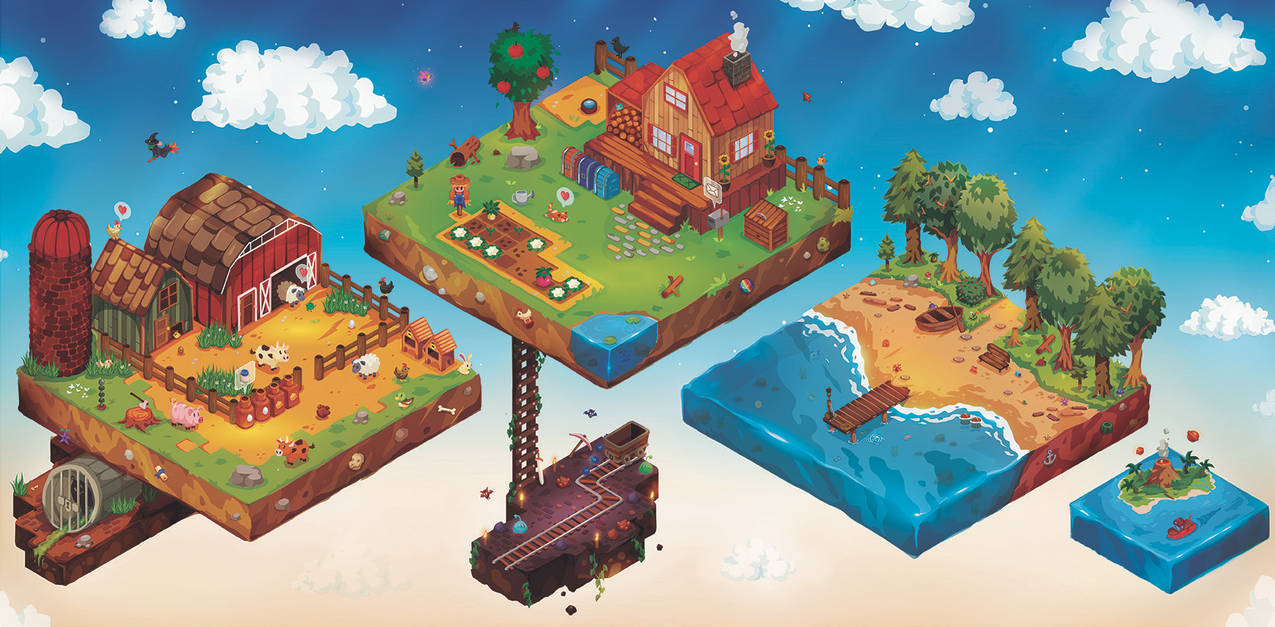
Stardew Valley is number 4 because farming, fishing, crafting, exploration, and community life let two friends choose parallel goals inside one ongoing world. It is best for a long-running shared routine, with a typical fit of open-ended farm days.
Agree on a shared first-week priority, divide routine chores, and leave room for each player to pursue a favorite activity. Keep in mind that platform and multiplayer setup vary, and the open-ended structure asks for a larger time commitment. Choose it when that trade-off matches your available time, preferred pace, and device.
- Best for: a long-running shared routine.
- Session fit: open-ended farm days.
- Know before playing: platform and multiplayer setup vary, and the open-ended structure asks for a larger time commitment.
5. Keep Talking and Nobody Explodes
Keep Talking and Nobody Explodes is number 5 because one player sees the bomb while the other uses a manual, so clear language becomes the primary mechanic. It is best for spoken communication puzzles, with a typical fit of short timed scenarios.
Put the manual where only the expert can see it, describe symbols consistently, and announce the remaining time without talking over instructions. Keep in mind that the countdown and deliberate information gap are stressful by design. Choose it when that trade-off matches your available time, preferred pace, and device.
- Best for: spoken communication puzzles.
- Session fit: short timed scenarios.
- Know before playing: the countdown and deliberate information gap are stressful by design.
6. Brawlhalla
Brawlhalla is number 6 because a free-to-play platform fighter gives two friends a low-commitment way to compete or join team modes. It is best for quick competitive matches, with a typical fit of short fighting rounds.
Learn movement and recovery with a small fighter pool, then choose private or team settings that fit the group. Keep in mind that skill gaps are obvious and current platform, account, or cross-play details should be checked. Choose it when that trade-off matches your available time, preferred pace, and device.
- Best for: quick competitive matches.
- Session fit: short fighting rounds.
- Know before playing: skill gaps are obvious and current platform, account, or cross-play details should be checked.
7. Chess.com
Chess.com is number 7 because browser access, multiple time controls, and a universally understood two-player board make setup simple. It is best for browser strategy and direct rivalry, with a typical fit of from quick clocks to long games.
Create or share a direct challenge, choose a clock both players understand, and use an unrated game while learning. Keep in mind that account features and plan limits vary, and a large skill gap can make repeated games one-sided. Choose it when that trade-off matches your available time, preferred pace, and device.
- Best for: browser strategy and direct rivalry.
- Session fit: from quick clocks to long games.
- Know before playing: account features and plan limits vary, and a large skill gap can make repeated games one-sided.
8. Board Game Arena
Board Game Arena is number 8 because one browser platform offers many turn-based and real-time tabletop rulesets, so two friends can change genre without changing tools. It is best for trying different tabletop games online, with a typical fit of varies by selected board game.
Filter for two-player support, check whether the table is turn-based or real-time, and learn with a shorter game first. Keep in mind that availability, premium access, rules complexity, and two-player quality differ by title. Choose it when that trade-off matches your available time, preferred pace, and device.
- Best for: trying different tabletop games online.
- Session fit: varies by selected board game.
- Know before playing: availability, premium access, rules complexity, and two-player quality differ by title.
Choose the Setup Before You Choose the Game
First decide whether both players are in the same room. Then decide whether you want a shared objective or a winner. Finally, match the time commitment: one short round, a chapter, or a world you will revisit for weeks.
Ownership and platform details are part of the game-night experience. Check them before the invitation, especially for online co-op campaigns. A ten-minute compatibility check is better than discovering after everyone arrives that the selected mode is unavailable.
- Fastest browser start: Chess.com or Board Game Arena.
- Best campaign built specifically for two: It Takes Two.
- Best communication puzzle: Portal 2 or Keep Talking and Nobody Explodes.
- Best short chaotic co-op: Overcooked! 2.
- Best ongoing shared world: Stardew Valley.
- Best direct competition: Brawlhalla or chess.
Frequently asked questions
What is the best game for exactly two friends?
It Takes Two is the clearest campaign choice because its main adventure is designed around two cooperating characters. Portal 2 is better if your pair primarily wants puzzles, while Chess.com is faster to start in a browser.
Which two-player games can we play in a browser?
Chess.com and Board Game Arena are browser-first options in this guide. Check the current account and game-access rules before starting a private table or challenge.
What is a good couch co-op game for two?
It Takes Two and Overcooked! 2 both support local cooperative play according to their current official pages. It Takes Two suits a longer adventure; Overcooked! 2 suits short, hectic stages.
Can both people play It Takes Two without buying two copies?
EA's Friend's Pass is designed to let a friend join when one player owns the full game, subject to the current platform and version rules. Confirm EA's live instructions before downloading.
What two-player game is good for non-gamers?
A familiar board game on Board Game Arena or an unrated chess match may reduce control complexity. Keep Talking and Nobody Explodes uses communication rather than conventional movement, but its timer can feel intense.
How do we choose between cooperative and competitive games?
Choose cooperation when you want a shared outcome and are comfortable communicating through mistakes. Choose competition when both players enjoy a clear winner and the skill gap will not make the match predictable.
Sources and further reading
- EA — It Takes Two
Official game page used for the two-player design, couch co-op, online play, and Friend's Pass context.
- EA Help — It Takes Two Friend's Pass
Official setup reference; players should check the current platform-specific instructions.
- Portal 2 on Steam
Official store listing used to verify the separate cooperative campaign.
- Overcooked! 2 on Steam
Official store listing used for local and online co-op context.
- Stardew Valley official site
Developer-owned overview used for farming, exploration, crafting, and community features.
- Keep Talking and Nobody Explodes
Official product site used for the asymmetric bomb-and-manual communication format.
- Brawlhalla official site
Official game site used for current free-to-play competitive context.
Next step