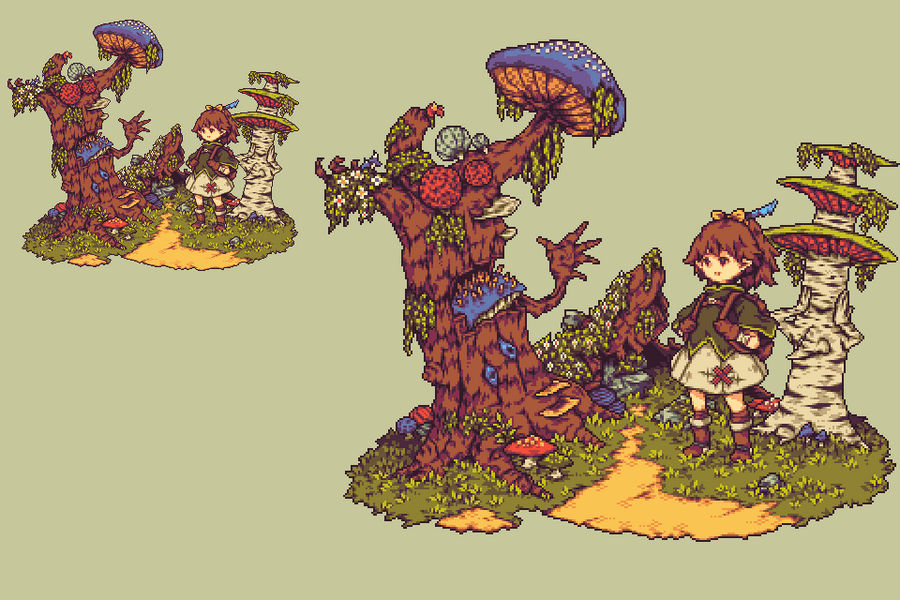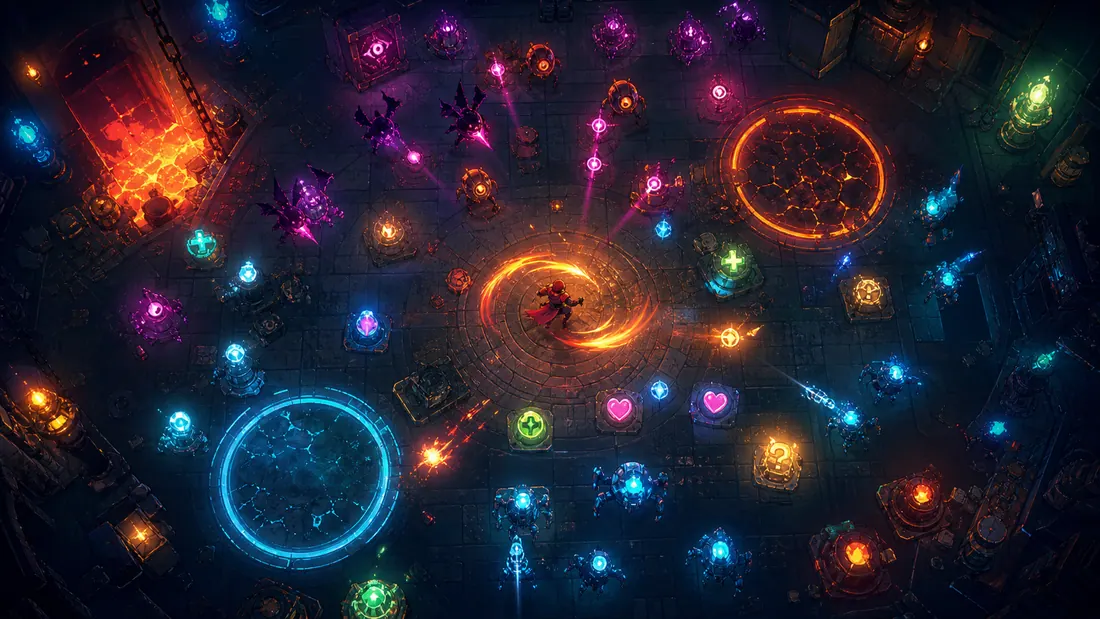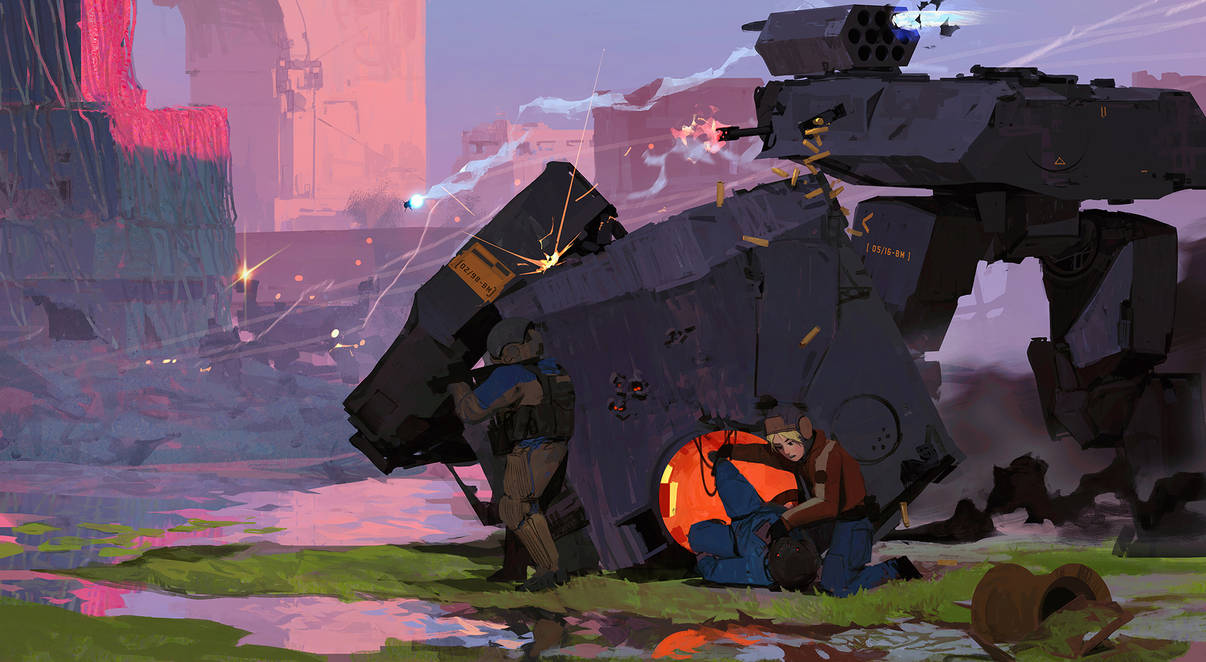

AI image comparisons often rank one attractive output from each model. Game production needs a different test: can the tool keep one character stable, make a targeted revision, create a coherent asset family, respect transparent boundaries, and reproduce the workflow across many iterations?
Before choosing a model, define the visual rules in the AI game art consistency guide. The style specification should remain stable even if the generation provider changes.
Quick read
Key takeaways
- GPT Image 2 offers documented API access and image generation/editing capabilities for developer workflows.
- Meta presents Muse Image as a new image-generation and editing model within Meta AI experiences.
- Game-art evaluation should measure consistency, editability, transparency, small-scale readability, and batch control—not beauty alone.
- Run a rights-cleared, repeatable prompt suite in the exact access surface before selecting a production model.
Compare the Documented Product Surfaces
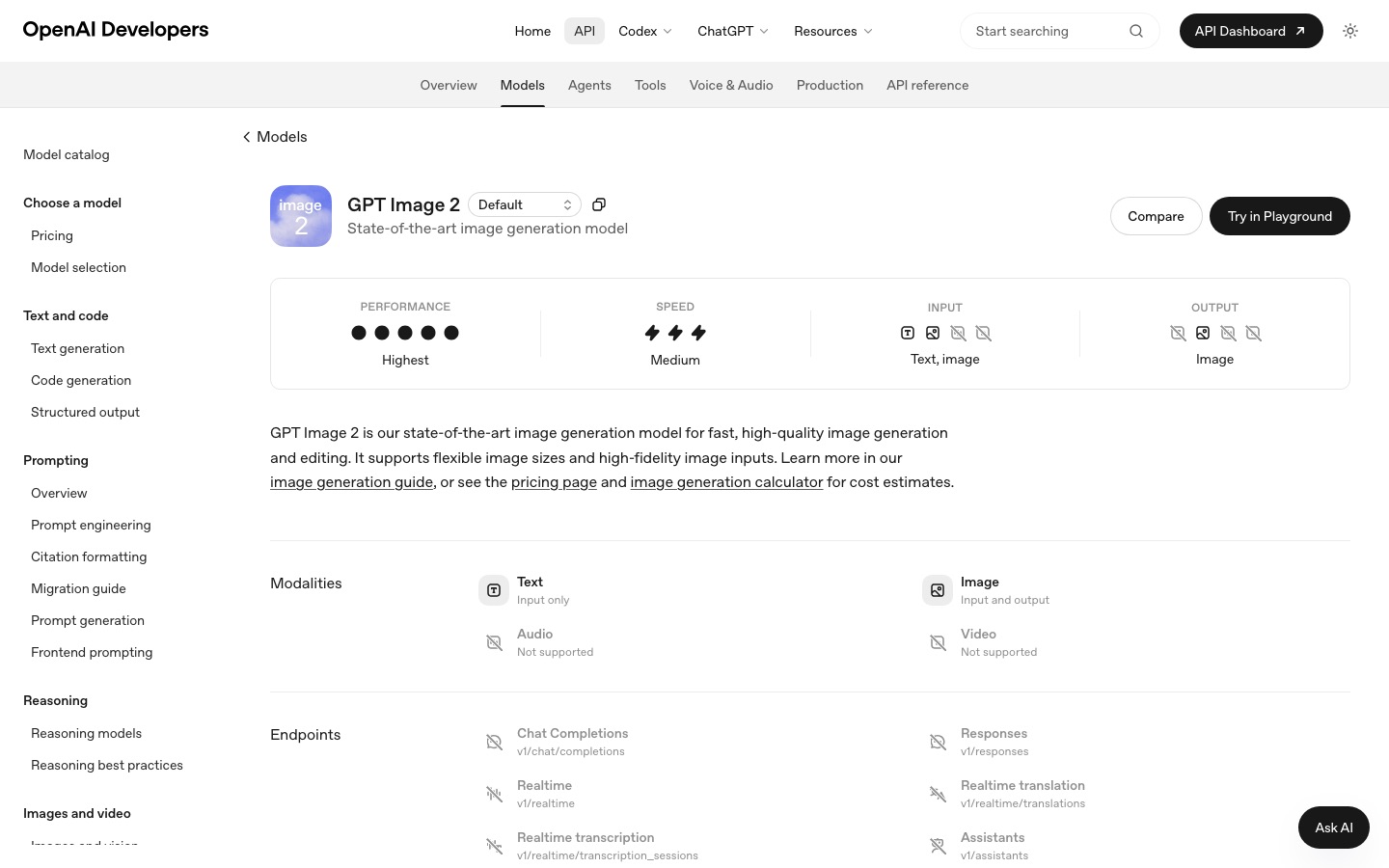
OpenAI documents GPT Image 2 as an image generation model available through its image APIs, with generation and editing workflows. Meta announced Muse Image for generating and editing images in Meta AI products.
Access surface matters. An API supports repeatable integration, logging, parameter control, and batch orchestration differently from a consumer interface. Confirm current regional and account availability before designing a pipeline.
Use Game-Art Tasks Instead of Generic Prompts
| Task | What to evaluate | Failure signal |
|---|---|---|
| Character sheet | Identity across poses and views | Costume, face, or proportion drift |
| UI icon set | Shape, padding, and scale consistency | Mixed perspective or detail density |
| Targeted edit | Unchanged regions remain stable | Whole composition drifts |
| Tile or prop family | Palette and material language | Near-duplicate style variations |
| Text-bearing mockup | Legibility and exact wording | Misspelling or decorative substitution |
Evaluate Editing and Reproducibility
Run the same rights-cleared references, prompts, aspect ratios, and edit instructions. Record generation date, product surface, settings, output count, latency, failures, and human cleanup time.
Do not compare hidden defaults as if they were identical models. Document the actual configuration a production team can access.
Review Rights, Provenance, and Disclosure
Store the source reference license, prompt, model, date, output, and human edits for every approved asset. Review provider terms and the target storefront's AI disclosure requirements at the time of release.
Content credentials can help carry provenance information, but teams still need an internal asset record and a human approval process.
Choose by Workflow Fit, Then Retest
Score each task for instruction following, identity consistency, targeted editing, transparency, native-size readability, cleanup time, API or interface reliability, and total cost. Weight the criteria by the asset family you actually plan to ship.
After selecting a tool, place approved outputs in a playable prototype or browse game categories to compare how visual requirements change by genre.
A Reproducible Game-Art Test Suite
Use five rights-cleared tasks: a four-view character sheet, a six-icon inventory set, a tileable environment texture, a targeted costume edit, and a text-bearing UI mockup. Keep prompt intent, reference files, output size, and review criteria stable, but document product-surface defaults that cannot be matched.
Have reviewers score anonymized outputs at native game scale before seeing the provider. Record generation failures, retries, cleanup time, transparency quality, identity drift, and whether edits preserve untouched regions. The fastest attractive image is not automatically the lowest-cost production asset.
| Criterion | Measurement | Why it matters |
|---|---|---|
| Identity | Landmark drift across views and poses | Character continuity |
| Targeted edit | Unrequested change outside mask or instruction | Revision safety |
| Asset system | Palette, perspective, padding, material consistency | Batch production |
| Native readability | Recognition at final display size | Gameplay clarity |
| Operations | Access, failures, latency, logging, cleanup | Repeatable workflow |
Use a Weighted Decision Score
Assign weights before testing. A character-driven RPG may prioritize identity and editing; a UI-heavy puzzle game may prioritize text and icon consistency; a concept-art team may prioritize composition variety. Precommitted weights reduce winner-by-showcase bias.
Keep rights, provenance, API or interface access, data handling, regional availability, and current terms as gate criteria rather than small quality scores. A visually strong model may still be unsuitable for a production workflow the team cannot legally or operationally sustain.
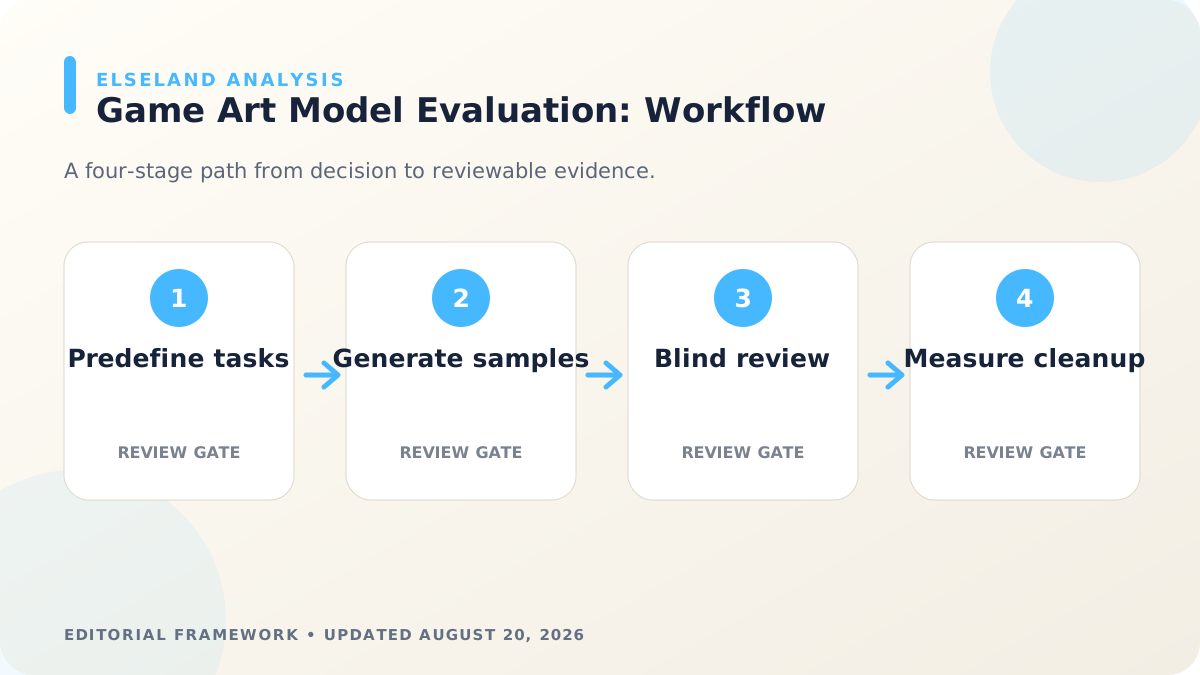
- Define tasks and weights before generating outputs.
- Blind visual review where practical and retain failed generations.
- Measure cleanup time and asset-system consistency, not only preference.
- Treat current access, terms, rights, and provenance as explicit gates.
- Repeat after material model or product-surface changes.
Avoid False Equivalence in Model Comparisons
A developer API, a consumer chat interface, and an integrated social product expose different controls even when related models are involved. Do not call hidden defaults a fair model benchmark or infer API behavior from a consumer demo.
Official OpenAI and Meta announcements support capability and access statements, but a hands-on quality verdict requires the shared test suite described above. Until that test is run, the article should remain documentation-based and avoid naming a universal winner.
| Symptom | Likely cause | Next check |
|---|---|---|
| One output per model | High variance and cherry-picking | Run multiple seeds and report failures |
| Different reference rights | Input quality changes the task | Use one approved input pack |
| Only beauty judged | Game utility is ignored | Score native readability and cleanup |
| Access surfaces differ | Controls and defaults are not comparable | Document each surface and limitation |
| Winner declared forever | Models and products change | Date-scope and schedule retest |
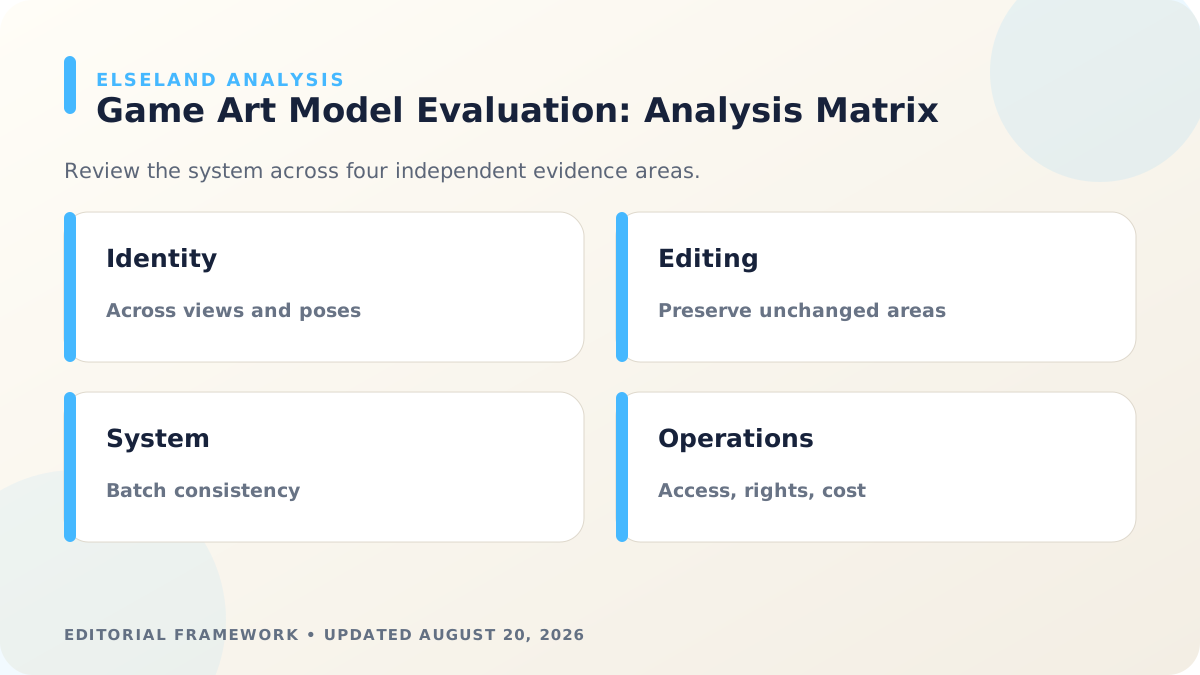
Image Model Comparison Reporting Checklist
Publish the tested date, access surface, model label shown by the provider, prompts, references, dimensions, output count, review rubric, weights, and known mismatches. Separate direct observations from vendor claims.
Store approved outputs with provenance and human edits. If the production pipeline later changes model or interface, rerun the highest-risk asset families rather than assuming the earlier result transfers.
- The comparison date and exact accessible product surfaces are stated.
- Tasks use rights-cleared inputs and identical intent wherever possible.
- Output count, failures, retries, latency, and cleanup are recorded.
- Review covers identity, editing, transparency, text, native scale, and batch consistency.
- Operational gates include access, rights, terms, provenance, data, and cost.
- The verdict reflects the declared weights and distinguishes documentation from hands-on evidence.
What the Primary Sources Establish About GPT Image 2 vs. Muse Image
Our evidence baseline starts with the OpenAI GPT Image 2 model docs, accessed August 20, 2026. We use it to establish documented behavior, terminology, or constraints—not to claim that the source endorses Elseland's workflow or conclusions. The practical artifact under review is a dated, task-balanced evaluation set with blind review, cleanup logs, rights notes, and reproducible prompts.
That distinction is central to E-E-A-T. A first-party page can establish what a format, tool, platform, model, or game team publicly documents. It cannot prove that a particular asset is fast, accessible, legally cleared, fun, or production-ready. Those conclusions require separate observation, measurement, specialist review, or player evidence tied to the actual project.
For this topic, the decision is which model better fits a defined game-art workflow under current access and product conditions. The following observations turn the official reference into a reviewable production record rather than a decorative citation:
| Evidence layer | What it can support | What it cannot support alone |
|---|---|---|
| Official source | Documented feature, rule, format, or published design context | Project-specific quality or universal performance |
| Project measurement | Observed behavior in a named build, scene, device, or sample | Unmeasured platforms or future versions |
| Human review | Usability, visual, editorial, and production judgment | Legal certainty or population-level player behavior |
| Release record | Who approved what, when, with which evidence | Permanent compliance after inputs or rules change |
- 1. compare the same asset tasks, inputs, constraints, and review rubric. Store the result with the asset or build identifier so another reviewer can reproduce the conclusion.
- 2. separate attractive single images from identity and family consistency. Store the result with the asset or build identifier so another reviewer can reproduce the conclusion.
- 3. measure manual cleanup, retries, failed constraints, and integration work. Store the result with the asset or build identifier so another reviewer can reproduce the conclusion.
- 4. date-scope availability, API behavior, terms, and model documentation. Store the result with the asset or build identifier so another reviewer can reproduce the conclusion.
A Field Review Protocol for GPT Image 2 vs. Muse Image
Use this protocol after the first plausible output exists and before scaling the workflow. Keep one untouched baseline, one candidate revision, and one deliberately stressed case. The stressed case should expose the topic's likely failure mode—crowded scenes, extreme poses, small-screen play, unusual inputs, or a release-rule change—rather than merely repeat the easiest success case.
Run the review in the real delivery context whenever possible. Capture the tool or model version, source files, settings, target device or engine, date, and reviewer. If the work depends on a changing external service, record the response or exported artifact instead of assuming the same output can be recreated later.
A useful review ends with a decision and a next action. “Looks good” is not a gate. State whether the candidate passes, passes with a bounded exception, needs revision, or should be rejected; identify the evidence behind that status and the owner of the next check.
| Review status | Meaning | Required next action |
|---|---|---|
| Pass | All defined visual, technical, and release gates are supported by evidence | Freeze the reviewed artifact and link it to the build |
| Conditional pass | A known limitation is bounded and does not invalidate the intended use | Document the exception, owner, and trigger for re-review |
| Revise | The direction is viable but one or more gates remain unsupported | Change one controlled variable and repeat the affected checks |
| Reject | The candidate conflicts with the intended use, evidence, rights, safety, or budget | Preserve the record and choose a different approach |
- pre-register tasks for characters, environments, UI, editing, and variants. Record the expected result before the check, then attach the observed result and any exception after it.
- fix prompt intent while adapting only documented model syntax. Record the expected result before the check, then attach the observed result and any exception after it.
- randomize outputs for blind visual and production review. Record the expected result before the check, then attach the observed result and any exception after it.
- record retries, edit time, usable yield, and failure categories. Record the expected result before the check, then attach the observed result and any exception after it.
- review provenance, provider terms, safety behavior, and export needs. Record the expected result before the check, then attach the observed result and any exception after it.
- publish a fit-by-task conclusion instead of one universal winner. Record the expected result before the check, then attach the observed result and any exception after it.
Expert Interpretation and Limits of This Game Art & Visuals Guide
The strongest conclusion this guide can support is a conditional production recommendation: use the workflow when its documented assumptions match the project, and keep the evidence needed to revisit the decision. We do not infer universal model quality, player preference, legal clearance, or performance from an official screenshot, a provider example, or a single successful asset.
Experience matters here because gpt image 2 vs. muse image crosses creative judgment and implementation detail. The practical review should include the people who will edit the source, integrate the result, test it in play, maintain it after release, and answer rights or policy questions. A narrow expert handoff often misses problems that appear only when those responsibilities meet.
Before publishing or shipping, repeat time-sensitive checks against the current source and exact build. Preserve dated evidence, disclose the evaluation method, and distinguish measured results from editorial inference. That record is more valuable than a confident conclusion that future reviewers cannot reproduce.
| Claim type | Editorial treatment |
|---|---|
| Documented fact | Link to OpenAI GPT Image 2 model docs and include the access date |
| Observed project result | Name the build, environment, sample, and method |
| Expert judgment | State the criteria, reviewer role, and tradeoff |
| Inference or forecast | Label it explicitly and describe what evidence could change it |
- This article is a documentation-based evaluation framework, not a fabricated hands-on benchmark.
- Model quality and interfaces can change after August 20, 2026.
- Vendor examples are curated and should not stand in for a controlled sample.
- Game-art fit depends on style, rights, consistency, editing, and pipeline needs—not beauty alone.
Frequently asked questions
Is GPT Image 2 better than Meta Muse Image for game art?
This documentation-based draft does not claim a universal winner. Run a controlled test in the exact product or API surfaces available to your team.
Can GPT Image 2 be used through an API?
OpenAI documents GPT Image 2 in its developer model and image-generation documentation. Check the current API terms, pricing, limits, and availability before production use.
What is Meta Muse Image?
Meta announced Muse Image as an image generation and editing model for Meta AI experiences. Current access and product integration should be verified directly with Meta.
What should a game-art model benchmark measure?
Measure identity and style consistency, targeted editing, transparency, text, small-scale readability, batch control, failure rate, cleanup time, access, rights, and cost.
How many outputs should a fair image-model comparison generate?
Use enough outputs to reveal variance and failure patterns for each task, not just one showcase. Report the count, retries, rejected outputs, and selection rule so readers can judge the evidence.
Should prompts be exactly identical across image models?
Keep task intent and constraints identical, but document syntax or feature differences required by each surface. Blindly forcing one provider's prompt language onto another can test interface mismatch instead of capability.
How should cleanup time be measured?
Define an acceptance target, record the human steps and elapsed active work needed to reach it, and include failed attempts. Compare the complete path to a usable asset, not raw generation latency alone.
When can this article declare a winner?
Only after a controlled test in the current accessible surfaces with published criteria and results. Even then, conclusions should be task-specific and date-scoped rather than universal.
Sources and further reading
- OpenAI: ChatGPT Images 2.0
Official overview of OpenAI's current image generation and editing experience.
- OpenAI GPT Image 2 model docs
Primary developer reference for the model and API surface.
- Meta: Muse Image
First-party announcement of Muse Image and its Meta AI product context.
Next step