Searching for the best adventure games usually produces a list of famous names without explaining what “best” means. A five-minute browser puzzle, a cooperative live-service game, and a sixty-hour story can all be excellent, but they solve different player needs. This guide starts by defining the decision instead of pretending popularity is one universal score.
Our list mixes widely known games with a small number of relevant Elseland experiences. You can also browse the full adventure games collection to compare shorter playable loops before committing to a larger download or purchase.
The order is an editorial recommendation based on public evidence and the fixed criteria above. We did not claim private telemetry, publisher access, or hands-on testing that did not occur. Use the quick table to shortlist by fit, then read each numbered entry for the limitation that could change your decision.
Quick read
Key takeaways
- The best choice depends on session length, device, desired challenge, and whether you are playing alone or with other people.
- A famous game is not automatically the best fit; every selection below includes a clear strength and a meaningful trade-off.
- Elseland games appear only where their actual loop matches the category, and they are not ranked as best overall by default.
- Official pages were checked on August 21, 2026, but live modes, pricing, accounts, and platform access can change.
The 15 Best Adventure Games at a Glance
Start with the “best for” column rather than the rank. The list rewards games that express their intended experience clearly, but a lower-ranked specialist can still be the right personal choice.
For live and annual games, treat this as an August 21, 2026 snapshot. Check the linked official page before spending money or planning a group session, especially when subscriptions, account requirements, online services, or platform editions matter.
| Rank | Game | Best for | Why it stands out |
|---|---|---|---|
| 1 | The Legend of Zelda: Tears of the Kingdom | open-ended exploration and experimentation | its construction and physics tools turn obstacles into invitations to invent |
| 2 | Outer Wilds | curiosity-led exploration | every expedition advances understanding even when the loop resets |
| 3 | Mouse Chasing Cat | short interactive storytelling | a focused farm crossing connects exploration to relationships and choices |
| 4 | Subnautica | survival exploration with strong atmosphere | depth, resources, and mystery make each new biome meaningful |
| 5 | Hollow Knight | challenging action-adventure exploration | interconnected spaces reward careful mapping and mechanical growth |
| 6 | Firewatch | short, authored narrative adventures | a compact landscape carries character tension without filler |
| 7 | Undertale | character-driven stories with player agency | its small world changes meaning as the player learns its characters |
| 8 | Elden Ring | difficult combat and open exploration | landmarks and danger support self-directed routes |
| 9 | What Remains of Edith Finch | a compact and inventive story experience | exploring one house becomes a sequence of imaginative perspectives |
| 10 | Red Dead Redemption 2 | slow-burn cinematic storytelling | travel and ambient encounters give the journey narrative weight |
| 11 | Hades | action runs with narrative continuity | repeated routes stay fresh through builds, encounters, and conversation |
| 12 | Wanderfolk | players interested in persistent AI relationships | social memory adds a persistent layer to village exploration |
| 13 | Pirates Begone! | approachable strategy and action | hero movement and island defense create a compact campaign journey |
| 14 | TUPA Chroma Drift 3D | fast arcade driving | its racing route offers a short, movement-focused adventure |
| 15 | Animal Crossing: New Horizons | cozy creativity and daily check-ins | daily island life supports discovery without pressure |
1. The Legend of Zelda: Tears of the Kingdom
The Legend of Zelda: Tears of the Kingdom earns the number 1 position because its construction and physics tools turn obstacles into invitations to invent. Flexible building, physics, traversal, and layered spaces reward players who invent their own solutions. That combination gives it a specific reason to appear in this best adventure games list instead of relying on name recognition alone.
Best for: open-ended exploration and experimentation. Its strongest quality is how clearly the player can understand the next meaningful decision, then see the result soon enough to adjust. The main trade-off is that its scale can distract players who prefer a direct route. We reviewed the current official product or publisher page for public gameplay and availability context as of August 21, 2026; modes, pricing, and platform access can change after that date. Choose it when that fit matches your time, device, group, and tolerance for complexity—not because every player needs the same universal winner.
- Why it made the list: its construction and physics tools turn obstacles into invitations to invent.
- Best fit: open-ended exploration and experimentation.
- Consider before playing: its scale can distract players who prefer a direct route.
2. Outer Wilds
Outer Wilds earns the number 2 position because every expedition advances understanding even when the loop resets. A repeating solar system turns knowledge into progression: every trip reveals how locations, time, and history connect. That combination gives it a specific reason to appear in this best adventure games list instead of relying on name recognition alone.
Best for: curiosity-led exploration. Its strongest quality is how clearly the player can understand the next meaningful decision, then see the result soon enough to adjust. The main trade-off is that unspoiled discovery is essential and navigation can be demanding. We reviewed the current official product or publisher page for public gameplay and availability context as of August 21, 2026; modes, pricing, and platform access can change after that date. Choose it when that fit matches your time, device, group, and tolerance for complexity—not because every player needs the same universal winner.
- Why it made the list: every expedition advances understanding even when the loop resets.
- Best fit: curiosity-led exploration.
- Consider before playing: unspoiled discovery is essential and navigation can be demanding.
3. Mouse Chasing Cat
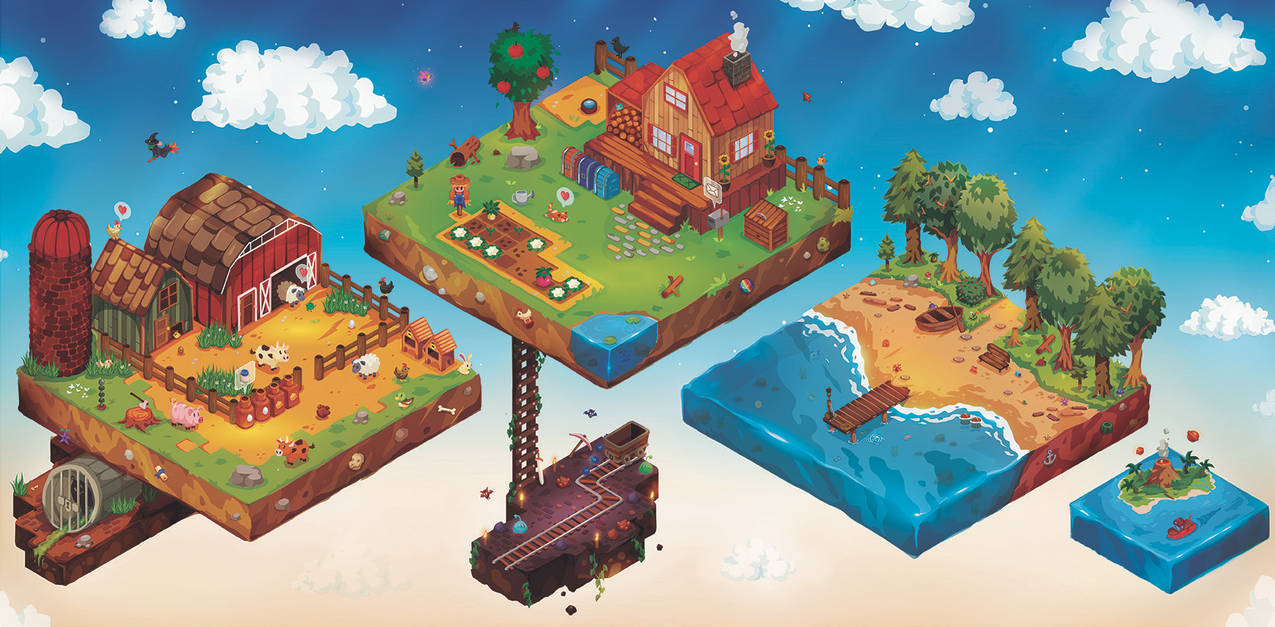
Mouse Chasing Cat earns the number 3 position because a focused farm crossing connects exploration to relationships and choices. Rowan's farm journey uses choices, allies, and an unlikely romance to center story inside a playable route. That combination gives it a specific reason to appear in this best adventure games list instead of relying on name recognition alone.
Best for: short interactive storytelling. Its strongest quality is how clearly the player can understand the next meaningful decision, then see the result soon enough to adjust. The main trade-off is that it is a focused story rather than an open-ended RPG. This is an Elseland selection, so its shorter scope is part of the recommendation: it is meant to demonstrate one readable loop quickly rather than imitate the content volume of a large commercial release. Choose it when that fit matches your time, device, group, and tolerance for complexity—not because every player needs the same universal winner.
- Why it made the list: a focused farm crossing connects exploration to relationships and choices.
- Best fit: short interactive storytelling.
- Consider before playing: it is a focused story rather than an open-ended RPG.
4. Subnautica
Subnautica earns the number 4 position because depth, resources, and mystery make each new biome meaningful. Underwater exploration ties wonder and danger to crafting, survival, and a mystery revealed through the environment. That combination gives it a specific reason to appear in this best adventure games list instead of relying on name recognition alone.
Best for: survival exploration with strong atmosphere. Its strongest quality is how clearly the player can understand the next meaningful decision, then see the result soon enough to adjust. The main trade-off is that resource gathering and deep-water tension are not equally relaxing. We reviewed the current official product or publisher page for public gameplay and availability context as of August 21, 2026; modes, pricing, and platform access can change after that date. Choose it when that fit matches your time, device, group, and tolerance for complexity—not because every player needs the same universal winner.
- Why it made the list: depth, resources, and mystery make each new biome meaningful.
- Best fit: survival exploration with strong atmosphere.
- Consider before playing: resource gathering and deep-water tension are not equally relaxing.
5. Hollow Knight
Hollow Knight earns the number 5 position because interconnected spaces reward careful mapping and mechanical growth. Precise combat and interconnected exploration make every shortcut, map fragment, and boss feel earned. That combination gives it a specific reason to appear in this best adventure games list instead of relying on name recognition alone.
Best for: challenging action-adventure exploration. Its strongest quality is how clearly the player can understand the next meaningful decision, then see the result soon enough to adjust. The main trade-off is that recovery after failure can involve long return journeys. We reviewed the current official product or publisher page for public gameplay and availability context as of August 21, 2026; modes, pricing, and platform access can change after that date. Choose it when that fit matches your time, device, group, and tolerance for complexity—not because every player needs the same universal winner.
- Why it made the list: interconnected spaces reward careful mapping and mechanical growth.
- Best fit: challenging action-adventure exploration.
- Consider before playing: recovery after failure can involve long return journeys.
6. Firewatch
Firewatch earns the number 6 position because a compact landscape carries character tension without filler. A focused wilderness mystery uses radio dialogue and environmental pacing to keep character relationships at the center. That combination gives it a specific reason to appear in this best adventure games list instead of relying on name recognition alone.
Best for: short, authored narrative adventures. Its strongest quality is how clearly the player can understand the next meaningful decision, then see the result soon enough to adjust. The main trade-off is that exploration is deliberately guided rather than systemic. We reviewed the current official product or publisher page for public gameplay and availability context as of August 21, 2026; modes, pricing, and platform access can change after that date. Choose it when that fit matches your time, device, group, and tolerance for complexity—not because every player needs the same universal winner.
- Why it made the list: a compact landscape carries character tension without filler.
- Best fit: short, authored narrative adventures.
- Consider before playing: exploration is deliberately guided rather than systemic.
7. Undertale
Undertale earns the number 7 position because its small world changes meaning as the player learns its characters. Combat choices, recurring characters, and consequences give a compact RPG unusual emotional range and replay value. That combination gives it a specific reason to appear in this best adventure games list instead of relying on name recognition alone.
Best for: character-driven stories with player agency. Its strongest quality is how clearly the player can understand the next meaningful decision, then see the result soon enough to adjust. The main trade-off is that its retro presentation is intentionally spare. We reviewed the current official product or publisher page for public gameplay and availability context as of August 21, 2026; modes, pricing, and platform access can change after that date. Choose it when that fit matches your time, device, group, and tolerance for complexity—not because every player needs the same universal winner.
- Why it made the list: its small world changes meaning as the player learns its characters.
- Best fit: character-driven stories with player agency.
- Consider before playing: its retro presentation is intentionally spare.
8. Elden Ring
Elden Ring earns the number 8 position because landmarks and danger support self-directed routes. A vast action RPG supports discovery through geography, enemy design, build choice, and minimal hand-holding. That combination gives it a specific reason to appear in this best adventure games list instead of relying on name recognition alone.
Best for: difficult combat and open exploration. Its strongest quality is how clearly the player can understand the next meaningful decision, then see the result soon enough to adjust. The main trade-off is that its opacity and punishment can repel newcomers. We reviewed the current official product or publisher page for public gameplay and availability context as of August 21, 2026; modes, pricing, and platform access can change after that date. Choose it when that fit matches your time, device, group, and tolerance for complexity—not because every player needs the same universal winner.
- Why it made the list: landmarks and danger support self-directed routes.
- Best fit: difficult combat and open exploration.
- Consider before playing: its opacity and punishment can repel newcomers.
9. What Remains of Edith Finch
What Remains of Edith Finch earns the number 9 position because exploring one house becomes a sequence of imaginative perspectives. Short interactive vignettes continually change mechanics to express memory, perspective, and family history. That combination gives it a specific reason to appear in this best adventure games list instead of relying on name recognition alone.
Best for: a compact and inventive story experience. Its strongest quality is how clearly the player can understand the next meaningful decision, then see the result soon enough to adjust. The main trade-off is that it offers limited mechanical challenge and replay depth. We reviewed the current official product or publisher page for public gameplay and availability context as of August 21, 2026; modes, pricing, and platform access can change after that date. Choose it when that fit matches your time, device, group, and tolerance for complexity—not because every player needs the same universal winner.
- Why it made the list: exploring one house becomes a sequence of imaginative perspectives.
- Best fit: a compact and inventive story experience.
- Consider before playing: it offers limited mechanical challenge and replay depth.
10. Red Dead Redemption 2
Red Dead Redemption 2 earns the number 10 position because travel and ambient encounters give the journey narrative weight. A deliberate open world supports a long character arc through ambient detail, travel, and reactive encounters. That combination gives it a specific reason to appear in this best adventure games list instead of relying on name recognition alone.
Best for: slow-burn cinematic storytelling. Its strongest quality is how clearly the player can understand the next meaningful decision, then see the result soon enough to adjust. The main trade-off is that the pace and control density are not suited to quick sessions. We reviewed the current official product or publisher page for public gameplay and availability context as of August 21, 2026; modes, pricing, and platform access can change after that date. Choose it when that fit matches your time, device, group, and tolerance for complexity—not because every player needs the same universal winner.
- Why it made the list: travel and ambient encounters give the journey narrative weight.
- Best fit: slow-burn cinematic storytelling.
- Consider before playing: the pace and control density are not suited to quick sessions.
11. Hades
Hades earns the number 11 position because repeated routes stay fresh through builds, encounters, and conversation. Fast combat, build variety, and character reactions turn repeated escape attempts into both progression and story. That combination gives it a specific reason to appear in this best adventure games list instead of relying on name recognition alone.
Best for: action runs with narrative continuity. Its strongest quality is how clearly the player can understand the next meaningful decision, then see the result soon enough to adjust. The main trade-off is that repetition is fundamental to the structure. We reviewed the current official product or publisher page for public gameplay and availability context as of August 21, 2026; modes, pricing, and platform access can change after that date. Choose it when that fit matches your time, device, group, and tolerance for complexity—not because every player needs the same universal winner.
- Why it made the list: repeated routes stay fresh through builds, encounters, and conversation.
- Best fit: action runs with narrative continuity.
- Consider before playing: repetition is fundamental to the structure.
12. Wanderfolk
Wanderfolk earns the number 12 position because social memory adds a persistent layer to village exploration. AI-powered villagers remember conversations, form opinions, and spread social information through a farming-RPG world. That combination gives it a specific reason to appear in this best adventure games list instead of relying on name recognition alone.
Best for: players interested in persistent AI relationships. Its strongest quality is how clearly the player can understand the next meaningful decision, then see the result soon enough to adjust. The main trade-off is that its systems and balance may evolve with updates. We reviewed the current official product or publisher page for public gameplay and availability context as of August 21, 2026; modes, pricing, and platform access can change after that date. Choose it when that fit matches your time, device, group, and tolerance for complexity—not because every player needs the same universal winner.
- Why it made the list: social memory adds a persistent layer to village exploration.
- Best fit: players interested in persistent AI relationships.
- Consider before playing: its systems and balance may evolve with updates.
13. Pirates Begone!
Pirates Begone! earns the number 13 position because hero movement and island defense create a compact campaign journey. A hex-island layout, hero movement, towers, and ten waves create a compact defense campaign. That combination gives it a specific reason to appear in this best adventure games list instead of relying on name recognition alone.
Best for: approachable strategy and action. Its strongest quality is how clearly the player can understand the next meaningful decision, then see the result soon enough to adjust. The main trade-off is that its campaign is smaller than a full commercial tower-defense game. This is an Elseland selection, so its shorter scope is part of the recommendation: it is meant to demonstrate one readable loop quickly rather than imitate the content volume of a large commercial release. Choose it when that fit matches your time, device, group, and tolerance for complexity—not because every player needs the same universal winner.
- Why it made the list: hero movement and island defense create a compact campaign journey.
- Best fit: approachable strategy and action.
- Consider before playing: its campaign is smaller than a full commercial tower-defense game.
14. TUPA Chroma Drift 3D
TUPA Chroma Drift 3D earns the number 14 position because its racing route offers a short, movement-focused adventure. Neon corners and a compact route focus attention on steering rhythm and a clean racing line. That combination gives it a specific reason to appear in this best adventure games list instead of relying on name recognition alone.
Best for: fast arcade driving. Its strongest quality is how clearly the player can understand the next meaningful decision, then see the result soon enough to adjust. The main trade-off is that it is a short browser challenge rather than a full racing career. This is an Elseland selection, so its shorter scope is part of the recommendation: it is meant to demonstrate one readable loop quickly rather than imitate the content volume of a large commercial release. Choose it when that fit matches your time, device, group, and tolerance for complexity—not because every player needs the same universal winner.
- Why it made the list: its racing route offers a short, movement-focused adventure.
- Best fit: fast arcade driving.
- Consider before playing: it is a short browser challenge rather than a full racing career.
15. Animal Crossing: New Horizons
Animal Crossing: New Horizons earns the number 15 position because daily island life supports discovery without pressure. Real-time island routines, decoration, collecting, and neighbor interactions support gentle long-term play. That combination gives it a specific reason to appear in this best adventure games list instead of relying on name recognition alone.
Best for: cozy creativity and daily check-ins. Its strongest quality is how clearly the player can understand the next meaningful decision, then see the result soon enough to adjust. The main trade-off is that progression is intentionally slow. We reviewed the current official product or publisher page for public gameplay and availability context as of August 21, 2026; modes, pricing, and platform access can change after that date. Choose it when that fit matches your time, device, group, and tolerance for complexity—not because every player needs the same universal winner.
- Why it made the list: daily island life supports discovery without pressure.
- Best fit: cozy creativity and daily check-ins.
- Consider before playing: progression is intentionally slow.
How to Choose the Best Adventure Games for You
First, choose the session you actually have. A daily puzzle should reach a meaningful result in minutes; a competitive game must justify practice and matchmaking time; a long story or simulation needs enough uninterrupted attention for its systems and characters to accumulate. Comparing all three on content volume alone produces a misleading winner.
Second, check access before excitement. Confirm device support, input method, download size, account requirements, online subscription, local or cross-platform multiplayer, accessibility settings, and whether the advertised mode is part of the base game. Free-to-play describes entry price, not the complete economy or long-term collection burden.
Third, identify the kind of friction you enjoy. Puzzle friction comes from incomplete information; action friction from execution; strategy friction from consequences; social friction from other people. The right game makes that friction understandable and recoverable. The wrong game can be critically acclaimed and still feel like work.
- Time: decide whether you want a five-minute round, a one-hour session, or a long campaign.
- Access: verify platform, account, network, input, and current price on the official page.
- People: distinguish solo, local co-op, asynchronous, and live competitive play.
- Difficulty: choose whether you want planning, execution, social reading, or relaxed progression.
- Safety and comfort: review age rating, content warnings, communication tools, privacy, and accessibility.
- Return value: look for mastery, varied stories, social play, or fresh systems—not only a long checklist.
What This Adventure Games Ranking Can and Cannot Tell You
A list can organize choices, but it cannot replace your device constraints, accessibility needs, regional store, preferred community, or tolerance for monetization. It also cannot freeze a live game in time. We therefore link first-party pages, date the review, separate Elseland's short playable experiences from full commercial releases, and avoid invented performance scores.
The ranking should be revisited when a game closes, changes its access model, launches a major edition, or materially alters the mode that justified its inclusion. Reader feedback is most useful when it identifies a factual change or a missing player need, not simply a different favorite.
| Evidence | Supports | Does not prove |
|---|---|---|
| Official game page | Current public positioning, platforms, and documented modes | Independent quality or universal fit |
| Public playable page | Observable controls, loop, and presentation | Long-term retention or private metrics |
| Editorial criteria | A consistent basis for comparison | A mathematical truth for every player |
| Dated review | A reproducible snapshot | Future availability, price, or balance |
Frequently asked questions
What is the best adventure games game in 2026?
The first-ranked option is our broadest editorial recommendation, but the better answer depends on your device, session length, preferred difficulty, and whether you play solo or with a group. Use the “best for” field before treating rank as a universal score.
Are the best adventure games free?
Some are free, some offer free entry with optional purchases, and others require a purchase or subscription. We avoid hard-coding unstable prices; check the linked official page for the current terms in your region.
Can I play these games in a browser?
Only some entries are browser games. Browser access is stated when it is central to the recommendation; other games may require a console, PC, mobile download, account, or online service.
Why are Elseland games included with famous commercial games?
They give readers a directly playable example of a category loop. Their smaller scope is disclosed, they use the same best-for and trade-off format, and they are included only when the actual mechanic fits the topic.
Did Elseland test every game on this list?
No. This draft is based on current public official pages and documented or publicly observable gameplay, not a claimed hands-on benchmark. The methodology states that limit explicitly.
How often should a best-games article be updated?
Review it whenever a listed game changes access, closes, receives a major new edition, or alters the mode behind its recommendation. At minimum, recheck official links and time-sensitive claims before republishing the annual title.
How should parents choose an age-appropriate game?
Check the current regional age rating, content descriptors, online communication, user-generated content, purchases, privacy controls, and whether play requires interaction with strangers. A broad “casual” or colorful presentation is not an age rating.
What should I play if I only have ten minutes?
Choose an entry built around a complete short loop, such as a daily puzzle, arcade run, match, or compact Elseland game. Avoid starting a long narrative or management session when stopping early would erase context or progress.
Sources and further reading
- The Legend of Zelda: Tears of the Kingdom official page
First-party product or publisher reference used for public gameplay and availability context; checked August 21, 2026.
- Outer Wilds official page
First-party product or publisher reference used for public gameplay and availability context; checked August 21, 2026.
- Subnautica official page
First-party product or publisher reference used for public gameplay and availability context; checked August 21, 2026.
- Hollow Knight official page
First-party product or publisher reference used for public gameplay and availability context; checked August 21, 2026.
- Firewatch official page
First-party product or publisher reference used for public gameplay and availability context; checked August 21, 2026.
- Undertale official page
First-party product or publisher reference used for public gameplay and availability context; checked August 21, 2026.
- Elden Ring official page
First-party product or publisher reference used for public gameplay and availability context; checked August 21, 2026.
- What Remains of Edith Finch official page
First-party product or publisher reference used for public gameplay and availability context; checked August 21, 2026.
- ESRB ratings guide
Authoritative reference for rating categories and content descriptors.
- Game Accessibility Guidelines
Practical accessibility guidance used when considering control, feedback, and readable game states.
Next step